


Ermal Spahiu
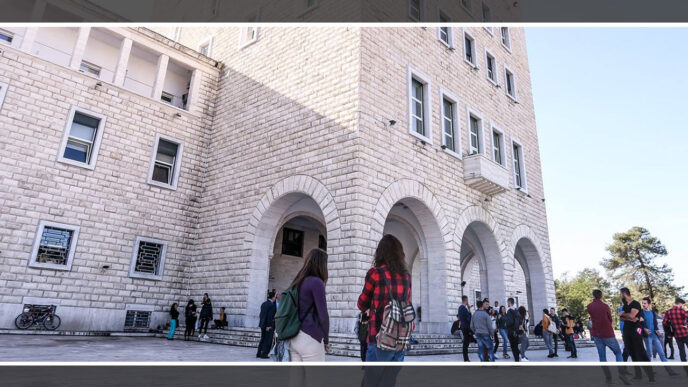
The new school year resumed this September, finding students back at school. Their well-being, however, still remains a dilemma that deserves a solution. Past experiences serve as a lesson for all those responsible for the education and protection of children. The event of a year ago, near the 9-year-old school "Fan Noli" in Tirana, remains a painful memory. Two 14-year-old minors were involved in a violent conflict that led to the murder of the young man with the initials MC by his peer.
This violence, present outside of school premises, brings back the same uncertainty about how institutions react to such phenomena. The evidence of most of these conflicts begins on social networks and often ends with the teenagers themselves carrying cold weapons.
Just a few weeks after the start of this school year, another incident occurred in Kamëz, on the premises of the 9-year-old “Ibrahim Rugova” school. Two young men were involved in a fight with cold weapons, and as a result, three 16-year-olds were injured. Fortunately, this time there were no victims, but with the same root of the conflict.
In most of the incidents that occurred, TikTok has been held responsible, having for years become a communication network where filters do not exist. The majority of active users are teenagers, unrestricted and uncontrolled by adults. However, even though the presence of the parent exists, the control is not continuous and strict. The heavy daily workload in daily chores and the avoidance of responsibilities are decisive factors that cause truncated control over children.
Police "scam" with incident data, frustrated teenagers, wrong solutions
To determine the aggravated situation regarding the involvement of minors in physical conflicts, this is reinforced by the data coming from the State Police. The largest percentage is held by conflicts with the cause of "injury and other intentional damage" . Malice reflects the communication with which these adolescents choose to "explain themselves". This is also verified by the number of criminal proceedings registered in the police regions; a full 1 thousand 150 minors.
| Classification of the criminal offense | Number of registered criminal proceedings | Number of injured parties |
| Intentional slight injury | 556 minors | 510 minors |
| Other intentional damage | 594 minors | 667 minors |
| Serious injury due to negligence | 3 minors | 8 minors |
| Minor injury due to negligence | 1 minor | 5 minors |
On the other hand, the presence of injured parties, a total of 1177 minors, also remains worrying. Regarding these figures, an explanation is provided by education expert Suela Koçibelinj, who chooses to speak about a wound that is still incurable.
" Statistics from recent years show alarming figures regarding the involvement of adolescents in conflict events, even to the point of loss of life."
Young people seem to have lost the ability to communicate and build cooperative relationships. In an attempt to stand out, to show that they are strong, to define territory and establish their power, they are choosing methods that are based on the basic human instinct: "flight or fight" , Koçibellinj initially states.
Less pronounced seems the problem in the definition given by the police to the causal criminal offense of "minor and serious injury by negligence" . As the table above shows, the tendency of minors to participate in incidents of this nature is decreasing. A total of 4 proceedings registered and 13 injured parties.
In cooperation with the Ministry of Interior, the State Police, has clarified through an electronic notification that there are a number of measures to ensure the protection of students, as part of the basic security package in schools. According to them, security measures in educational institutions have increased across the country.
"Uniform police Services (order and road) have been increased near schools at fixed times, such as before the start of classes (students' arrival at school), during the morning break and at the end of classes. There are no additional police forces near schools, but police forces that perform service near schools according to the schedules mentioned above, in addition to other duties in the territory designated for service ," the electronic communication further explains.
As part of the program, the Ministry of Interior and the Ministry of Education informed about the School Safety Package, launched a year ago publicly by the former acting Minister, Taulant Balla. It provides for a number of measures to be implemented by institutions with administrative and legal responsibilities, with the aim of guaranteeing the safety of schools, students and the learning process.
| What does the school safety package foresee? |
| Increased role and direct responsibilities of the two ministries |
| Close cooperation between institutions of dependency, by building permanent and systematic communication, at every level, central and local, between educational institutions and other state institutions with responsibilities in the field of security, such as those of physical security, road safety, food safety, local self-government authorities, etc. |
| The State Police is on duty every day, without neglecting any information or notification regarding situations in school premises or in the security perimeter near them. |
| The implementation of tasks by police structures to fulfill the obligations arising from the school security package continues. |
In addition to the Ministry of Interior and the State Police, the Ministry of Education and Sports also comes to our aid, which informs and discloses the program that operates in the preparation of psycho-social workers in school environments. From the data provided, it results that this number for the 2024-2025 school year, valid for pre-university education, is 1255.
The "safety circle" that protects students, the Ministry "trains" employees for the guarantee in schools
The role of psychologists and sociologists is indispensable. The responsibility for any behavior by adolescents lies with them. They must be aware of any situation that directly affects students. Their presence is seen as easing the parental burden and creating a bridge between them and teachers.
To achieve a more promising standard, the Ministry of Education indicates that within the framework of the National Teacher Professional Development Program, a special training module is organized on the topic "Strengthening mechanisms for preventing conflicts, violence and bullying in school", while specifying who participates: all social science teachers, the school's psychosocial service, school principals and security officers.
Finally, the Ministry comes out with the explanation that the person who receives the general powers and must immediately be put into operation of this system is the security officer. "Beyond the intervention of conflict resolution, he is responsible for reporting to other structures, and referring the case. The security officer documents his work through the standard form approved in the guide to their work practice. Reporting of incidents/problems by the security officer is addressed to the head of the educational institution, the person exercising parental responsibility (through the SMIP), the person in charge as a member of the Coordination and Monitoring Office in each ZVAP or the person in charge of the ZVAP for supervising the work practice of security officers in schools, State Police bodies (according to the assessment of the case), and child protection structures (in cases where it is assessed that the child should be given protection)", the statement concludes.
The Regional Directorates of Pre-University Education are also part of this important interaction link, to understand the activity and scope of their function as public institutions for guaranteeing the safety of children in schools. For these reasons, we turned to the directorates in Tirana, Durrës and Lezha, cities in which these conflicts have occurred. We started with Tirana, which also has the largest percentage of the population.
The Directorate states that, according to the policies and acts in force, the management and teaching staff immediately intervene to stop any conflict in the school, notifying the principal, the security officer and the psycho-social service. Parents are immediately called to be informed about the situation, while the level of risk is assessed and psycho-emotional support is provided to the students involved; each incident is documented and reported in the SMIP digital system. In the most serious cases, the intervention of the State Police and social Services is required, while orientation curricula are used in schools to promote the peaceful resolution of conflicts between students. In addition, educational activities are organized at the school level to promote positive behavior and prevent similar phenomena.
"These activities aim to inform and raise awareness among students about bullying, other forms of violence, the psycho-emotional consequences they bring to certain age groups, and legal education by informing them about legal responsibilities and the consequences of dangerous behaviors," the official response states.
The education directorates in several regions, including Lezha and Durrës, have detailed a series of disciplinary measures and support programs aimed at preventing incidents between students and educating them on conflict management. In addition to escalating measures, from warnings and additional assignments, to lowering the grade for behavior or expulsion in the most extreme cases, schools conduct psychosocial assessments, individual counseling sessions, behavioral contracts and awareness-raising activities, while security officers and psychosocial staff continuously monitor problematic situations and intervene with personalized educational plans.
Technology, now a system: Teenagers, locked "in the screen shell".
The numbers have managed to reveal a flaw in modern parenting. As a recent study, focusing on American teenagers, shows, the tendency towards "isolation" on a small screen and with excessive hours has reached a level of 41%. Even at an age where their emotional development has not received the proper formation, 13 to 18 year olds today are seen completely focused on the trends of the day by watching, reading and listening to various virtual content.
This is the opinion of the technology expert, who, in addition to her knowledge of the virtual network, also sees psychosocial intervention as necessary, as she shares the "symptoms" of a teenager at the moment his "brain" is attacked by the explosive energy of social media.
From this perspective, the risk and the percentage to take the situation under control to curb a "digital slavery" is considered a difficult mission in order not to break the thread of a generational education as healthy as possible. In this regard, clinical psychologist Destemona Çelo believes that immediate reaction can heal still fresh wounds. Based on her experience, engaging in her function as a psychologist in cases where minors end up in police stations, Çelo shifts the focus to modeling any behavior that reads insecurity and fear.
"Prevention must start very early, to notice these symptoms and actively listen to children, then when they are teenagers, young people, and listen to their emotional needs, mainly because they are unheard. Aggressive or delinquent behavior has a very great fear and a very pronounced insecurity. These fears and insecurities that these minors have must be addressed in order to significantly reduce aggression ," psychology initially quotes, as it explains why aggression is seen as an immediate solution for every teenager.
"Men are suffering from the tendency to appear stronger. They show this by exercising, so that their body shapes are very masculine according to them and show aggression and all this is related to protection. I base it on my experience, for both age groups and genders, that there is such a tendency. So in Albania it is seen as protection, as strong, it is not seen as a problem, as an unaddressed, untreated emotional problem that can also come as a result of mental health disorders ," explains psychologist Çelo.
Another perspective is brought by Suela Koçibellinj, an expert on issues affecting young people, based on the basic human instinct: flight or fight. According to Koçibellinj, it is difficult for adolescents to fully interpret fear and instead of communicating, they choose to attack.
The education expert believes that the developmental phase is an inherent challenge for minors, linking it to rapid physical changes as a result of increased hormonal development. "It must be said that this aspect differs from psychosocial development, as it requires more to reach maturity ," emphasizes Koçibellinj.
Kele brings a concrete example, referring to the way in which a teenager can be read by their actions. "Imagine a young girl, around 15 years old, who sees on her phone screen perfect portraits of her peers or influential figures in society. She will immediately feel dissatisfaction, a sense of inferiority, and will always seek to resemble perfection in order to be accepted more quickly in society. This also leads to social isolation, in the worst case ," says Kele.
The challenge of reporting on the ground; journalists: We face pressures not to tell the truth
In addition to the numerous difficulties that experts, parents, and media reporters who have followed criminal events involving minors are constantly facing, part of this circle also remains.
Xhensil Shkëmbi, who covers developments for Euronews Albania in the city of Korça, openly reveals the difficulties he faces every time he has to uncover the event. “ The dynamics are high, while interventions to hide the truth occur in most cases. There have been cases when there has been a blockade of information by the police and the prosecution, and on the other hand, successive threats from family members. What we do is that we seek to be in contact with them just to say that we want to get the truth out ,” the journalist shares his concern.
The reporter also recounts other vicissitudes that accompany him during his work, when the Police are in most cases powerless to do more than they should. "Their cooperation is minimal," Shkëmbi states, as he states that the interviews take a sporadic course, losing depth in detail. The journalist even goes further, saying that the institutions have a responsibility, but instead, they choose to advertise their image, claiming that they are in the protection of children.
Igli Çelmeta, a crime reporter at A2 CNN, shares the same opinion, stating that in such events, in addition to the responsibility in reporting where teenagers are involved, it also speaks of a more selective and not immediate cooperation from institutions. "It happens that information from officials comes late or fragmented. This makes our job of bringing accurate details more difficult," adds journalist Çelmeta, who also points out the attempt to control information.
According to him, their minimization in public also causes misinterpretations and a lack of transparency towards citizens about the flow of information. Witnesses and family members are often reserved about going public, due to a number of factors such as fear, social pressure and interference from institutions. “Institutions delay or refuse the information that journalists need to report accurately. This forces us to be more careful with sources,” the reporter underlines.
Experts: Violence, the fastest response in incident situations. What parents should do
Denisa Kele believes that closer and broader cooperation between parents and teachers would ease the psychological burden of young people. Through this, they would find it easier to manage anxiety, social dependency, and the effects of constant comparison.
Likewise, thinks Destemona Çelo, who in her view, chooses to address parents, asking for better management of their behavior, so as not to burden children with their emotional side. "First, let them work on themselves, and then communicate with the children ," the psychologist further adds.
Children always remain the "cream" where a secure future begins. And consequently, to have a safe, cooperative, and democratic environment, their presence is needed to make society an "institution" beyond the family where cooperation can take place.
" Children and young people should be a national priority. Supportive measures for their well-being and safety should prevail at every level of policy, whether local or central ," concludes Suela Kocibellinj. /acqj.al