


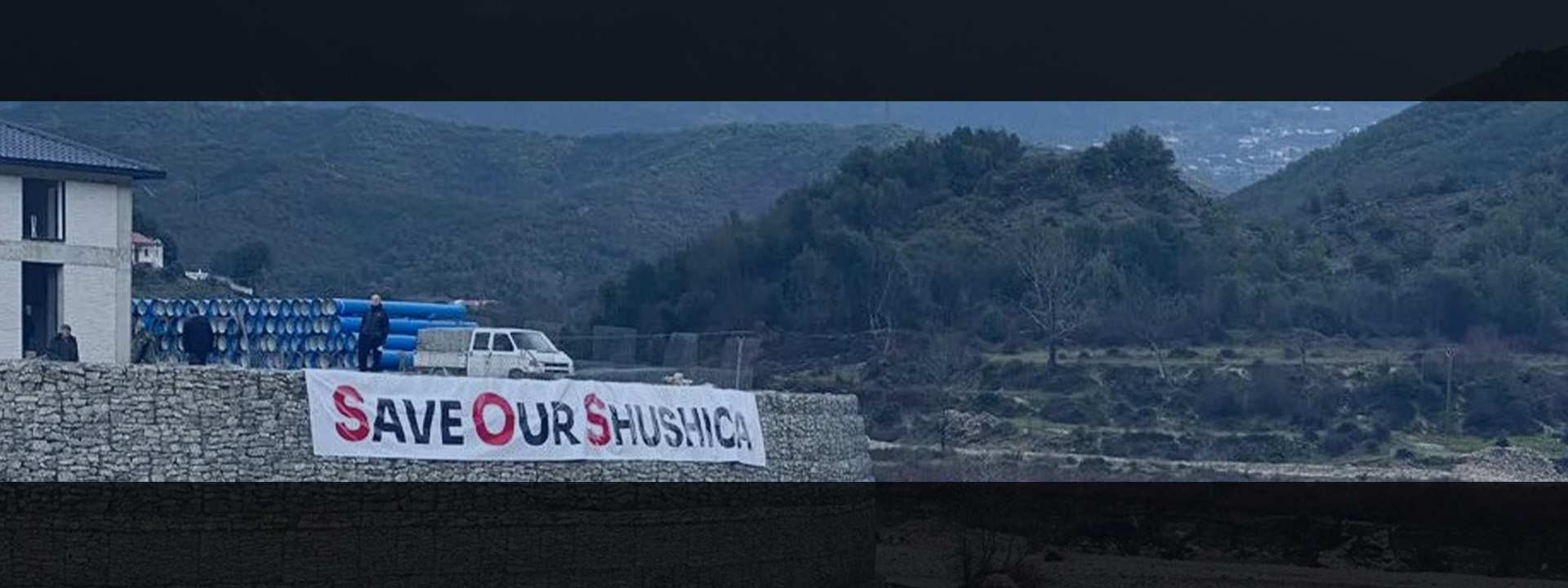
Author: Dallandyshe Xhaferri
The Vjosa River, a treasure of Europe and a symbol of rich biodiversity and natural water flow, is facing a new challenge: survival. A Himara aqueduct project threatens to change its wild landscape.
The Vjosa River was declared a Second Category National Park on March 13 of last year, but before a full year has passed since receiving this status, the "wild" river, the only one left in Europe, is having its branches cut off. .
This river has been described as "wild" because its water flows naturally, which means that hydropower plants have not been built on it and no works have been carried out that divert its free flow.
Last year, the Minister of Tourism and Environment, Mirela Kumbaro, said that the declaration of the Vjosa River as a National Park is the second category of protection, much higher protection than the status that this river enjoyed as a Park could offer. Natural.
"We have extended this protection surface to 12.727 hectares, which is the entire water surface, the river bank, together with the land surface and the three branches of the river Vjosë, Drino, Bënçe, Shushicë, do what is necessary, what is today the first park of a river wild in Europe", - stated Minister Kumbaro!
And "today" the infrastructural permit for the construction of the Himara aqueduct in one of the main branches of the Vjosë river, in that of the Shushicë river, given by this municipality, which in 2022 endangers the Park. The works of this project are expected to be completed in August of this year.
The "separation" of the Shushicë River from the Vjosa National Park
The tributary of the Shushicë river covers 30 villages, becoming the main source for irrigation of agricultural lands, as well as serving as the main source of water for the cattle raised by farmers in the area. The villages located upstream of this river are an administrative part of Himara Municipality, while those located downstream are included in the territory of Selenica Municipality.
According to the residents of these villages, they were not included in any public consultation carried out by the Himara Municipality, being excluded during the decision-making process for the construction of the Himara water supply. They protested in the course of the Shushicë river in the village of Kuç, in August 2023 and then on February 24 of this year, 2024.
Bujar Jari, the Elder of Mesaplik Village, part of Selenicë Municipality, tells "Sinjalizo" that none of the residents who live in the course of the Shushicë River, nor the representatives of these villages, were given an opinion before the start of the works, which officially started on January 10, 2023.
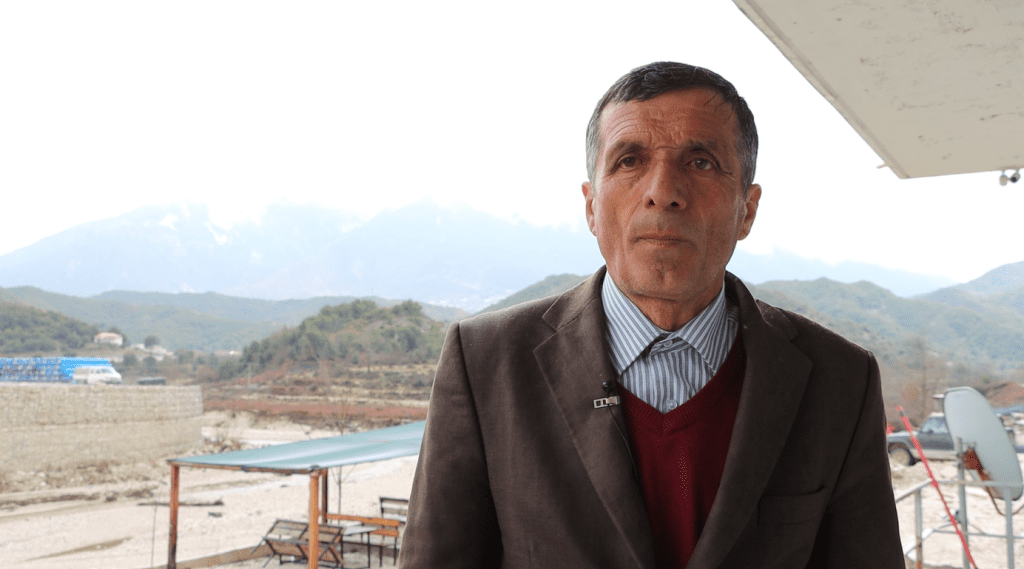
During the development of the protest, Jari told "Sinjalizo" that the construction of the aqueduct on the branch of the Shushicë river will be accompanied by major consequences in the agricultural and livestock activities of the residents of these areas.
"We are here protesting against this project, that they have decided to take the water and take it to Himare. If we, as a village, run out of river water, we, as a village, are called bankrupt",- says Jari, adding that in addition to the use of water for the irrigation of agricultural lands, in the village of Mesaplik the inhabitants have about 5 thousand heads of cattle, for which the issue of drinking water will become a major problem.
For Kastriot Shehu from the village of Gumenicë, surveyor and at the same time Chairman of the Association "Gjelbërimi 2000", after the destruction in the 90s of the 14 pump stations that were used during the communist system to irrigate agricultural lands, the flow of water in the branch of the Shushicë River remains the only natural asset for the village.
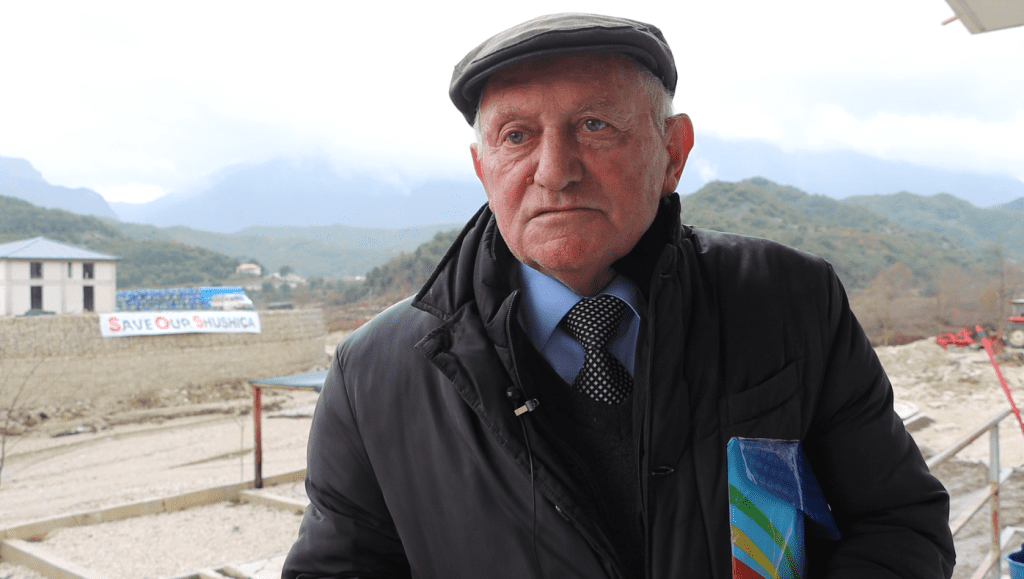
"The municipality of Selenica today has 320 thousand olive trees, while in 1991 there were only 40 thousand olive trees", - says Kastriot Shehu, stressing that olive cultivation for the residents of the area is only possible thanks to the water of the Shushicë River.
Olsi Nika, environmental biologist and expert in the biological assessment of water quality, at the same time the executive director of "Eco Albania" tells "Sinjalizo" that the main consequences of the construction of this aqueduct in the branch of the Shushicë river are related to the fact that the project envisages receiving water from the source of the river, diverting it to another basin, which will bring negative consequences to the entire functioning of the ecosystem.
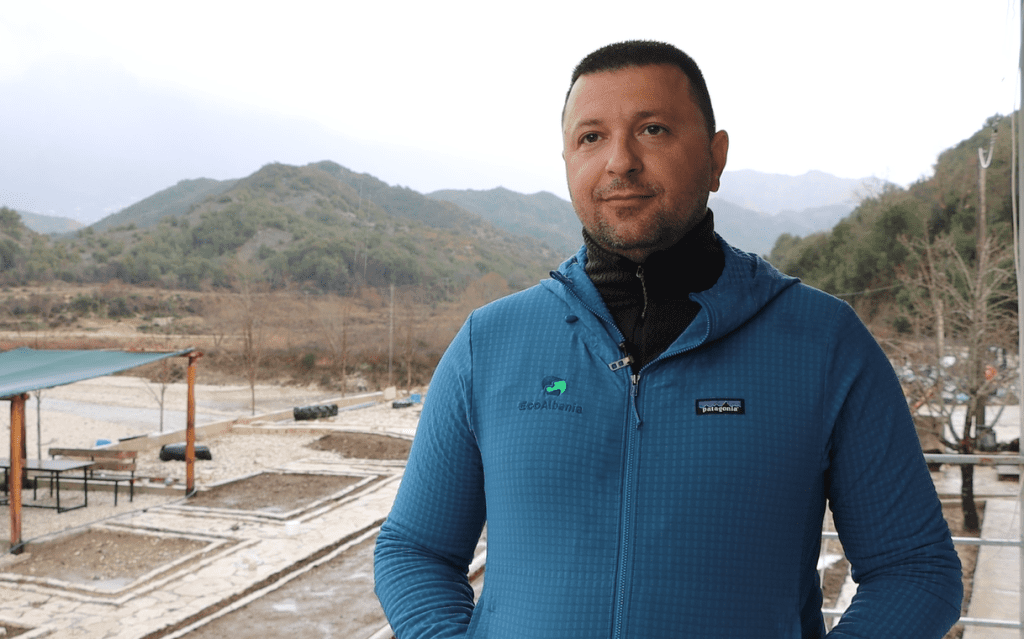
According to Nika, the diversion of water will be accompanied by "water stress" for aquatic organisms, plants or invertebrate animals, which are a reason why Vjosa was declared a National Park and at the same time it would undo the Shushicë River from being part of the National Park.
"If this project continues, Vjosa can be called a National Park, but Shushica can no longer be part of this national park, because Vjosa has other branches that are not included in the national park for this very reason, because they are not in the flow of free as the river Vlorës (Shushica) is, as the Drinos is...this makes Vjosa unique in ecosystems in Europe, because it is not only Vjosa but also the tributaries that are free-flowing", Olsi Nika emphasizes, adding that "Eco Albania" together with the 54 residents of the Administrative Units Brataj, Kuç, Kotë and other areas, have filed a lawsuit against the National Environment Agency, the Himar Municipality and the Vjo Basin Council for a number of legal violations that, according to them, are related to the construction of this water pipeline and now Justice must have the last word.
According to the lawsuit filed by them, the legal violations are related to the lack of public consultations with the residents who are directly affected by the construction of the water supply. In the National General Plan, approved by the National Territorial Council (KKT), the area around the Shushicë River is designed towards tourism, agrotourism, ecotourism, adventure tourism. These plans do not envisage any projects for infrastructural developments on the Shushicë river. In addition, the Himara water supply project at the source of Lepuša envisages collecting all the water of this source, without envisaging an ecological flow, while the construction permit, given by the Himara Municipality, was obtained in excess of the competence, which in this case belongs to the National Council of the Territory
Public consultation…2 only residents and dozens of administration employees
The Municipality of Himarë through the response to the Request for Information explains to "Sinjalizo" that the Albanian Development Fund (FShZh), in the role of the implementer of this project, the Municipality of Himarë and Kfw (German Bank) have carried out studies on water flows for more than 2 years of sources in the entire territory of the Himar Municipality, from which it was found that no source could meet the need or the capacity of the flows and the quality of drinking water.
"During this study, the only source that meets the conditions of flow and water quality was the spring of Lepusha along the flow of the Shushica river. This source is not the only source in this river, but the Shushica river has several dozen other sources...",- it is stated in the answer, in which it is further emphasized that from the main flows of this source, only a part of it is used, which would be negligible for the life of the river.
According to the documents made available to "Sinjalizo" by this Institution, it appears that 3 informational meetings were held (November 3, 2020, and on December 4-5, 2023), two in the building of the Himar Municipality and one near a grass near the building. of Selenice Municipality.
However, according to the attendance list dated November 3, 2020 that this municipality has made available, it appears that out of the 24 present, only two of them have declared themselves as "citizens", while 11 of those present are part of the administration of the Himar Municipality. .
The two participants declared as "citizens" are residents of the village of Pilur in Himara, a village which according to the project is expected to benefit from the project by being supplied with drinking water.
The Vjosa River is a living testimony of the intertwining of nature and human needs—a symbiosis that requires mutual respect and prudent management. The conflict between the preservation of a natural landscape and the development of infrastructure stands as a reminder that dialogue and sustainability are essential for a future that does not encroach on the National Park.
It is important that the decision on infrastructural intervention takes into account all possible consequences and that open dialogue and cooperation of all stakeholders, including local communities and environmental expertise, is encouraged.
This article was created based on input provided by individuals who have chosen to speak up. Share your story, empower others and be an agent for change. Visit the website: www.acqj.al/sinjalizo-dhe-ti/