


Denada Jushi
It is 8:00 in the morning and traffic on the Grand Ring Road towards TEG is moving at its usual pace. But the calm is broken within seconds. From an improvised opening in the side curb, a truck loaded with inert materials suddenly emerges and enters the Grand Ring Road, without any warning and without an acceleration lane. In an instant, the road advertised as a “modern highway” turns into a scene of panic: drivers traveling at 90 km/h brake hard, emergency lights flash on and off, a car swerves into the other lane to avoid a collision.
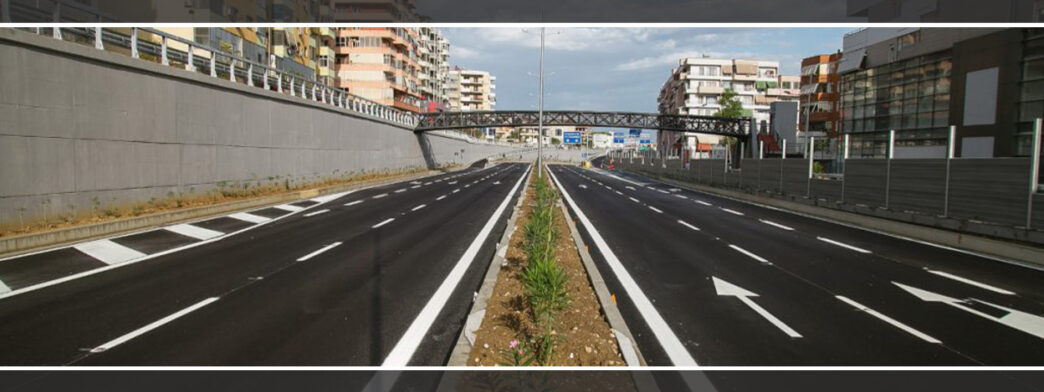
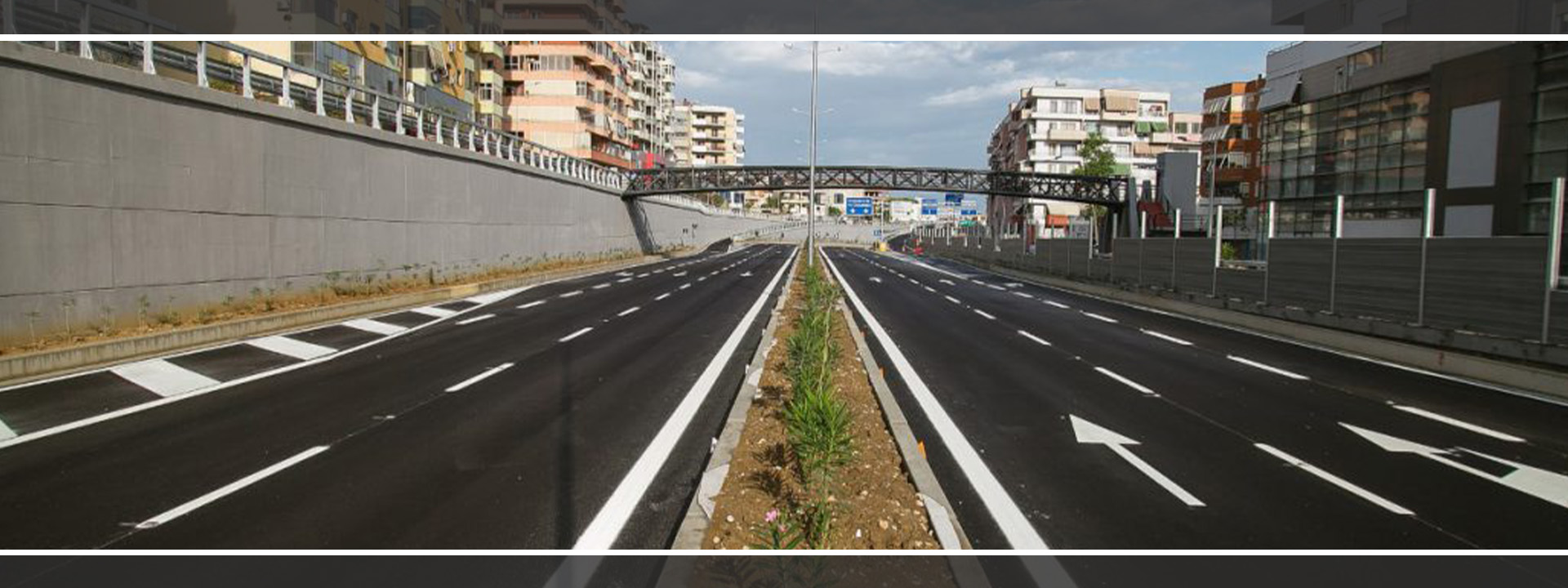
The road, which cost 433 million euros and is described as a "highway" on paper, offers the appearance of an inevitable accident on the ground. And what makes the situation even more alarming is the fact that this is not an isolated episode.
On an axis that theoretically should be safer and more controlled than any other road in the country, entrances are not made from the designed junctions, but from construction sites and illegal cracks in the side barriers. Where there should have been discipline, improvisation prevails, and no one is held accountable.
Just a short time after its full inauguration, after nearly two decades of waiting , the Grand Ring Road is turning from a great promise of infrastructure into a constant source of accidents. What was envisioned as a modern highway, without random entrances and exits, has transformed into a chaotic road, where entrances are added day by day, without any clear plan as to how many were foreseen, how many were added to the road and, more importantly, how many more are expected to open in the future.
The Tirana Ring Road is 28.8 km long, divided into four segments: Northern, Western, Southern and Eastern. Initially conceived as the “Tirana By-Pass”, the project began to be designed in 2009, but this project can be considered one of the most delayed projects, full of ups and downs during its construction.
The works dragged on for more than a decade and a half. The project was changed several times and has still not been properly completed.
Designed during the Berisha administration, it was implemented during the Rama administration. Only after 2019 did construction actually begin on the ground. The total cost of this axis is 433 million euros, one of the most expensive infrastructure works in the country.
It was promoted as one of the country's most important infrastructure works, promising to connect all the main national arteries. On paper, the Grand Ring Road would connect Tirana-Durrës, Tirana-Elbasan and the exits to the North and South, significantly easing traffic for citizens and turning the capital into the most modern road traffic hub in the country.
But today, the reality on the ground tells a completely different story. Instead of a safe and controlled highway, we have a hybrid road, which on signs is called a “highway,” but in practice functions as an overcrowded “urban road,” with uncontrolled entrances and exits and daily chaos at every kilometer.
Artur Sulçe, an expert in road signage and drafter of the Road Signage Code, tells ACQJ that:
"No vehicle is allowed to enter the highway if there is no acceleration lane. Removing obstacles or road safety elements is punishable by the Criminal Code. Immediately entering the road leads to inevitable accidents due to high speed."
Sulçe explains that every entrance and exit to a category A or B road must be designed according to VKM 628/2015, with deceleration/acceleration lanes, complete warning signage, respect for distances, and many other elements.
The ACQJ inspected the entire 28-kilometer length of the Grand Ring Road to closely verify whether road safety elements were implemented as required by law. The result was clear: no.
Temporary entrances, such as those serving construction sites, are only allowed with special signage and under constant monitoring. But on the Grand Ring Road, none of these rules are enforced. Instead, curbs are cut, protective barriers are removed, and temporary exits are transformed into permanent secondary roads, without any institutional control.
Artur Sulçe, an expert in road signage and drafter of the Road Signage Code, tells ACQJ that:
"No vehicle is allowed to enter the highway if there is no acceleration lane. Removing obstacles or road safety elements is punishable by the Criminal Code. Immediately entering the road leads to inevitable accidents due to high speed."
He explains that every entrance and exit to a category A or B road must be designed according to VKM 628/2015: with deceleration/acceleration lanes, complete warning signage, respect for distances, and many other elements.
According to expert Sulçe, this road "referring to technical-geometric parameters it is a highway, but since basic safety elements are missing, today it functions as a main interurban road." In other words: a highway only on paper, a dangerous road in reality.
While the risk increases daily, institutions choose to remain silent. To understand who grants permission for these improvised entrances and for entities that open exits along the axis, ACQJ turned to the Albanian Road Authority (ARRSH). But the institution's response was short and evasive: the responsibility now lies with the Municipality of Tirana.
According to the ARRSH, "the project from TEG to the Farkë e Vogël branch provides for entrance only on the right side near the short tunnel, while the Sauk–TEG segment has exit only at the Mjull Bathore overpass. With VKM no. 600, dated 13.10.2021, these segments have been transferred to the inventory of the Municipality of Tirana."
With this response, the ARRSH "washes its hands", passing the responsibility to another institution. But in the meantime, the road worth hundreds of millions of euros remains unattended and uncontrolled, while thousands of citizens circulate on it every day, blindly trusting an infrastructure that belongs to no one.
After the ARRSH passed the ball to the Municipality of Tirana, the ACQJ continued the official request to this institution to understand who is responsible for unauthorized entries and exits along the Grand Ring Road.
The questions were clear:
– Have permits been granted for direct exits to the street?
– If so, by what procedure were these provisional permits issued?
– Have firms that have cut protective barriers been penalized?
– And most importantly: is it dangerous for trucks to enter through unauthorized openings?
But to date, the Municipality of Tirana has not responded. A road that cost 433 million euros seems to have neither an owner, nor a controller, nor a responsible party.
Comparison with EU standards: Three main violations
While Albania preaches every day the rapprochement with European standards, in practice it remains hostage to the “Made in Albania” model. A highway according to the European Union must have a minimum distance of 2 kilometers between exits. On the Grand Ring Road, the exits are only 200 meters apart, in the TEG–Sauk segment alone there are three of them, some designed by ARRSH, some by private builders in the area.
According to EU rules, entrances should only be those designed into the body of the highway. But in reality, every new business, whether it's a gas station, a farm, a residential neighborhood, or a university, has opened its own "entrance-exit."
By European standards, a gas station is expected every 40 kilometers. Inside the Ring Road, they appear almost every few hundred meters.
The same picture emerges for pedestrians and cyclists: on European highways you will never see them, while on the Sauk–Shkozë axis, a quick glance is enough to see people, animals, and even carts passing through the high-speed lanes.
The Great Ring Road, instead of approaching European standards, is looking more like a typical Balkan hazard.
The guilt that has no name
If tomorrow a truck enters through an unmarked opening and hits a family, who will be held responsible? ARRSH will say “it is no longer in our inventory”. The Municipality of Tirana is silent. And as always, the blame will remain nameless, and the tragedies without culprits.
On a road "washed with gold", it is time to become aware before we wash it with blood. acqj.al