


Denada Jushi
The tourist season in Albania since 2019 is already in everyone's attention. What will happen? Will Albania continue to maintain the place it has gained in these years or, after the "discovery", will it fade away?
"We maintain the numbers we had last year at this time. The last two years are not the boom of foreigners that we had in 2022-2023, but we have returned to Albanians living in the diaspora or Albanians from Kosovo, while Albanians from Albania come mostly on weekends."
This is the experience of manager Armela M., who has been working for a decade now at one of the largest resorts in Drimadhë.
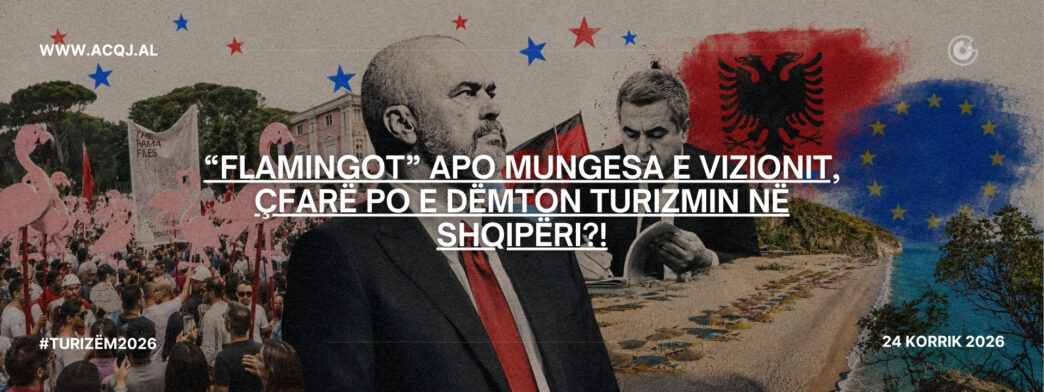
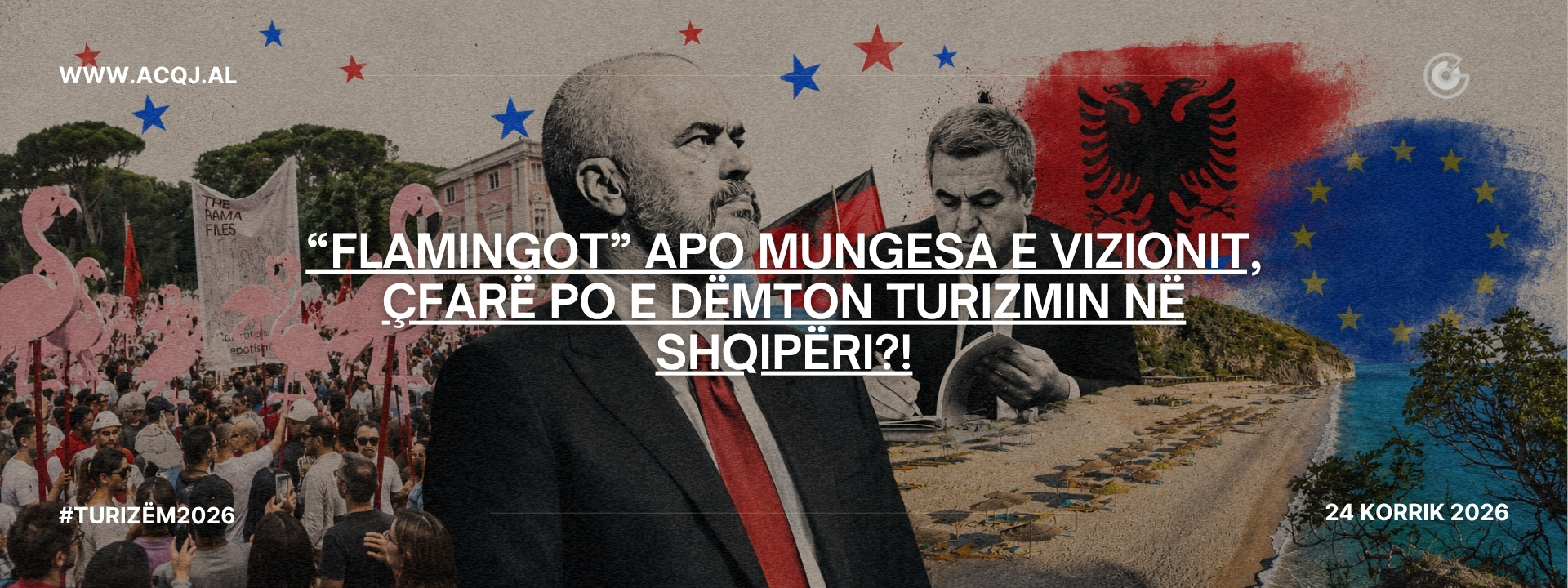
This year's season has started with controversy. On one side were tour operators and Prime Minister Edi Rama, who raised concerns that this year's cancellations have increased, pointing to the protest that has been taking place in Tirana for more than 50 days. On the other hand, the figures so far show that Albania is registering record arrivals of Albanian and foreign citizens.
For several years, the government has called the number of border entries an achievement, but is this the success of a season?
"We have an average growth of 7 percent in the period January-June, but the fluctuation in the pace is worrying. May marked an increase of 16 percent, while June only 1.5 percent. From communication with the representative covering Albania at Booking, I was confirmed that for Tirana there are ongoing cancellations of reservations until August," says Zak Topuzi, president of the Association of Tour Operators.
According to him, the prolonged protests may have affected tourists' perceptions, while adding that the conflict in the Middle East has also led to cancellations in some organized markets.
But Migen Qiraxhiu from the Civic Resistance, who has been part of the protest called the "Flamingo Revolution" for 54 days, sees this as an alibi for the Prime Minister:
"The government and Prime Minister Rama seem very happy and are seeing a golden opportunity to pass the bill for a year that does not guarantee records in tourism to the citizens, holding the protesters responsible. So, since the Prime Minister himself last year denounced the increase in prices without an increase in quality in tourism, it seems that the lack of regulation of this phenomenon this year has found the culprit. I say possible, because even at this stage we are abusing declarations, since to talk about real damage, concrete data is needed."
According to INSTAT, during May 2026 alone, 1.880.161 Albanian and foreign citizens entered Albania, 12.2 percent more than in the same month last year. While the figures for June are expected to be published, when the protests began.
On the other hand, for former Deputy Minister of Tourism, Ornela Çuçi, the entries should not be considered a success, but should be looked at further:
"Today the challenge is completely different. Not to have as many tourists as possible, but to have tourists who stay longer, spend more and leave with the desire to return. This is what makes tourism an engine of development and not just a seasonal statistic."
With an ACQJ observation on major beaches such as Shëngjini, Tale, Durrës and Vlora, Albania continues to attract a high influx of visitors.
Data shows that the majority of tourists are regional.
About 4.6 million arrivals are registered from Kosovo alone per year, while about 750 thousand from North Macedonia. After them is the Albanian diaspora living in European Union countries, a market that continues to remain crucial for the summer season.
The debate that has been going on for years is whether border entries are a measure of the season.
For tourism operators, the number of arrivals does not always indicate the true state of this sector.
More than numbers or statistics, the metrics should be revenue, nights of stay, and even what percentage of them return.
Topuzi describes tourism as “a digital stock exchange of trust,” where negative news or a perception of uncertainty can immediately impact bookings. According to him, Albania has not yet fully consolidated its position as an international destination and, for this reason, is more sensitive to political or geopolitical developments.
But for Migen Qirakhiu, a civic protest is good news and not negative news:
"So far they remain more of a political statement than an economic conclusion."
A civic protest, especially when it is peaceful, cannot be used as an alibi for the structural problems of the sector. On the contrary, a democratic country that allows citizens to protest is not necessarily less attractive to tourists.”
Beyond the discussion about protests, this sector seems to suffer from problems that are not related to a single season.
Most importantly, the lack of a skilled workforce remains a major concern. According to the Association of Tour Operators, seasonality makes it difficult to retain trained employees year-round, while businesses face staff shortages every summer.
Another problem is related to the structure of the tourism offer. Albania has only about 1% of accommodation capacity in four- and five-star hotels or resorts, while the vast majority of accommodation is realized through daily rental apartments. According to Topuz, this creates a disproportion that limits the ability to attract tourists with higher spending power and keeps the sector oriented mainly towards low-cost tourism.
Infrastructure also remains a weak point. Road congestion during the season, lack of parking, limited public transport, water supply and sewage networks, or wastewater treatment plants are problems that, according to operators, risk damaging the visitor experience.
But, above all, for the former Deputy Minister of Tourism, territory management remains vital in this industry:
"An element that has become more evident to us than ever before is territorial management. Tourism is not built only with hotels. It is built with clean beaches, functional cities, preserved cultural heritage, protected nature, and local communities that benefit from development."
Another debate that never stops is that of prices. For years, Albania has been promoted as a more economical destination than neighboring countries. But this difference is narrowing.
According to Topuz, rising labor, energy and supply costs, as well as the depreciation of the euro against the lek in recent years, have increased costs for tourists, especially for visitors from Kosovo. However, he says Albania still remains 15 to 45 percent cheaper than Greece, 25 to 45 percent cheaper than Montenegro and significantly more competitive than Croatia.
For tourism expert Ferjolt Ozuni, the problem lies in the sustainability of the current model. According to him, only about 3 percent of visitors return to Albania for a second time. This is a signal that the country continues to attract new tourists, but still has difficulty turning them into loyal visitors.
At the local level, municipalities are trying to cope with the increasing influx. The municipality of Lezha says that this season it has taken measures to manage traffic, monitor the prices of sunbeds and umbrellas, reorganize the cleaning system without public bins, increase field checks and strengthen security in tourist areas. It has also limited the movement of heavy vehicles during the season and added monitoring cameras on the coastline of Shëngjin.
The discussion of the tourist season this year has focused on the ongoing protests, but it seems clear that the problems are more related to the lack of clarity on what model the country should follow in this sector. Last year's episode, when at the peak of the season in one of the most visited areas, such as Thethi, the government launched an action to demolish unauthorized buildings, or similar episodes repeated in Himara and Vlora this year, as well as other elements, such as the endless extension of works on the junction axes that connect to tourist areas, seem to have a negative effect on the tourism sector more than the protests, which continue to be concentrated in the center of the capital even today, after 50 days, without any incidents or problematic episodes.
Tourism development cannot and should not be sporadic or episodic. To be long-term and successful, it must be based on clear strategies that match the needs and potential of the country./ acqj.al