


Author: Angela Bracja
Aishja, 60 years old, a resident of the city of Elbasan, regularly buys chicken wings (or chicken thighs) at the store near her home. She thinks that those chickens were raised in Albania and are of high quality. The seller (store owner) tells him that they are local products, despite the fact that this information is missing from the label. Aishja checks every product for the label, because in this way she avoids health problems.
In most cases at the supermarket Big Market chicken thighs are sold on offer, but without any label, raising doubts about the products we consume.
Aishja tells us that chicken thighs or chicken wings have different prices, from 190 Lek to 250 Lek. For the same product, the supermarket of a well-known company has a different price, 610 ALL, but with more detailed information, making consumers feel more confident about the products they consume.

Not all labels on domestic products contain all the information required by law. Chicken by-products in markets continue to be marketed with labels as products of local companies.
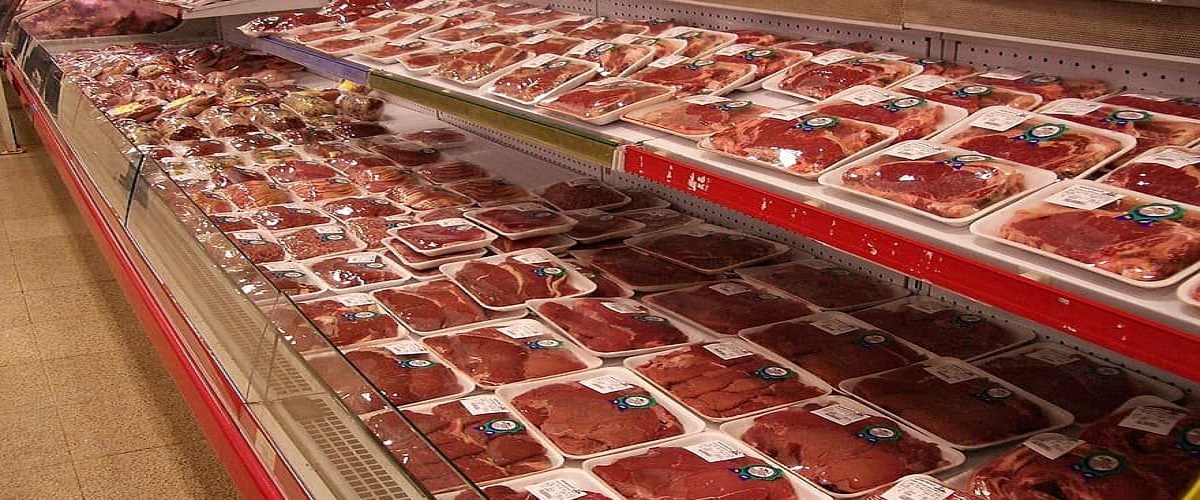
From an observation in markets and shops, it is easily ascertained that most of the imported chicken products do not have any distinguishing mark that can be considered as a label.
Chicken fillets, chicken wings or chicken thighs have no indication of where they came from, what is their origin, manufacturer or importer, much less advice on use.
According to Law 9863, dt. 23.01.2008, the label must contain certain data, which are considered mandatory, such as:
 The name of the product must contain the data only in the Albanian language;
 Have the name under which the product is sold;
 Have a list of ingredients;
 Have the quantity of particular ingredients or categories of ingredients;
 To have the declaration of the net amount;
 It must have a minimum shelf life date or in the case of foods, which from a microbiological point of view present a risk, the "use by date" must be declared;
 Have any special storage conditions or conditions of use;
 Have the name or designation of the business and the address of the manufacturer or packer or trader. (Even when it is produced for third parties, the address of the manufacturer, packer, trader and exporter is declared.)
 Have details of country of origin or provenance for imported food products. (failure to provide these particulars may confuse the consumer for another product and for the true origin or provenance of the food product.)
But these obligations expressed in the law for consumer protection often remain only on paper.

There are many violators of the law, but from an observation carried out at the main points of sale in the city of Elbasan, one of the main traders, which covers a significant part of the market for meat products, is the company Kazazi.
On the chicken fillets packaged with the inscription "Production of Kazazi" it is written: "Trusted taste".
Looking at such simple labeling and limited consumer information, several questions arise:
Does the company have a facility for raising poultry for meat?
If so, why is it written: Imported?
We reached out to the Kazazi Company with a request for comment, but as of publication date there has been none.
"The company Kazaz there is no poultry rearing facility, despite the fact that their food products are labeled as being packaged and produced by a meat processing plant, Kazaz Meat Ltd", - says the director of the center Alert, a non-profit organization that focuses on consumer protection.
"There are companies," he says, "that have facilities for raising poultry, such as Tik Tik, Halyard, Chicken Farm and Radostina, but the company Kazaz there is no information about the origin of the products, causing panic that the product may contain salmonella."
The products that the company sells are imported, but the consumer has the right to know where they originate from, and this information is missing.

Regarding the labeling of the food product (meat), which comes frozen from the import, it must be written on the label, because the entities are obliged to thaw it to put it in smaller bags and freeze it and put it on the market, but it must be written on the label and the consumer must know it.
The decision of the Council of Ministers "On labeling" and the Law "On Food" specify the way of labeling food products, while according to the law and VKM, products that are melted must be written on the label.
If we were to compare the labels of local products with those of the European Union countries, there is a very big difference between them, because the EU product labels have detailed information that the consumer should know. Products sold in shops in Albania may have the explanation that they are imported, but not from which country, also the temperature, nutritional values and ingredients, while the law makes it clear:
"To have details of the country of origin or origin for imported food products (failure to provide these particulars may confuse the consumer for another product and for the true origin or origin of the food product);
"To have the name or designation of the business and the address of the producer or packer or trader. (Even when it is produced for third parties, the address of the producer, packer, trader and exporter is declared.)"

If we compare these two products, it is immediately noticeable that the product is produced in Greece and the accompanying label contains a large number of data on the origin of the product, nutritional values and conditions of storage and consumption. Meanwhile, the product presented by the Albanian company has no data. Also, in the product produced in Greece, the ingredients and temperature are also given, accompanied by all the necessary information.
Have the original name under which the product is sold
Based on Decision no. 1344, dated 10.10.2008, for the approval of the rules "On the labeling of food products", the food product must have an existing name; not to be complicated, but ordinary; the name of the food must describe the way of use and be clear, so that the buyer can recognize the product and distinguish it from other products that may be similar and not be confused. No kind of trademark should replace the name under which the product is sold.
Any product sold must explain on its labels the physical condition of the food product or the specific treatment it has undergone (eg, powdered, frozen, deep-frozen, concentrated, smoked), in all such cases when this information is missing, it can create confusion for the buyer. Any food product that has been treated with ionizing radiation must contain one of the following indications: "irradiated" or "treated with ionizing radiation".
But, unfortunately, all these points do not contain many products, which are sold in markets and points of sale in the Republic of Albania, bringing concern to citizens about the safety of the products they consume.
The consumer should not only look at the expiration date on the label, but also the ingredients of the product. If the consumer may be allergic to an ingredient that the product may have and this ingredient is not placed on the label, then the company and the market that sells it must be held responsible according to the law.
The National Food Authority, in response to the request for information, says that there have been no complaints from citizens regarding non-compliant labeling of food products.
Food safety is an alarm bell, not only for consumers, but above all for the authorities charged by law to ensure that the products consumed are not dangerous to health. And for this it is not enough that the goods only have an expiration date.