


Denada Jushi
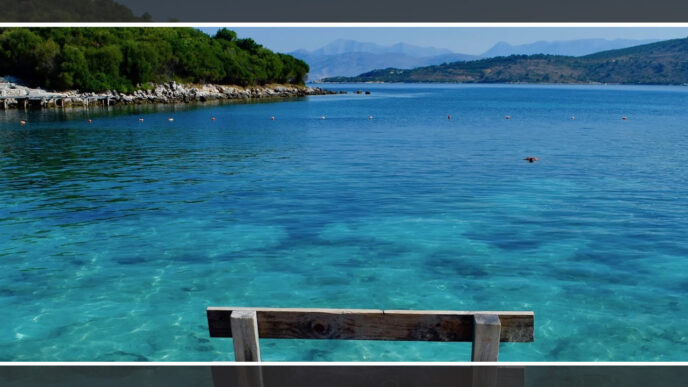
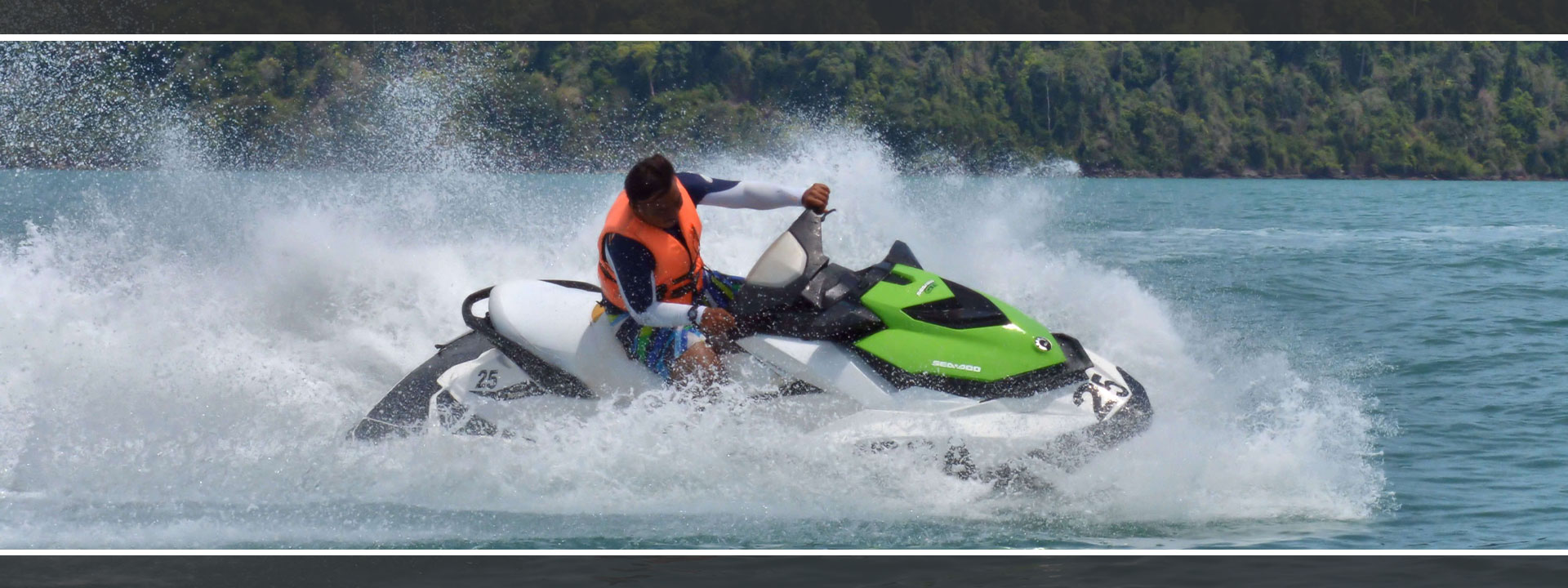
On the coast of Saranda, by the sea, a worried mother waited anxiously for her son, who had just rented a jet ski, 120 euros for 30 minutes to drive a dangerous vehicle. The young man had climbed onto a watercraft for the first time, without experience and without control, he was endangering himself and the nearby vacationers!
At the height of the tourist season, when the beaches are filled with vacationers and the sea becomes a place of entertainment for those enjoying sunny days, danger is often nearby.
In recent years, and especially this summer, watercraft, known as Jet Skis, have become a serious source of danger on the Albanian coast. This is due to lack of control, careless use and often by people who are not equipped with the basic knowledge of how to operate them.
These reasons have led these individuals to transform the sea from a recreational space into an unsafe territory.
The use of watercraft, especially Jet Skis, dinghies or small boats, has become a major tourist attraction, but also a means of quick profit for the tourism sector.
However, the number of accidents and disasters has also increased with concern. Fatal incidents, injuries and serious damage have highlighted serious gaps in water safety.
Sinjalizo has communicated with the Border Police, which indicates that since the start of this season, 3 maritime accidents have been recorded, one of which unfortunately ended with tragic consequences, causing death and 3 injuries.
Experts point out some of the causes of these accidents: first, the unauthorized use of water motors.
Fatjon Softa, a water safety expert, says that many accidents are caused by the use of unlicensed Jet Skis, which are used by people who lack knowledge of driving and basic safety protocols.
Also, the lack of a "registration book" that documents the driving license and verification prescribed by law makes it impossible to track and hold accountable those who own these vehicles.
The use of alcohol and narcotics is another cause that can become dangerous.
Routine checks for alcohol and prohibited substances among watercraft drivers are few, and effective sanctions for violators are lacking. Expert Softa considers these risks as flexible weaknesses in water safety, which when mixed with the lack of institutional control, create an environment conducive to accidents.
Ignorance of water safety and protocols.
Albania has suffered in the past from a lack of education regarding water safety, especially among young people and foreign visitors who were unfamiliar with the protocols. This neglect is also exploited by tour operators, who often prioritize economic aspects over safety mechanisms, bypassing equipment and qualified instructors.
Also, in some parts of the coast there is still a lack of coast guards or surveillance equipment.
Strong laws and weak enforcement
Although Albania has a clear legal framework, such as the law on beach management, regulations on the division of water areas, and guidelines from the Ministry of Tourism and Environment, implementation is fragmented. Often, the lack of coordination between the Border Police, local government, and local actors and other sectors hinders effective response.
The division of responsibilities between actors, such as the Border Police for technical and legal controls, local government for coastal logistics, and tourism operators, often leads to a lack of coordination. There are no common platforms or centralized bases for managing emergency situations on the water.
This makes it even more difficult to avoid accidents or minimize them.
At the start of this tourist season, the Albanian coast was drenched in blood. On June 2, 2025, a tragic accident in Durrës caused the vehicle to lose control and a 34-year-old citizen from England (OS) lost his life, while another, VB, 31, survived but was in a state of shock. Similarly, another incident was recorded a few days later, but this time without life-threatening consequences. Referring to police operations,
The Border Police reported in 2025: 128 administrative measures, 80 blocked vessels, 1,241 controlled vessels. Compared to 2024: 93 measures, 70 blocked vessels and 1,162 controlled vessels.
This indicates an intensification of control and patrolling, but unfortunately not a rapid reduction in fatal accidents.
The rapid growth of tourism has also highlighted the lack of experience that our country has in facing the challenges that the rise of the tourism sector brings. The management of a number of elements is also evidence that institutions, businesses and society have.
Figures collected by Sinjalizo from key stakeholders such as the Ministry of Tourism or the Police show that since 2023, around 170 tourism operators have been certified in water Services, such as surfing, diving, jet skiing, etc.
This led to the creation of a dedicated sector such as the Border Police, which has a dedicated patrol fleet along the coastline, with 35 watercraft (Jet Skis) and 105 trained employees. This mechanism created over the last two years seemed to have yielded results last year, as there were no fatalities at sea during 2024, but unfortunately this season showed that it is not sufficient.
So, in addition to this fleet, radars have been deployed in Dhërmi and Shëngjin, day/night cameras, drones, and biometric control systems for documentation.
Also, the deputy mayor of Himara, Pervin Gjikuria, says that water buoys have been placed up to the distance where swimming is allowed, and that floating vehicles cannot enter there, making vacationers safe. Himara seems to have been extremely strict about water accidents, after the tragic incident in which a boat's propeller caused the death of a little girl who was bathing on the shore.
Tourist season facing challenges
Improving the problems, or the risks that threaten, initially starts with society. Responsibility must lie with every citizen, from the one who takes such a vehicle for fun to the one who carries out such an activity. Law enforcement must be a priority for everyone.
Unfortunately, even when guidelines and institutional cooperation exist, reality is described with delays, expectations, and often economic interest challenges it, making money more attractive than the security of life itself.
On some beaches, there is a noticeable desire and meticulousness to respect the rules, but there are no uniform standards for producing rules regarding distance from the shore, speed, use of life jackets, etc.
Consequently, foreign tourists, operators, and young people act according to their own logic, often in conflict with the law!
However, public awareness, especially for foreign tourists who are unfamiliar with local rules and have little information about the risks and almost unknown protocols, is necessary and vital.
Experts recommend a number of elements to improve this landscape.
Starting from the increase in coastal controls, or line guards from Velipoja to Ksamil, continuous training and the use of international certifications. Also important is the visual definition of areas: for swimming, for sailing, for the entry and exit of motors or other floating vehicles.
Another element is the establishment of corridors for vehicle entry and exit and a safety distance from the shore.
Inspections, such as license, alcohol and drug checks, and strict fines for abusers and operators are key. In addition, information and education of young people on the dangers of indiscipline in the water should be increased.
It is important to have coordination between the Border Police, Civil Emergency, municipalities, the Ministry of Tourism and operators. Also, children should not be allowed unsupervised near the water. Vacationers themselves should be careful about the appropriate distance from motor vehicles. Sudden maneuvers and jumps should be avoided.
Water accidents in Albania stem from a number of causes, starting with society and continuing with the relevant institutions. Although progress has been made, especially from 2023 onwards, gaps in law enforcement, signage, coastguards and public awareness mean that watercraft continue to remain a seasonal hazard.
To ensure that the summer season does not turn into a tragic season, the immediate implementation of the listed reforms is absolutely necessary: from coast guard training, standard signage, rigorous inspections, and building fruitful cooperation between all actors involved.
Only in this way will we be able to transform watercraft from a source of accidents into safe entertainment instruments, in line with Albania's aspiration for a modern, sustainable and victim-free maritime tourism.