


Author: Denis Tahiri
When Arjana rushed her son to the hospital because of the sudden spots that appeared all over his body, the doctor handed him a prescription filled with medication, commenting that it was not an allergy, but a skin infection caused by dirty water. The doctor came to this conclusion immediately after the young mother told him that she was returning from the beach in the Mali i Robi area. “It’s strange because we usually frequent the Durrës beach and we are careful with hygiene,” says the woman who at the hospital learned about similar cases of skin infection caused by dirty water and parasites. That day was a difficult day for her son, which was followed by severe itching on the skin, although the doctor advised the parents to stay as far away from such a beach as possible. "It seemed like this was advice he often repeated to people, so I realized that the doctor usually encountered such emergencies during the summer, after all he would ask is: What do you want in Durres, it's full of infections in the sand and water there ," the woman says during the interview.
But in social networks the reality is quite different.
Prime Minister's post, June 11, 2021
"Increasing investments in environmental protection and water protection and much greater care for beaches have led Albania to reach European standards in the parameters that measure the quality of water in the sea, lakes and rivers," this is Prime Minister Rama's status on June 11, through which he also shares a video with data on the quality of beaches in Albania.
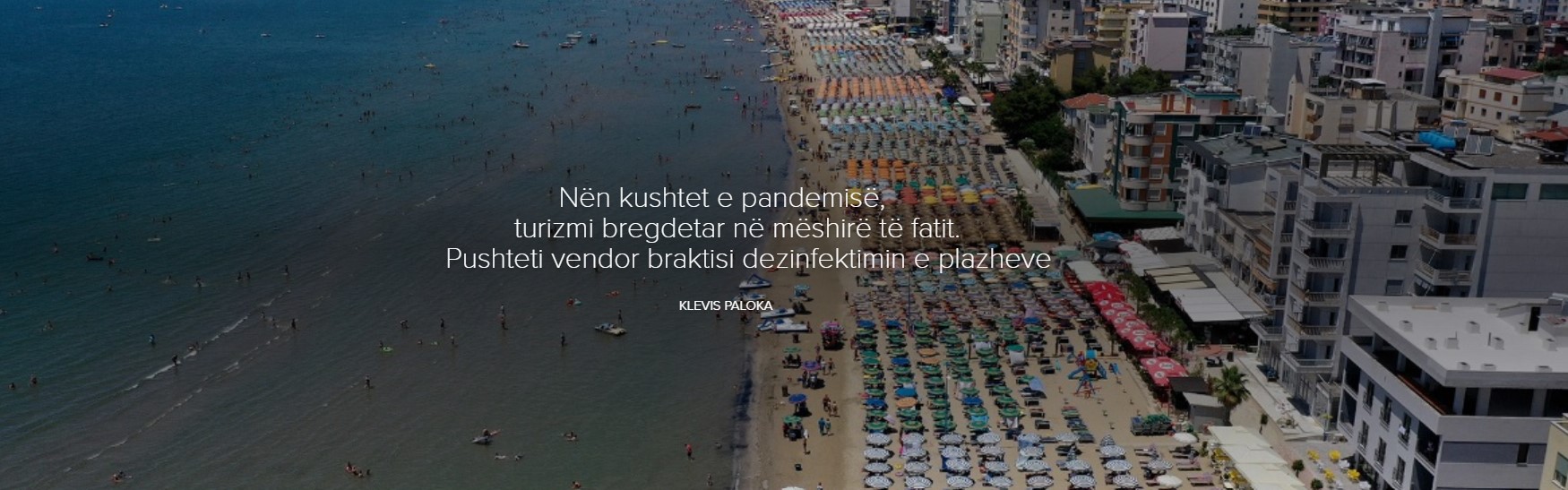
But what stands out is the fact that the head of the government left out of the video the fact that there are also some areas on the Albanian beaches, which are marked with red dots because of the bad quality of the water they have. In total there are 5 beaches which have a poor water quality due to the pollution caused. Two of these beaches are located only 35 minutes away from the capital, in Durrës. The beach in the area of Currilove and the one behind the canal in Plepa, have been classified as red zones in the report of the European Environment Agency.

Beaches that have been known to be polluted for years, but are not abandoned
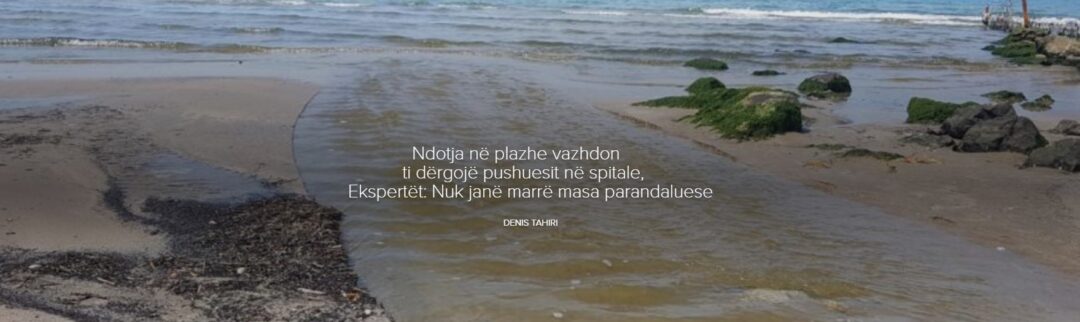
On the beach behind the canal in Plepa, pollution is detected by the senses. A canal several tens of meters long, has a direct discharge into the sea. Just a few meters further from this channel, there are dozens of citizens who are enjoying the first days of the beach.
Petriti, an elderly man, around 70 years old, has chosen to spend his first days at the beach this year right on the beach near the canal, but in conversation with him we understand that his choice is limited by circumstances.
" The reason I come here is because it's close to a house I bought a few years ago. We used to go to other places, but now we're old, we don't have the strength to move anymore," he says, turning his head back toward the canal.
" Look, is this normal?!", he says, pointing to the canal. " There is definitely a health risk here, a risk of various diseases. A lot of sewage and various dirt is dumped here. I have heard many cases of people having skin problems, so I don't go in the water either, I just sit and enjoy the sun. But it's not just this area, you just have to take a walk along the seashore in Durrës, and the dirt is visible," he concludes.
Meanwhile, the manager of a nearby bar-restaurant also became curious about the conversation with Petriti, who openly shows his dissatisfaction.
" To me it's absurd. It could be processed sewage and everything, it could even be cleaner than the water we have in the tap, but there's no way it could be left like this. At the very least, they should have covered it. It's shameful that tourists come and are faced with this sight. We've had many cases where vacationers have come to spend the day on the beach and as soon as they saw that the canal was here, they left ," he says.
A vacationer betrayed….
On the beach behind the channel in Plepa of Durrës, which is considered a red point, i.e. below the parameters of the European Union for water quality, there is no sign that can warn citizens of what they risk if they swim on that beach.
Hasan Stafa, of the Consumer Protection Association, says that warning signs are a must and should be placed in an area like this or similar ones. He even suspects that the number of beaches with a water quality below EU minimum standards is higher than reported.
" There are not 5, but 9 such beaches that are above the permitted pollution norms. Unfortunately, the pollution is caused by people, by the negligence and mismanagement of the administrative units in these areas that are tasked with keeping the environments clean," he says.
Mr. Stafa also talks about the measures that should have been taken to clean these beaches and find a solution to stop polluting discharges being allowed.
" It is precisely the sewage systems, especially in the Durrës area where there is a weak infrastructure that should have been eliminated by the institutions. The discharge of sewage, whether in the city of Durrës, in the beach area, in the Currile area, in the Rock of Kavaja, in the Robi Mountain, are certain points where intervention should have been made to stop these discharges," mentions Stafa, adding that it is the responsibility of the state authorities that have brought this problem to this situation.
The staff also talks about the measures that could have been taken to minimize pollutants on the beaches, where it mentions different actions for beach cleaning. But he says that stopping sewage discharges is something that cannot be done with actions, but it is necessary to set up an infrastructure.
On the other hand, dermatologist Monika Fida also shows the health risks that vacationers may face if they swim in these polluted waters where Escherichia coli and Intestinal enterococci bacteria can cause infections.
" They can cause testicular infections, plus many of these pathologies that occur in water, whether in freshwater or other waters, can manifest with a group of skin infections," says the doctor, who insists that these pathogenic skin infections are contagious bacterial infections.
" In the summer, as a result of polluted waters and frequenting beaches with polluted waters, as well as the overcrowding of beaches and swimming pools, various skin pathologies manifest, which are biodermatitis. I can say that there are some pathologies that can be much more complicated, they can cause sepsis, but there are many factors that affect each person's immunity," says the doctor, who raises the alarm for patients who have wounds on the skin and that these wounds become "gateways" for infections. She also states that in rare cases, the problems caused by these infections can worsen and hospitalization of the affected person may be necessary.
Not only water, but also dirty sand in some areas
A few kilometers from Durrës, another beach, where its sand is dirty, is that of Vilbashtova. This is a not very well-known beach area, but recently, local and foreign tourists have turned it into one of the main destinations to visit. Along with tourists, tourism Services, such as bars and restaurants, have also appeared.
Although a beach that nature has blessed with great beauty, the hand of man has left only remnants. Bottles, cans, plastic bags and many other types of waste are what lower expectations as soon as the large expanse of sand appears before the eyes. At the bottom corner of the sand, there is also the mouth of the Shkumbin river, where for years, many fishermen have settled in it. And in this case, no one else better than the fishermen can talk about the pollution that comes from the river and ends up in the sea.
Rigersi, a guy no more than 35 years old, has been a regular fisherman in this area for several years. But during his years of experience, he says that the amount of fish has changed, even the lack of fish has been replaced by garbage.
"There are times when we raise the net with only garbage. It's enough for a little wind to start or a little rain to fall and we know very well not to lower the net in vain because we will only pull garbage out of the water ," he says, and turning to the sandy shore behind him, he adds: "If you continue a little further, you can see how even the sand is filled with garbage, when it's all gone, imagine what the Shkumbini estuary is like."
A few tens of meters above the Shkumbin estuary, we also meet Alush Kashar, a 70-year-old man who has turned fishing into his main daily activity for 10 years.
"There is not a single inch of the banks of the Shkumbini that I have not been to, there is only garbage everywhere. It is the residents of the areas along the river who dump their waste into the Shkumbini and when the water comes, it completely washes it away. At the mouth, you can see very clearly what the waste is like," says the 70-year-old, who when asked what he catches most often replies with irony, "I rarely catch fish, but I have caught garbage from everything, even the calamari . "