


Author: Klevis Paloka
As soon as you arrive in the center of the village of Vërri in Fier, on the left a bar opened by a resident has turned into a place where young people not only "kill time" but continue to talk about the incinerator that began to "sprout" in this area in 2017. " Nobody asked us, they continue to work and no one even paid attention to us. We protested and nothing happened, " says one of them. According to him, the discussions have now shifted to the questions that everyone throws on the table. Each of the young people complains that the residents of Vërri were not given any basic information about whether there will be impacts on their health during the disposal of tons of waste, and what profits the residents have from this investment. Moreover, they were not even considered even though they continue to oppose it and a series of letters prove how the investment began before the file was closed.
" They work at night, they have even changed their route, they no longer pass through the main road so as not to have conflict with us, but come from a secondary road ," says one of the village residents.
What the file proves about the history of the incinerator in Vërri is a matter of conflicting data that supports the attitudes of the residents, who despite this lost in the first instance of the judiciary.
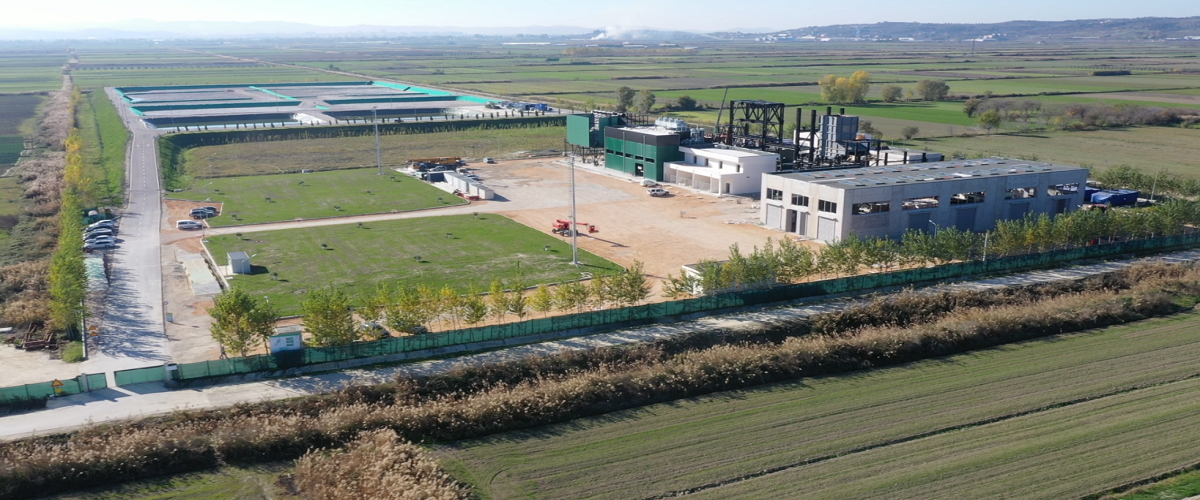
Although an incinerator was to be built in the village of Vërri, the environmental statement for the facility was signed on May 8, 2017, even though the company had started the works two months earlier. What deepens the scandal even further is the granting of the environmental permit, which is dated April 14, 2020. So three years late even though the effects on the environment are of a high sensitivity.
The permit, together with the environmental declaration, turn out to be one of the most important documents that had to be completed after the agreement of the residents of Vërria was reached.
The document states that the suggestions and comments made by the Technical Directorate of the Ministry of Environment for the deposit of ash, which comes out of the process of the incineration plant, have not been reflected. Also, the written data prove that the subject has held public hearings with the residents of the area who did not sign it and did not agree with the construction of this plant. In the end, it is said that since during the operation phase, this activity will have effects on the environment, it must also be subject to the procedures for equipment with an environmental permit. As the written history shows how the environmental statement was issued on May 8, and the permit was approved on April 14, 2020, the "Albanian Center for Quality Journalism" tried to contact representatives of the company that started work 3 years ago, but the data published by them was not available.
The route followed for the permit
In the letter provided by the "Albanian Center for Quality Journalism", in the environmental statement, the data from the National Environment Agency are given, how it was done to grant this permit to "Integrated Technology Waste Treatment Fier", sh.pk, which is also the company that won the concession for the construction of the Fieri Incinerator.
The company that won the Fier incinerator concession was established just three weeks before the contract was signed . But despite winning a 6-year agreement worth 27 million euros, it turns out that the shares were sold for a value of 30 thousand new leks.
The concession was signed on October 24, 2016 by "Integrated Technology Waste Treatment" with administrator Loran Dusha. As its shareholders turn out to have been "Integrated Technology Services" with 100 percent ownership of Klodian Zotos and "Energy 2 srl", the latter an Italian company.
According to the documents, only 7 days after the signing of the contract, 20 percent of the shares of "Energy 2 srl" were transferred to the company "Ndërtim Montimi Patos", for only 20 thousand lek (20).

So, to the same subject, the company "Integrated Technology Services" sells 10% of the shares for 10 ALL (10).

And on November 3, 2016, in the KKB results, the departure of the partner "Energy 2 srl" is noted.

The company "Integrated Technology Services" also has the majority of the shares with the main administrator Klodian Zoton, while the company "Montimi Patos Construction" has as administrator Ellton Kollozin.
Although it has not yet started work, in the last two years alone, around 1.3 billion new lek have been transferred from the state budget to this company.
Ignored residents
The village of Vërri has about 1000 thousand inhabitants, while only 20 families have moved since the beginning of the construction of the incinerator, as their economic activity was located very close to the place where the sudden investment "grew up".
" Some families have their own land and their own economic activity where they generate income 400 meters away from the place where the incinerator is currently being built. Because this incinerator will damage them a lot due to the ash it will burn and their products will not be like before, they have demolished their greenhouses and emigrated to Italy ," former mayor Bualli tells the "Albanian Center for Quality Journalism."
The former chief Andon Bualli, who claims that he left his job after taking the matter of the construction of this incinerator to court, shows that the land where the investment was made is the first agricultural category and it is not allowed to build there.
" I was fired as mayor after I gathered all the residents together and opposed this project, but also because I sent the case to court," says the former mayor of Vërri. While the land, based on the compensation law, has passed to the former owner, Nevin God o. "
But Bualli further insists that this land had no owner and that the person who is said to be the owner of this land has been expropriated and that the residents do not know him at all.
" The land has not been worked for many years and at the moment this incinerator was going to be built, their owners suddenly showed up ," said the former village headman.
The environmental statement states that the land where the incinerator is being built was owned by Nevin Godo, who transferred it to the state on December 28, 2016.
Problems
The construction of the landfill has started without the approval of the residents. Residents of the village of Vërri have refused to participate in the Public Hearing held on 20/03/2017, as according to them, signs were placed in the place where the landfill is being built and the entire area was surrounded. Since the residents refused to sign for the construction of this project as they were against it, the relevant authorities held a public hearing in the city of Fier, where 33 people participated, but none of them were from the village of Vërri. Even in the list of those who have signed for the construction of this incinerator, they are not related to the village. The only person who has signed as a resident, Dorela Ikonomi, does not belong to the village of Vërri according to them, and that they do not know her as a person.
" The first violation began with the Public Consultation, as all residents of the village of Vërri, but also of the surrounding villages, refused to participate in the public hearing. Public consultation has not been held to this day ," says village resident Kleant Ngolemi.
" We do not agree to any kind of consultation because you have put up signs, you call it a good thing, that's where the conflict with the residents began ," this was the statement of the residents at that public hearing, Ngolemi further recalls.
" We have sent a petition of 1100 signatures to the National Environmental Agency and the Ministry of Environment and Tourism and to the Supreme State Audit Office and it has not been taken into account ," adds Ngolemi for the "Albanian Center for Quality Journalism."
So, according to the residents, this is where the first violation for the construction of this landfill begins, since the Ministry of the Environment and other local authorities have not implemented national and international laws such as the "Aarhus Convention" for the right to be informed and for public participation in making decisions, the EU Directive on Environmental Impact Assessment and Albanian VKM No. 994 on Public Participation in Environmental Decision Making (2008).
Another problem is the coordinates. The location where the incinerator was to be built was wrong. The distance from the center of Fier to the actual project coordinates was several kilometers shorter than the claimed location where the incinerator is currently being built.
Already turned into experts, the residents also count other problems. Another problem is that the Fieri incinerator was built on an agricultural land and that the feasibility study of the land is in Portëz of the village of Mbyet and all the analyzes for the construction of this facility as well as the soil was taken in the other village, a resident of the village tells "Albanian Center for Quality Journalism". Even according to the residents of the village of Vërri, the construction of the incinerator has failed twice because the land is agricultural and does not support such large constructions.

The word of experts against
According to the Albanian-German expert Lulzim Baumann, one of the problems in the environmental permit is the solution offered for the ash produced after burning waste.
" Another problem in the environmental permit is the solution offered for the ash produced after the incineration of waste. After the incineration of waste, 15% is ash, meaning that from the incineration of about 70,000 tons per year, about 10,500 tons of ash with a hazardous composition will be produced. In the non-technical summary of the Environmental Impact Assessment for the Fier incinerator (Emc studio), the solution for the ash is to deposit it in landfills. Knowing that part of the ash is toxic waste and requires special treatment, we cannot send it to a landfill together with the rest of the ash because it would cause various health problems for the surrounding community ," says Baumann.
The expert also indicates that the environmental permit does not specify how much air pollution is in the Vërria area.
" One of the other prominent problems in the environmental permit is the measurement of air pollution in the Vërri area. The risk posed by toxic fumes is very great for the environment and human health. In Vërri, the incinerator construction area has no data on air pollution. The closest data is in Fier about 7 km away where air pollution is beyond European standards. Along with the construction of the incinerator, it is clear that air pollution will become an even more serious problem. This raises the question: How can we build an incinerator in an area where data on air pollution is lacking and how will we ensure that the air in the area will not be polluted by the incinerator or any other previous source. This issue should have been explained very specifically in the environmental permit, an explanation that is missing in the permit for the construction of the Incinerator in Vërri ," said the waste management expert.
While the environmental expert, Olsi Nika shows that Albania has overturned the waste management strategy itself, doing the first, what should have been the last in the strategy.
" Albania has inverted the pyramid that it has in its own strategy by moving to the last link in the hierarchy, which is incineration, while according to the strategy that Albania has adopted, but also according to EU practices, incineration is the last link for waste. Albania uses the last link, while it has not implemented the steps that should be used at the beginning, such as the reduction, reuse and recycling of waste ," says environmental expert Nika regarding the method that the Albanian government is using for waste management.
Regarding the incinerator that is being built in the village of Vërri, Nika says that it will have a negative impact not only on the environment, but also on the population of this village, even if it is operated at full capacity, it will also have an impact on the areas of others.
" The operating capacity is several times higher than the needs of this area, and this could turn into a hotspot for pollution in the area. The incinerator will have a direct impact both in terms of the environment and health for the residents of the village of Vërri, if there is a release of carcinogenic substances, but in addition to the village where the incinerator is located, it will also have consequences for a larger area, because if it is operated at full capacity and the radius of the negative impact on both the environment and the population will expand to other areas ," says Nika for the "Albanian Center for Quality Journalism".
Also, the environmental expert Nika expresses skepticism about the transparency that is made for the public by the state authorities, but also by the companies that build them.
" State authorities do not make the contracts they sign with these companies transparent, but they also do not make the technology they will use to burn waste transparent. Even though they are paid for with people's taxes, it is difficult to enter these incinerators to see how they work ," Nika concludes.
Protests and trials
One of the main reasons for the protests that the residents of Vërria are carrying out is the lack of information and the fear of the danger that will threaten them from the construction of the incinerator in the "heart of Myzeqe". The residents of Vërria have sent a letter to the EU Delegation in Albania, which has replied that they fully share the concerns of the residents and that the above-mentioned violated points are very important for the country's progress towards EU integration.
Lost in the first instance of the Administrative Court, the residents of Vërria continue the battle in the Administrative Court of Appeal. Even though they have little faith in Albanian justice, the residents of Vërria promise that they will follow him at every level of the Court, even if necessary, they will also send him to the Court of Human Rights in Strasbourg.
But what happened during these months cost some of them, who, after opposing the start of the works through protests, were placed under investigation by the prosecutor's office of Fier. This is one of the reasons why some of the young people speak anonymously, as they are afraid of any "punishment" they may receive later.

But Ngolemi says that this was one of the reasons why they decided to take the case to court. " Since there were only a small handful of people left and since we had all the documents that refuted the construction of this incinerator, we decided to take this case to court ," he says.
With the help of the OSFA Durrës Law Clinic, the former headman of the village Andon Bualli together with seven other residents started the process initially with the request for lawsuit insurance, until the case is resolved on the merits. Their request insisted on blocking the works until the court made a decision, but they lost while securing the lawsuit. Then, the case was registered in the Administrative Court of First Instance, Tirana, on December 12, 2018. The decision on this case was made on June 17, 2019, where the judge Afërdita Maho declared the claims of the residents as unfounded.
The residents have continued the legal battle by sending the case to the Tirana Administrative Court of Appeal. The case in this Court was registered on July 30, 2019. The Court accepted the expedited request of the residents of Vërria to open a hearing, as usually a case to be brought before the Administrative Court of Appeal is delayed for over 3 years. So far, two counseling sessions have been held on November 26 and December 3, 2020. According to the official website of the Administrative Court, the date of the next trial was announced on December 23, 2020. The rapporteur of this issue is Alkelina Gazidedja, while the members are Ardian Dvorani and Altina Nasufi.
The incinerator according to the expert Baumann.
The incinerator planned for Fier has a larger capacity than the entire amount of waste produced in Fier. The daily production of waste in the city of Fier ranges from 100-137 tons/day of urban waste, while the annual production goes up to 50,000 tons of waste per year. The largest part is organic waste with 46%, 15% plastic and 15% paper. (Territory Development Strategy document, drawn up by FIER Municipality).
The incinerator has a capacity of 180-200 tons/day, while a total of 165 tons/day of waste is produced in the district of Fier. What about recycling? What do the 4 recycling companies in Fier say? What about European standards? If we respect the objectives of the Republic of Albania by recycling and composting up to 55% of municipal waste by 2020, it means that only 46% of the waste remains to be burned, which in the case of Fier is 23,000 tons/year, which will it covered only 33% of the incinerator's capacity. This means that the capacity of the incinerator would require more than 3 cities the size of Fier combined.
A simple comparison of the Fier incinerator and an incinerator in Germany, according to the European standard in Germany only non-recyclable waste is incinerated, which is about 11% of the total waste (Umveltbundesamt, 2017).
Electrical, hospital or toxic waste has a different process. The TAD incinerator in Germany cost 172 million euros, 36% of the costs, i.e. 61,4 million euros, cost only the air filter system which serves to eliminate the fumes with the aforementioned gases that are very dangerous for human health. The TAD incinerator has a capacity of 160.000 tons/year and has created only 59 jobs. Based on the TAD incinerator, the Fier incinerator has 45% of its capacity at 66,000 to 73,000 tons/year. According to this simple calculation, the Fier incinerator should cost about 78 million euros, of which only 28 million euros would cost the filtration system based on German and European standards. With this amount of money, only one incinerator without filters can be built and the impact on the environment will be the same as if we burned the waste in nature only this time surrounded by 4 walls. The incinerator in Fier that burns almost half organic waste will need a lot of diesel or oil in order to burn it.