


Author: Merxhan Daci
" The resistance package is a minimal effort, I would call it, up to this point, because the government still doesn't have a clear idea of what impact the crisis has had," insists Bardhi Sejdarasi, an economic expert, for "Sinjalizo." He believes that all of this is a minimal effort, coupled with the lack of knowledge of how much the crisis will really affect citizens' pockets . "To my knowledge, another package is being prepared ," predicts Sejdarasi.
The expert's assessment is related to the position taken by the government in March of this year when, pushed by the energy crisis and the increase in prices, the government allocated the additional fund of 26 billion lek or about 260 million dollars. All this amount was declared to go to the compensation of the lights and to the package of social resistance.
But how much can this package cushion the effects of the crisis and the increase in prices it has brought?
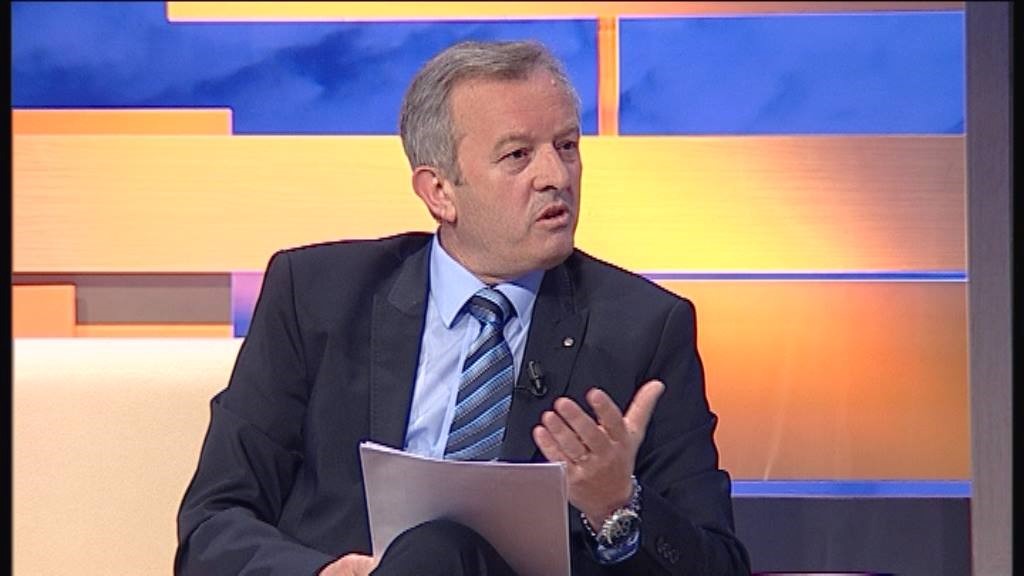
Sejdarasi says that taxpayers' money for the moment should go to companies to be subsidized, in order to ensure sufficient supply of some products as the crisis is making it more difficult.
"The chain effect that comes from missing products on the market is very large. The budget has eliminated part of the planned expenditures at the beginning of the year, which amount to no less than 10,5 billion in the first phase and up to another 5 billion in the future. The great impact of the lack of public spending has effects on the market, such as unemployment," said Sejdarasi.
The consequences that are not calculated are for the citizens
Endrit Nezaj is a 25-year-old young man who lives in Tirana. He is done with finance and says for "Sinjalizo", that the crisis situation reflected in the increase in prices has brought a rather difficult and uncertain situation for him and his generation.
"The most important problems for this period would be the high level of prices we are facing, unemployment and low wages in some sectors. The increase in the prices of food products as well as the price of oil forces a large part of the youth to spend more money on basic things and they have much less to spend on entertainment, entertainment and other activities.
Endriti further shows that many young people like his work, this situation is pushing them even more towards unknown paths, one of them, leaving.
"I think a bigger impact and discouragement will happen to that part of young people who actually work with average wages and cover all expenses themselves, including rent expenses. The standard of living for these young people will be greatly changed and unfortunately not for the better and may put them in front of other solutions and one of them is leaving the country."
The agriculture budget over the years, what the figures show
Agriculture is the largest sector in terms of importance in the contribution it makes to the Albanian economy. However, the attention received over the years has been insufficient and "unfair" as far as it contributes to the economy and employment.
If we look at the numbers, for the year 2022 the government has thought of 12 billion ALL as budget expenditures for the agriculture sector. Meanwhile, last year this figure was 12,8 billion.
INSTAT data show that in 2021 the agriculture sector grew by only about 0,3%, one of the lowest increases.
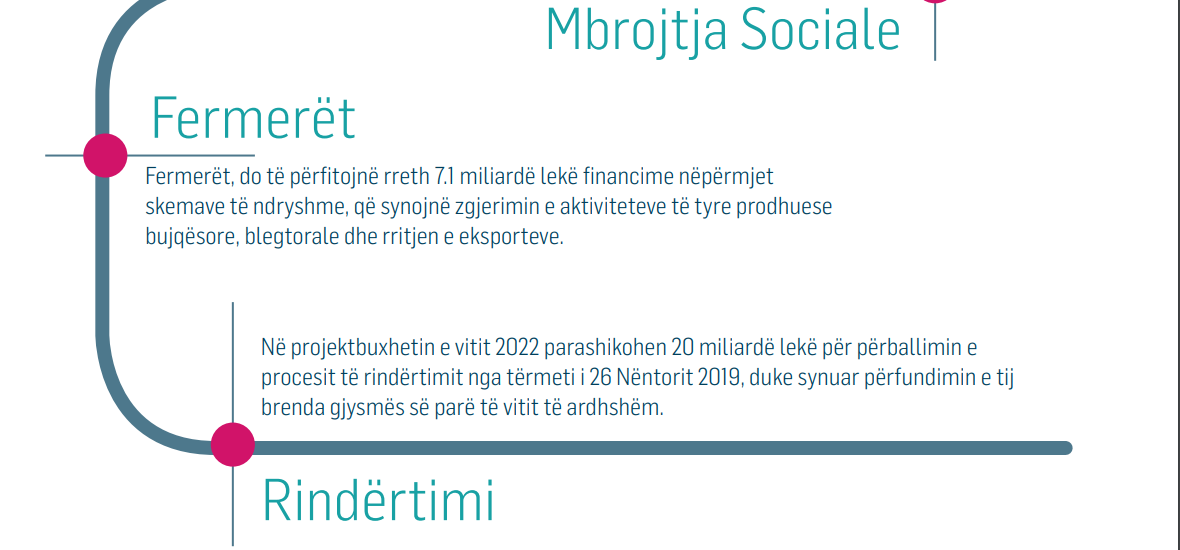
But the finance ministry in the "Budget for Citizens" report for 2022 says that it prioritizes farmers. According to the Ministry of Finance, they will benefit from 7.1 billion ALL of financing through various schemes, aimed at expanding their agricultural and livestock production activities and increasing exports.
The first farmers...
However, many farmers hope to leave the country, as life has become difficult.
Durim Nika, is 30 years old and has been working with livestock for several years now in the area of Peza Helmës on the outskirts of Tirana.
" I have 400 goats, we have had ups and downs, some good and some bad. There is no continuous support for our sector. One year there is support, another year there is none. For example, I hear people saying no to free vaccines, no to other free things for livestock, I really don't see where these free things are ," says Durimi.
" We'll keep going ," says Durimi when we ask him what his plans are for the future and if he sees hope for his business.
The health budget and the truth on the ground
The figures show that within four years the budget funds allocated to the Ministry of Health have increased by 27% or about 16 billion ALL. 80% of the increase in these funds went to additional funding for health programs.
However, there has been constant criticism against the Ministry of Health, for example, for the management it has made of the Covid-19 pandemic.
There are 15 additional deaths in Albania in the two pandemic years, which experts attribute to the mismanagement of the pandemic, and as a result, thousands of Albanians lost their lives to the virus and the health consequences it leaves behind.
Osman Stafa, a journalist by profession, recently published an investigation for Investigate Network Albania regarding the lack of medicines. Dozens of children with serious, tumorous diseases face a lack of chemotherapy drugs. The QSUT does not admit the lack of these life-saving medicines, but data shows that some of these life-saving medications have been missing for years.
"My investigation began in November of last year when I learned from family members that there was a shortage of medications in the Pediatric Oncology Department at the University Hospital. The parents asked me for help. The family members told me all the hardships they had gone through, that they had taken out loans, sold their land, their livestock to buy the children's medications. The problem was obtaining the medications through smuggling. Even when the family had the money, they could not find the medications. Then realtors came into play, who provided the medications at very high prices. The climax was when a child in the hospital was told by doctors to leave the hospital because there were no medications," journalist Stafa told ACQJ.
But is drug shortages an isolated phenomenon? Osmani does not think so.
"The lack of medicines is not an isolated problem at all, it is a very big problem, but one that is not well addressed by the media. Only during these days, different citizens from different pavilions have written to me endlessly about the lack of medicine, It is hidden because no one talks about it."
For Taulant Mukë, an epidemiologist in Switzerland, health in Albania has several problems.

"There are several priorities that we need to focus on, first of all, human resources, specialists in both large centers and rural areas. Covid-19 showed that we do not have specialists in many fields. The foreign market, mainly German, is taking away those we have. It is necessary to look at the salary system. It is also necessary to have a meritocracy system. So, employment should not be done by politics but by the abilities of the individual. It is unfortunate that we only have one university hospital center in the country, which makes it a monopoly and is controlled by politics. There is also a great lack of equipment in Albania," Muka told "Sinjalizo".
How much does the European Union and Albania spend on each sector, but do we have priorities in the economy?
According to Open Data Albania data , in the European Union countries the average public expenditure per capita is a total of 12,684 Euros. In Albania the state spends nine times less per capita. So what the state spends per capita, to provide assistance or pensions; education; health; order and security; P-public investments; costs for administrative Services and even costs for functions such as culture; entertainment or environmental protection in the country, is nine times less than what the European Union countries offer on average.
For Social Protection, where old age or disability pensions are included, the European Union countries have an average per capita budget expenditure of 5,256 Euros. While in Albania the state spends 11.5 times less or 455 euros. Likewise, the financing that Albania makes for the health sector is 13 times lower. Education also has a ratio 8 times less in Albania compared to EU countries.
Not only in nominal value but also as a ratio of expenditure for budgetary functions against gross domestic product, Albania has an inferior position. For example European countries spend on public functions about 46.6% of the gross domestic product value. Albania spends 29.3%.
From the comparative analysis of functional expenses in relation to GDP, in Albania and in the European Union for 2019, it results that social protection is the function with the highest budget support, although with a relatively high change, in Albania about 9.3% of GDP while in the EU about 19.3% of GDP. Annual expenses per inhabitant in Albania were 455, while in the EU 5,256 euros.
The second function with the highest share of expenditure in the EU is health with 7% of GDP, while in Albania health expenditure is around 3% of GDP.
For housing and amenities, spending in Albania results in 2.2% of GDP or 105 euros per inhabitant, while in the EU it has the lowest weight at around 0.6% of GDP or 158 euros per inhabitant.
In Albania, the function with the lowest support is environmental protection, where expenses in 2019 were less than 0.2% of GDP or 9 euros per inhabitant, while in the EU 214 euros per inhabitant.
Does the Albanian government and state have priorities in the economy that are therefore reflected in the budget cake every year?
Economic expert Bardhi Sejdarasi says that Albania suffers from a lack of clear economic priorities and strategies.
"Albanian governments have changed priorities time and time again. This is because at one point one sector comes to the fore and then another. We have had processing, agrotourism, that is, tourism. We have not prioritized the growth of domestic production and it must be stimulated. We do not have a strategy to say what economic model we have today, what priority sectors we have and how we finance these sectors. Today, no one can tell you that we are following this economic model. Suffice it to mention that to date, 7 strategies have been drafted for the development of tourism, another 7 for exports. And no one can tell you what the impact of this strategy has been on a sector. We have a very big problem with the management of the economy and the way we set priorities ," Sejdarasi told "Sinjalizo".