


Ida Ismail
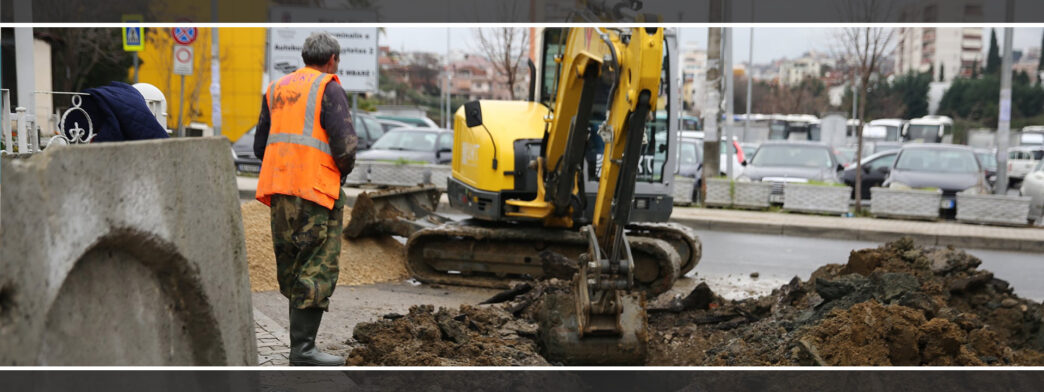
While Tirana “grows” at a rapid pace and its population increases year after year, the sewage infrastructure is lagging behind real investment needs. A recent audit by the Supreme State Audit Office (SSA) highlights a worrying picture: Low investments, inefficient management and serious risks to the environment and public health.
The audit of the Supreme State Audit Office (SSA) highlights that out of 7 billion lek or about 70 million euros of investments made in a decade by Tirana Water and Sewerage, the amount of investments in the sewerage system remains far from real needs.
The SAI finds that from year to year there has been no harmonization of the values invested in sewerage, fluctuating in some cases from 2% to 58%.
"The funds intended for the improvement of the sewerage network of the city of Tirana peaked in 2015, where the share of these funds accounted for 58% of annual investments, while in 2022 the lowest percentage of investments for the improvement of the sewerage system was recorded, with only 2.1%, despite being the year with the largest total investment budget (around 2.8 billion lek). For the entire period 2015-2024, the total investments of UKT sh.a. are 7.038 million lek and those for the sewerage system only 13.2% of them, or 927 million lek," the audit states.
The published report by the Albanian Supreme Audit Office (KSAI) shows that the sewage infrastructure is old, often damaged and in many areas operates at maximum capacity, causing flooding during heavy rainfall and direct discharge of polluted waters into the Lana River and the Tirana River.
The SAI highlights that by 2022, 50% of the urban population will not have safely managed sewage systems. Another concern identified in the audit is the fact that 30% of the population uses systems not connected to the sewage network (septic tanks), often without further treatment.
Wastewater flows directly into rivers
According to the KLSH report, polluted waters in the capital continue to flow directly into rivers, including the Lana and the Tirana River, without treatment and without control. The Supreme State Audit finds that the lack of institutional coordination and sufficient investments, in open contradiction with the National Water Supply and Sewage Strategy 2023-2030, has led to a continuous deterioration of the situation.
"Infrastructure development has not kept pace with rapid urbanization, creating serious risks for environmental pollution, flooding, and public health," the audit emphasizes.
The KLSH audit shows that the Lana River has about 85 discharge points that flow into it, most of which are located in the systemized segment, but despite this, during heavy rainfall, the sewage network fails to cope with the volume of water, causing flooding in several areas of the capital.
For decades, Lana has been an open sewage channel in the heart of Tirana, as a result of successive urban interventions and the lack of functional investments in sewage and water treatment. The concreting of the riverbed and the expansion of the city stripped the stream of its natural function, while the direct discharge of wastewater eliminated biological life and created chronic pollution, strong odors and health risks.
Since the 80s, technical solutions for water supply and construction of treatment plants have been proposed, projects have been drafted and funding of hundreds of millions of euros has been announced , but most of them were never completed.
The SAI report highlights a bitter reality: Tirana is expanding on an overloaded, underinvested and mismanaged sewage infrastructure, causing the capital's residents to face environmental and health consequences./ acqj.al