


Author: Fatjona Mejdini
Iljaz Mehmeti, a businessman in Tirana, lost his recycling business in 2017, putting the key to a modern and ecological plant that was considered among the most advanced in the Balkans.
For years he exported to Italy raw materials for the textile and packaging industries.
As a result, around 30 people lost their jobs, at a time when income was also cut off for the 2,000 recyclable waste pickers who supplied his business with raw materials.
"I don't forget the beginning of 2017, when the municipal police came and retaliated at one of my waste collection points. There I realized that the will to keep this business alive in Albania was zero", he said.
The measures of the Municipal Police in Tirana against the collectors of recyclable materials and the wholesalers who used them as raw material started at the beginning of 2016, in the name of revolutionizing waste collection.
The Mayor of Tirana, Erion Veliaj, while signing an agreement with the Municipality of Verona in January of that year for the creation of a company for waste collection and management, emphasized that the capital would now separate its waste at the source.
The initiative was considered important, at a time when separating waste from the bin helps recycling – a process considered vital to reducing waste and protecting the environment. Also, this process was expected to give the city a European feel and generate income and employment.
A few months later, Eco Tirana was created, the joint company of the Municipality of Tirana and a public company of the Municipality of Verona. This company, in addition to cleaning the capital, was also responsible for the separation of waste at the source and their differentiated collection.
At the same time, the mayor Erion Veliaj intensified the fight against individual waste collectors, from administrative fines to criminal prosecution as waste thieves. According to him, the source for the recyclers would be only the waste collected from the separation at the source.
He introduced the first bins in Tirana, which provided differentiated spaces for waste, also launching an awareness tour for students and promising that 144 of them would receive lessons on the values of recycling.

The investigation of the Center for Quality Journalism shows that, for at least two years, Eco Tirana has benefited from the Municipality of Tirana more than 500 thousand euros for the service of collection of differentiated waste at the source, but without actually offering this service on the ground.
Enthusiasm was apparently not dampened by the fact that at the same time the Rama government officially opened the way for the construction of an incinerator in Tirana that would burn an amount of 550 to 800 tons of waste a day - despite the announced initiatives sounding contradictory. .
Today, when two years have passed since the promise to separate the waste at source, there is no sign of realization in Tirana. The nearly depreciated segregated waste bins are the only reminder of the mayor's ambition.
On the other hand, the recycling business in the country is assessed in a very difficult situation, where the only solution remains the import of raw material to recycle or the use of recyclable waste that is generated by landfill separation. The latter are considered contaminated and almost unusable.
While some have found as a solution the closure or suspension of the recycling activity, hoping that the situation will change, others have transferred their business outside of Tirana, where the collectors of recyclable waste are still not persecuted by the local government.
Meanwhile, the country's ability to recycle has decreased significantly compared to the past.
According to the Institute of Statistics, during 2017 only 17,4% of waste was recycled, while in 2013 the level was 24%.
The average amount of recycled waste in European countries ranges from 45% to 50%, with the aim of moving towards a zero waste philosophy, where everything is recycled and zero waste is sent to landfills to be decomposed or to incinerators to be burned. .
A failure warned
The municipality of Tirana emphasizes that, as a result of the campaign for the separation of waste at the source, it placed 383 containers and 82 points for the collection of small batteries in the city.
The situation on the ground shows that in almost none of these containers, citizens do not dispose of waste in a differentiated way.
But, despite this, the Municipality of Tirana emphasizes that the source separation process started in December 2016 and hints that it continues normally and is already focused on taking citizens' waste from their homes.
"Eco Tirana, which operates in the Red Zone (middle ring), has implemented the differentiated collection of waste, as well as activated the "door-to-door" waste collection process.
This service is a very important element in the minimization of waste at the source", - it is emphasized in a response of the municipality to the initiative.
However, this initiative brought an economic consequence on the citizens of Tirana. According to the contract of September 2016 between the Municipality of Tirana and "Eco Tirana", with a term of 25 years, in addition to the payment of 2.5 million euros per year for the cleaning Services of the city, an additional 10% is foreseen at the moment when the differentiated collection has started of urban waste.
As a consequence of this clause, until today, the Municipality has paid the company more than 500 thousand euros - for the years 2017 and 2018 - for the differentiation of urban waste, at a time when there are no traces of this process in the city.
Vullnet Haka, the representative of the Association of Recyclers, emphasized that, at the moment when the Municipality of Tirana announced this new strategy, the interest of recyclers was high.
"As recyclers, we asked to become part of the Eco Tirana joint stock company and give our contribution and experience in the part of waste collection that came from special bins. This request was rejected and no information was shared with us on how this process would be carried out", he said.
According to Haka, the following months showed that the initiative was propaganda and superficial and there was no well-thought-out strategy on how it would actually be carried out.
"The Municipality and Eco Tirana did everything to make the waste collection and processing process a closed and non-transparent cycle", he said.
Leonard Olli, a member of the Democratic Party in the Tirana Municipal Council, emphasized that the failure was due to the monopoly situation in which the company Eco Tirana operates for the collection and management of waste in the capital.
"Basically, the municipality as a partner is one and only with the company and there is no administrative or legal mechanism to control the implementation of the terms of the contract.
In our judgment, it was and remains only a mega-corruption affair, which created a monopoly situation in the field of recyclable waste", he said.

Ened Mato, an environmental expert and president of the Ecovolis association, has been one of the pioneers of the differentiation of waste at source.
In 2012, he undertook a tour throughout Tirana, from Ali Demi to Kombinat, but also in schools and kindergartens, to show citizens that differentiation in source helps recycling, which is necessary for environmental protection.
He thinks that the initiative for resource sharing came to an end, at the moment when the government started plans for the construction of an incinerator in Tirana.
"For 2-3 years, separation at the source has been discouraged, with the idea that these will all be burned together (in the incinerator). Here, many organizations that were pro-recycling were confused," he said.
Recycling, step by step
Recycling is considered the best way to manage urban waste, as it reduces its amount in the environment and in turn reduces the demand for natural raw materials.
According to the environmental expert, Lavdosh Ferruni, the failure of the municipality's waste strategy is considered not only a big step backwards for ecological Tirana, but also carries an economic cost for the city where 800,000 inhabitants live.
"Today, a ton of plastic costs 300 euros, after recycling and if processed even more, the value goes up to 800 euros. Imagine how many tons of plastic and other recyclable materials are generated in Tirana", said Ferruni.
According to the Institute of Statistics, during 2017 in Albania, 1,2 million tons of waste were managed, at a time when the average generation per inhabitant was 386 kg, a figure which has an increasing trend during the last years.
Ferruni emphasized that it is ridiculous that the residents of Tirana pay for the concession of the incinerator that is expected to be erected to eliminate undifferentiated waste, at a time when the economic potential of recycling, from which the city profits, has stopped.
The fact that incineration is an added cost for Albanian citizens is also emphasized by the experts of the EDEN center (Center for Development, Education and Networking), who are preparing an analytical report within the project for stimulating citizen participation in environmental issues. supported by LévizAlbania.
"Incineration with energy recovery is a form of waste recovery, but for Albania's conditions it is a very expensive option, the most expensive possible, which would require an increase in family fees up to 80 Euro/family per year, where it is currently 12 Euro/family/year on average in all of Albania", - emphasize the experts of the EDEN center.
Likewise, they believe that waste incineration is not a priority in Tirana, for reasons not only economic, but also environmental.
According to them, the burning of waste in the incinerator creates pollution as a result of toxic and carcinogenic smoke that is released into the air, adding to the problem created by their ashes.
On the other hand, the reduction of recycling is expected to be a real obstacle in terms of the country's membership in the European Union, which requires member countries to achieve a quota of 60% recycling of their waste by 2030.
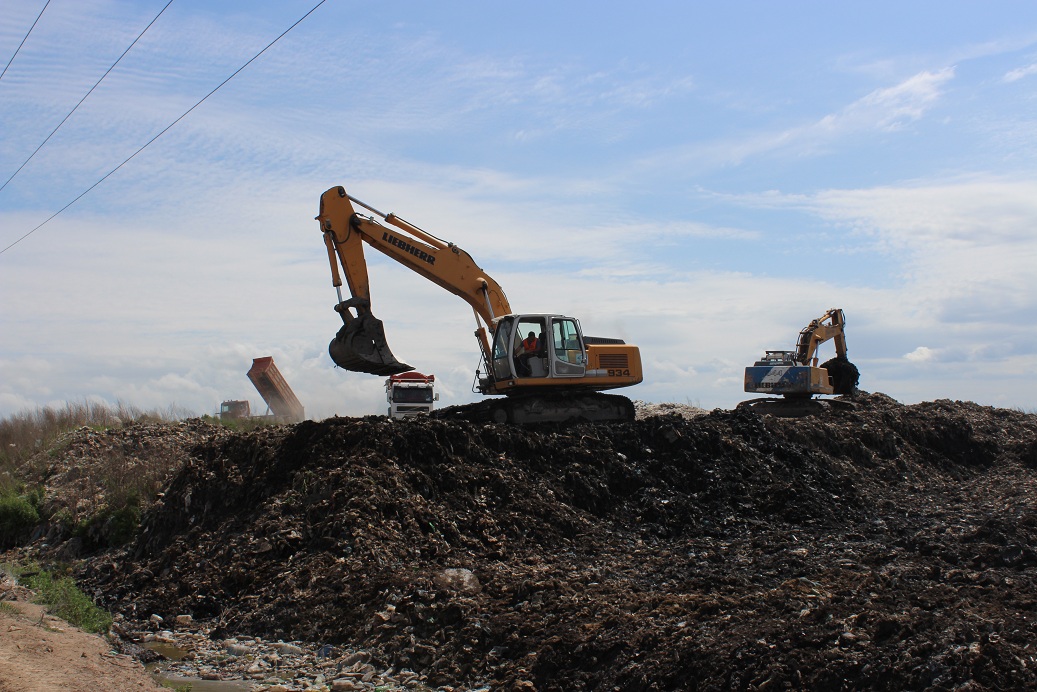
According to businessman Iljaz Mehmeti, the only solution offered today to recyclers in Tirana is the materials, which are differentiated in the landfill through contracts with the company Eco Tirana.

"For me, that material was unusable and toxic. Based on this, I decided it was better to close the business than to compromise the product I was exporting", he emphasized.
Vullnet Haka of the Association of Recyclers added that the Municipality of Tirana had successfully managed to eliminate a well-organized and trained network of individual waste collectors.
"We had invested in the establishment of this network, which mainly self-employed people coming from marginalized groups. Today, I don't know what will happen to them", he said.
According to Leonard Olli, there are approximately 1,200 families in Tirana who have lost the source of income that came from the collection of recyclable waste.
"This situation has also created a serious social drama... The majority belonged to the Roma community, self-employed as individual collectors. Their fate was not at all included in the plan or activity of this company", he said.
One of the elements that most worries environmental experts and recyclers is the long time required to make it possible to inculcate the culture of waste separation at the source.
"Citizens got excited and started to cooperate for waste separation, and abandoning the initiative brought disappointment. Today, if it were to be announced again, it would be viewed with great suspicion and this is really painful", said Haka.
*In the main photo at the beginning of the article, several bins for recyclable waste in the area near the "Arena Kombëtare" stadium, where the waste is all thrown together without being separated by the citizens. Photo: ACQJ
**Note
This article was produced within the project "Tiranalytics: An assessment of public expenditures of local government in the Municipality of Tirana" which is supported by LevizAlbania. The opinions and positions expressed in this article do not necessarily represent the opinions and positions of the donor.