


Denada Jushi
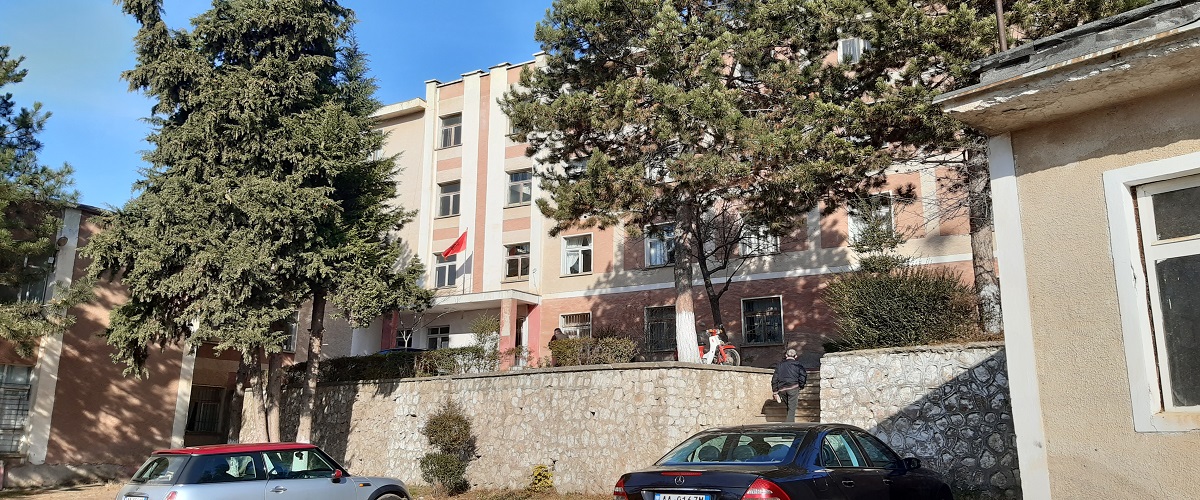
On August 29, 2026, an electrical accident in the village of Karmë in Vau i Dejës claimed the lives of two men: SP, 40 years old, and DD, 46 years old. The tragedy exposed another wound in the health service. Family members and residents of the area protested in front of the local health center, denouncing that the ambulance arrived about an hour and a half late, while the emergency service at night is completely absent.
The Emergency Medical Response revealed the reason: the Vau i Dejës ambulance had a technical defect. For this reason, the vehicle was sent from the Shkodra Regional Hospital.
The event raises the most basic questions of any emergency: Will the ambulance arrive and, above all, how soon?
For citizens living outside Tirana, answers are difficult to find.
The ACQJ officially requested information from the National Center for Medical Emergency (QKUM), the Ministry of Health and the regional hospitals in Shkodër, Korçë and Pogradec. There were only three questions: How many ambulances are in the inventory and how many of them are actually functional? How many personnel are engaged in each region? What are the funds allocated for the maintenance of the vehicles and what is the plan for improving the arrival time?
Apart from Korça Hospital, none of the other four institutions responded.
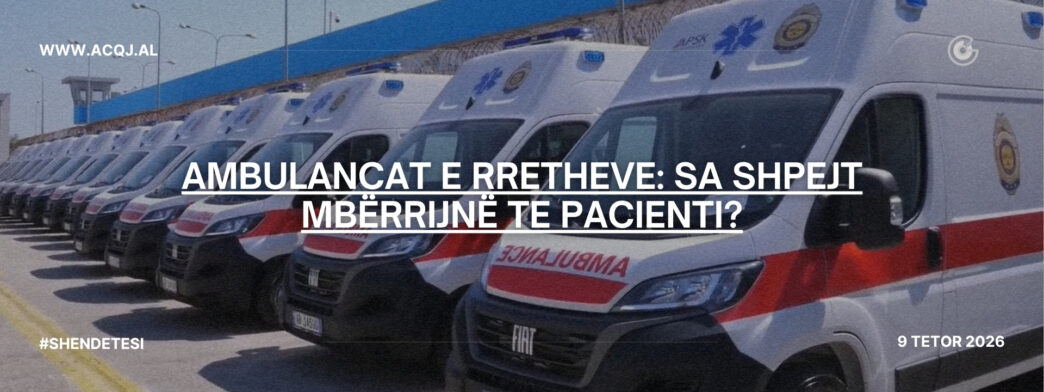
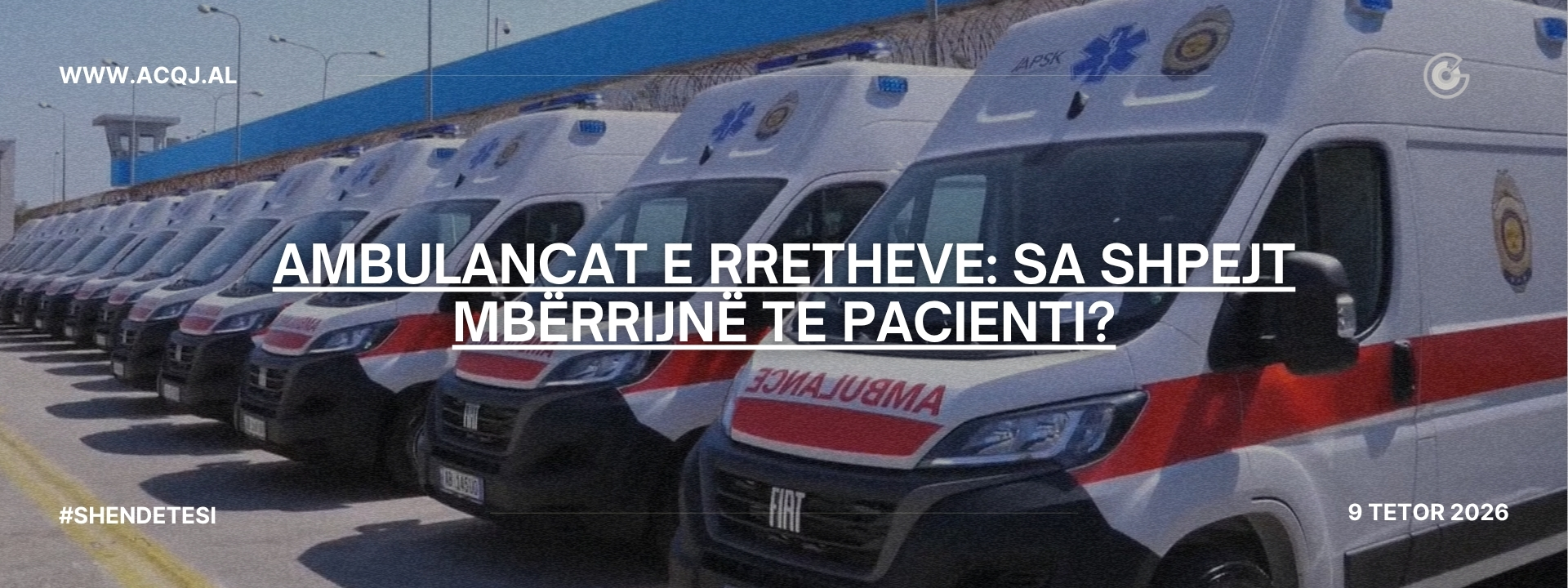
The lack of transparency makes it impossible to verify official statements. In July 2026, the Ministry announced that 13 new vehicles had been added to the National Emergency fleet, following the announcement of 106 ambulances purchased in the last four years, with an average response time of 15 minutes.
The application of this average remains fictitious: official figures do not show how many vehicles belong to each region, how many are in operation today, and how many minutes it takes to reach remote rural villages.
Field: Doctor with a bag on his arm, without tools and without staff
LP, a doctor with extensive experience in the remote areas of the North, from Rubik to Mirdita, describes the reality of working in the field:
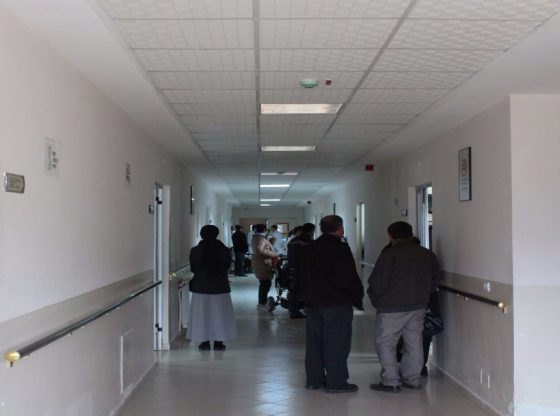
"The buildings may be lined up and painted, but there is a lack of equipment, doctors and nurses. In the villages, the situation is dramatic, especially during the winter. The lack of ambulances forces us to direct patients to other hospitals by private vehicles. We send cases with a lighter diagnosis to Lezha; when the situation is critical, we send them to Tirana."
Korça Hospital provided us with the data: it has 10 ambulances in inventory and has 6 teams available 24 hours a day, covering the Municipality of Korça and the surrounding villages.
The fleet is depreciated: 4 vehicles are over 20 years old, 2 are over 15 years old and only 3 were purchased within the last 6 years. According to the hospital, only these 3 vehicles have the necessary equipment for serious cases; they carry the heaviest load and depreciate faster. The older ambulances have equipment deficiencies and are less functional for transporting patients.
The hospital says that rural roads are generally passable, but remote mountainous areas, especially in the snow, create difficulties. Long trips to Tirana for specialized treatment and congestion on the Korçë-Elbasan road increase time, consumption and depreciation of vehicles. The Directorate is seeking the addition of new ambulances to improve service.
While the hospitals in Shkodra and Pogradec did not respond, searches of public documents reveal only partial data. For example, the Shkodra Hospital declares 17 ambulances in inventory, but does not specify how many of them are in working order. For Korça and Pogradec, public data on purchases and maintenance do not even reveal the total number of vehicles in operation.
Chronicle of delays with life-threatening consequences
The case of Vau i Dejës is not isolated. A series of serious events over the past few years attest to the failure of timely service:
Pogradec (August 2026): A 37-year-old pregnant woman presented with severe pain at the local maternity hospital. Family members allege that the transfer to Tirana was delayed for hours and the helicopter transport was not carried out. The ambulance left around 04:00, but the patient died at the Elbasan Hospital. The ministry spoke of an “independent assessment,” but the results have not been made public.
Elbasan (May 2026): In Mëngël, a 7-year-old was hit by a vehicle. Residents reported that the ambulance did not arrive in time and the child was transported by private car, arriving at the hospital with no signs of life.
Lezhë and Vlorë (July 2025): On Tale beach, a vacationer died during transport after reported ambulance delays. That same month, on the Lungomare in Vlorë, a 41-year-old tourist drowned while rescuing her daughter; the ambulance arrived over 30 minutes late due to traffic.
Kavaja (July 2023): A father and his two sons lost their lives in Vilë-Bashtovë. Witnesses reported a delay of over 30 minutes, while QKUM claimed that the vehicle arrived in 22 minutes.
The problem of urgency is not solved by purchasing equipment alone. It is directly related to the distribution of human resources and connecting roads.
Licensing figures show a massive concentration of medical staff in the capital: out of 6,037 licensed doctors across the country, 3,980 (around 66%) work in Tirana.
Although the health budget increased from 76.3 billion lek (2025) to 81.2 billion lek (2026), official documents do not specify how much of these funds specifically go to the emergency fleet and staff in the districts.
Bardh Spahia, MP and chairman of the Health Committee, told ACQJ that he has requested a public hearing on the state of emergencies:
"It is unacceptable that billions of taxpayers' money go to inefficient tenders and concessions, while vital Services such as emergency Services are left without support. We will demand full transparency from the Ministry regarding the service guaranteed regardless of residence."
But as long as institutions refuse to make public data on the real time of arrival and the condition of vehicles in each region, the balance of medical emergencies will continue to be measured by the testimonies of family members and the minutes lost on the road./ acqj.al