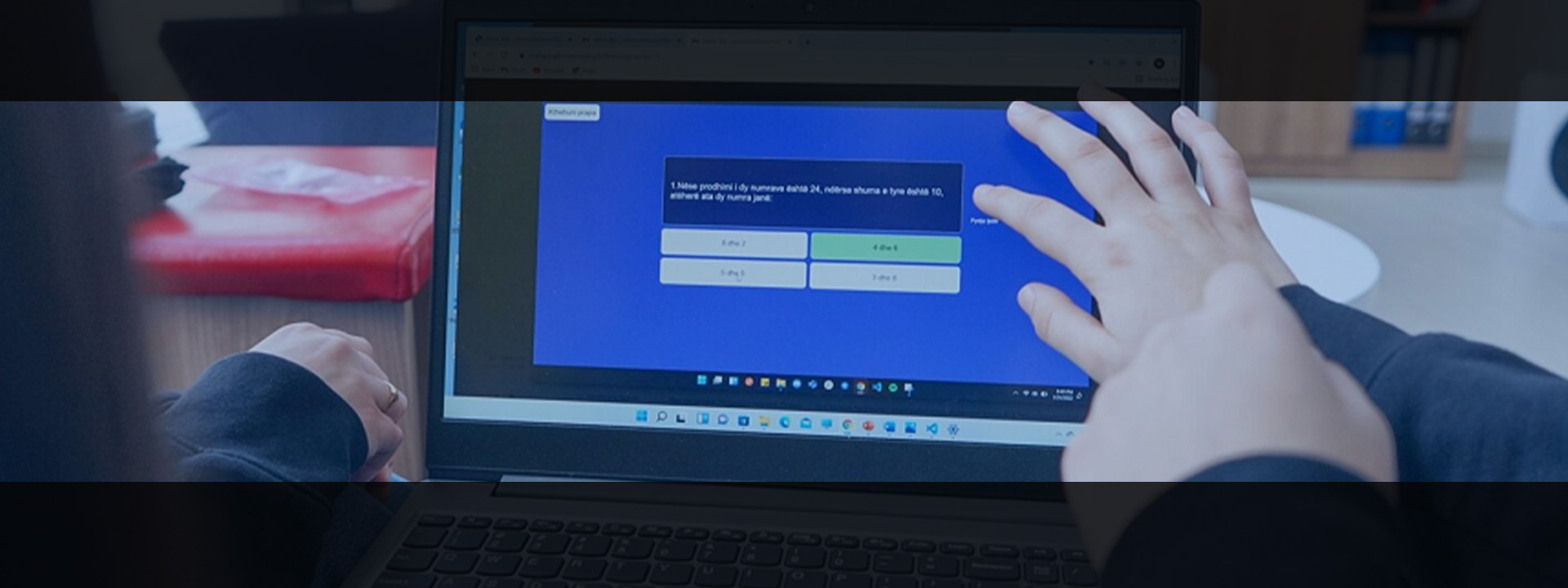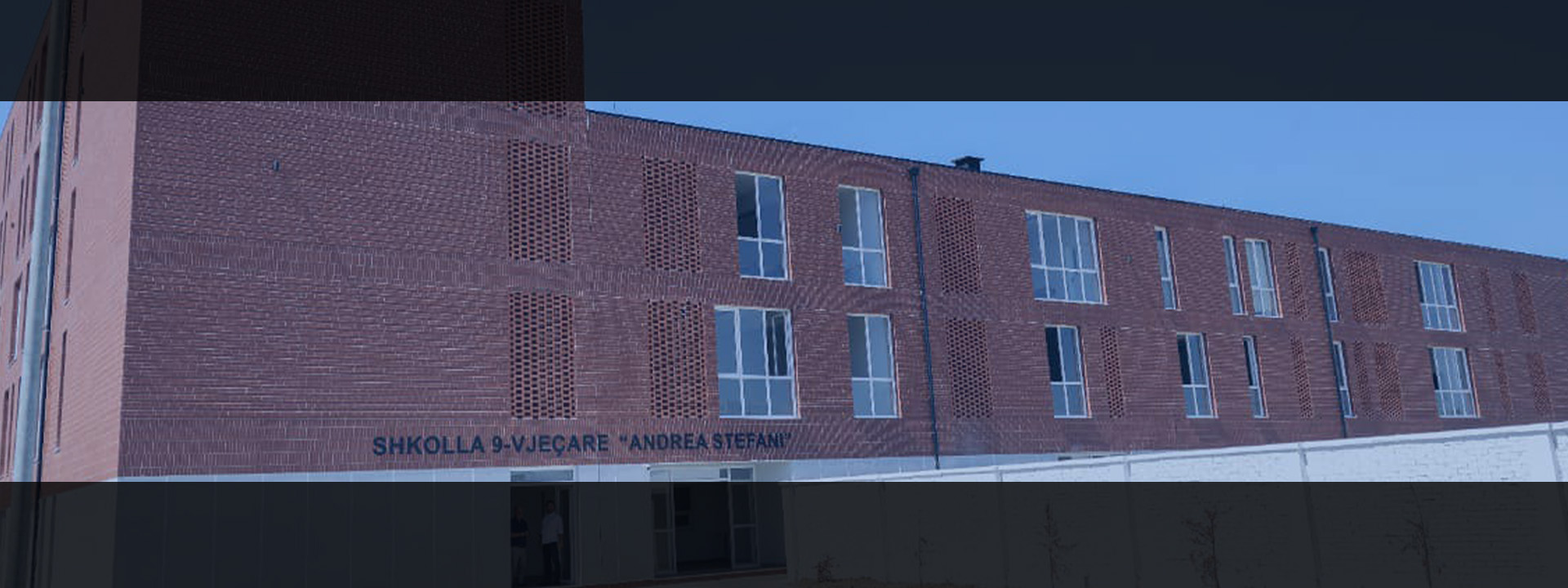




The project for digital classrooms started with enthusiasm in 2014. The fund of 3 million dollars was tripled during these 8 years, but the actual situation is far from the announced goals. At a time when the whole world is digitizing and every service or activity is moving to the digital world, in schools, mainly in districts, there are still no Information and Communication Technology laboratories.
Author: Eleni Zere
"The subject of Information and Communication Technology seems to have never existed in my high school, even at the age of 9 we didn't have a single class," says Elizabeta Bregasi, a student at the "Skënderbeu" high school in Maliq.
She further states that they have never had a computer teacher.
"In high school, we used to do the lesson as a conversation class with the physics teacher, while now we learn with the math teacher. It is very useless, because we are not even pushed, but the teacher takes absences, and they even force us to buy the book for nothing", says Elizabeta, showing signs of boredom and dissatisfaction.
The initiative to digitize schools started in 2015, with the aim of having digital classes initially in 60 schools, for which an initial fund of 3.5 million dollars was requested. With this fund, 5.800 tablets were purchased.
The Prime Minister, Edi Rama , appeared enthusiastically at the "Sami Frashëri" high school in Tirana and declared that by 2018 every high school class in Albania would be equipped with tablets.
"I am convinced that with the completion of this project, in the next three years, we will have the opportunity to say that we are in the conditions of an unprecedented transformation, through which we will without a doubt have the opportunity to see further and to bring about transformations that today we can't even imagine".
Ndriçim Mehmeti, education expert and lecturer at the University of Tirana , recounts the odyssey of tablets for digital classrooms in Albania.
"I was at the Ministry of Education, we made an agreement with Austria. The then minister, Mr. Tafaj, (year 2013) concluded an agreement with two Austrian banks, which brought an initial investment, specifically for smart classes, of 2.4 million euros, while the Minister of Education, who came, grabbed another 1 million and presented the project at the "Sami Frashëri" school, he says.
He further states that along the way, about 4.5 million euros were added to this figure, and it went to 9 million euros in total.
"The pandemic came. We didn't have tablets. Mrs. Shahini (Minister of Education) said that the tablets are not charged outside the school. "Sami Frashëri" school was destroyed. The school was rebuilt, while the tablets were buried. Today, someone should tell us where the 5.800 tablets went. where are they Where did this investment go?", asked Mr. Mehmet.
In 2017, the Socialist Party promised in the electoral platform that it would create a stable, widely usable infrastructure, both of digital resources in schools, as well as of developing the pedagogical skills of teachers for the use of Information and Communication Technology.
Meanwhile, the project that became known in 2015 continues to be active this year. This initiative was further presented in the form of a project for the digitalization of Albanian schools, with the aim of integrating technology into secondary education.
Initially, 60 secondary schools were selected for the digitization process. By the end of 2018, it was expected that all secondary schools would be included in this project.
The then Minister of Education, Lindita Nikolla, emphasized that the digital classroom is a government commitment, which allows 60 schools and 120 classrooms to communicate with each other and provide real-time information to parents. She added that the technology would not replace teachers, but would help them improve their teaching skills through online illustrations , tests and presentations, according to global standards.
"They brought us the tablets and took them back. We are hopeless, that the spirit of opposition and protest has been lost, both here in Tirana and in the districts", says a student near the "Sami Frashëri" high school in Tirana.
The year 2018 was also supposed to mark the completion of the cross-sectoral agenda on digitalization and the creation of Information and Communication Technology classrooms, but the smart schools project , which began in 2014, failed to achieve its goal of equipping schools with modern technology, including interactive whiteboards, computers and internet connections. The aim was to create an interactive learning environment and promote digital literacy among students and teachers.
"The computers we have are old... Our maximum in the Information and Communication Technology subject is to make a game with that figure that appears when there is no internet , because we don't have internet , without any reason," says a student at the "Raqi Qirinxhi" high school in Korça.
Pandemic effects and follow-up
Albania made efforts in 2019 to digitize educational materials and resources. This included the creation of digital textbooks, the creation of e-learning platforms and online resources to support students and teachers in accessing educational content. However, all this effort encountered a colossal obstacle in 2020, when, like many other countries, our country faced significant challenges due to the COVID-19 pandemic , which necessitated a shift towards distance learning and the use of technology in education.
This period of time forced every individual to adapt to the internet and the world of online technology , because every aspect of social life went online. It was at this time that the need for tablets and computers increased greatly, because not all students had computers at home. But did these students receive assistance from the state?
"According to data from the Ministry of Education, today 1 computer is available for 27 students in Albanian schools, which means that we are very far from the digital standard and the time of the pandemic showed that our educational institutions were unprepared for such a transformation of learning," says Rigels Xhemollari, Executive Director of Qëndresës Këtjetare , a civil society organization that has monitored the process of digitalization of schools in the country.
Regarding the figures that have been spent between 2018 and 2022, especially in schools in the districts, it is almost impossible to find accurate information.
In a request for information addressed to the Regional Directorate of Education, Korça, ACQJ asked:
How much has been invested in the last two years for digital classrooms? How many schools have functional classes and how many qualified teachers are there in this region?
The Regional Directorate of Education in Korça responded, emphasizing that there are 13 9-year schools, 3 gymnasiums and two secondary schools, united, which have laboratories dedicated to this subject, but without making available any figures and concrete addresses .
"There are 27 ICT teachers in total, of which 19 are profiled. For the 2022-2023 school year, investments have been made in 4 schools in basic education within the framework of the project Implementation of ICT Laboratories in Schools ", - says DAR, Korça. When asked about the shortages and potential problems, this institution has chosen to remain silent.
"The class performance is poor because the ICT laboratory does not favor the program that students do at school. The computers that we have in the laboratory provide access to the Office package , but not to the Python , Java Script , C + , etc. programs that they have in the curriculum. The most important thing is that the teachers who teach the ICT subject are teachers of different subjects and with this subject we, the teachers, fill the hours, while the students chat," says Zamira Mulla, a mathematics teacher at the "Raqi Qirinxhi" gymnasium in Korça.
"The subject of Information and Communication Technology is a burden for students later, because they encounter this subject in many university branches and fail there, because they have not received any basic knowledge, at 9 years old, no, no, but neither in high school", she says.
Ndriçim Mehmeti says: "The money was thrown and it is not known where it went. The proper investment has not been made and in the end, what is most important, we do not have a vision, a long-term action plan of what we will do in all areas in this direction. We will lack professionals, we will also lack students, and in the end we will have to import the brain, which in this field is very expensive and we do not have the will to pay for it."
But, beyond the advertisement of the initiative of intelligent classes in Tirana and in the districts, there are the students themselves, who desperately see this initiative only as a good opportunity to make propaganda.
"The informatics class is not at the right level, but it is not at all low either", says Leana Duge, student of the "Ismail Qemali" high school.
"We don't have internet . Half of the computers don't turn on, but there are also those that freeze. I don't think they're impressed, because my sister graduated from here three years ago and they had computers in the same condition. So, even then, ICT wasn't a subject at all," she says.
Edlir Spaho, Informatics lecturer, says that unfortunately the level of learning for the Informatics class is at most average, because the curriculum and its treatment often include conceptual errors in the topics it deals with; there is an impossibility for proper handling of the topics by ICT teachers; as well as due to the small number of computers in the laboratory.
"For classes with 35-40 students, there are 20-25 computers and not all of them are functional," he says, adding that, "despite the developments, the ICT curriculum, which is developed in our country, is still not close to international standards."
In almost a decade of investments in information technology and digital classrooms, where leaders of the Ministry of Education and the Prime Minister himself in public appearances have consistently emphasized the need for schools to better prepare students to participate in the information society and for young people to improve their skills for digital knowledge, in order to participate in the digital world, the real development of this initiative leaves much to be desired.
Millions of euros of investments and long-term and short-term action plans have been made available, so that the education of pupils and students is at the highest levels, while the pupils themselves say that in most cases these classes simply remain on paper. Students are still not familiar with the subject of ICT, they do not have functional computers or tablets, even the teacher is missing in some schools.
The Ministry of Education was asked by ACQJ about the shortcomings highlighted in the implementation of this strategy, but as of the time of publication of this article, it has not responded.
This article is part of the Investigative Journalism Laboratory project, which is financially supported by the Public Relations Office of the US Embassy in Tirana. The opinions, findings, conclusions, and recommendations expressed are those of the author(s) and do not necessarily represent those of the Department of State.