


Author: Joel Cela
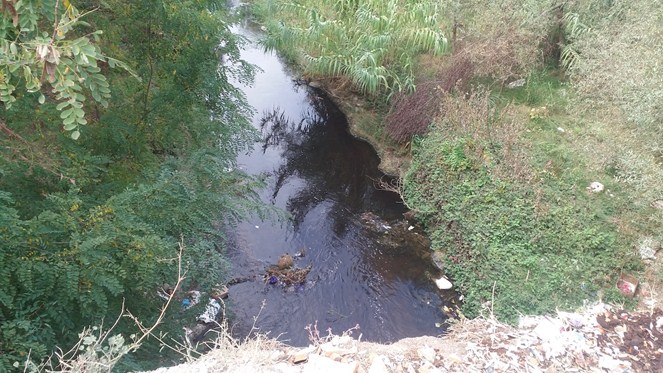
The polluted Gjanica river has been threatening the residents of the Fier area and the environment for years, so much so that last year it was sent to court as a case. The initiative did not fundamentally change anything, as the river, although with a cured facade in the center of the city, continues to be polluted. A verification in the field and in the municipality showed two major problems. First, the mayor's promise for the pilot project of the device with cleaning filters in Gjanica turns out to have been a media spectacle, and secondly, the local environmental authority recently denies that the river's pollutants are hydrocarbon waste. But the sight and the smell wafting from the river are unmistakable.
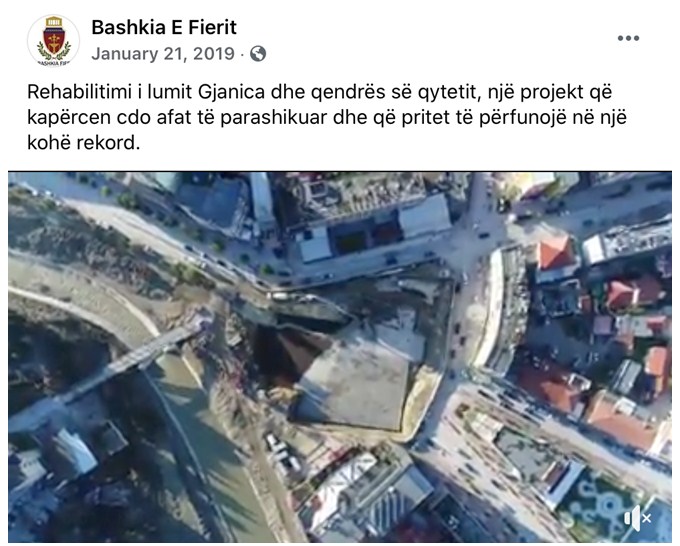
Cleaning the Gjanica River in Fier is a promise that has been repeated for years, especially in local election campaigns. From 2015 to 2019, there were successive promises for the rehabilitation of this river, also published on the official Facebook page of the Municipality of Fier, which meanwhile admits that the polluters are the hydrocarbon processing operators.
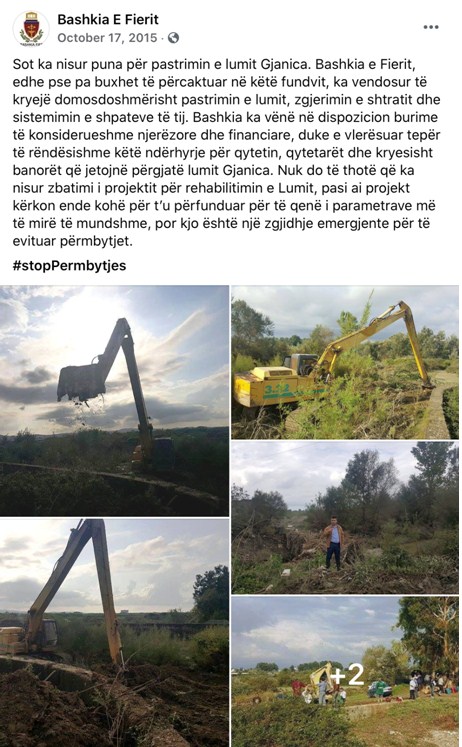
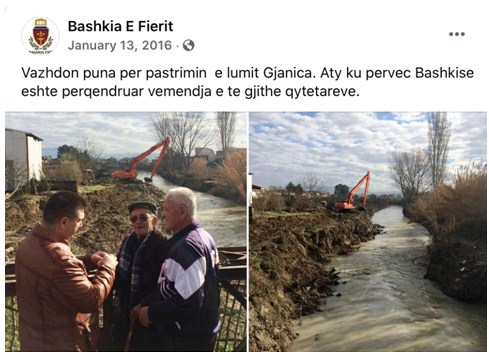

In the successive posts of the work of the Municipality of Fier for the Gjanica river on social networks, the fact that it is once referred to as the cleaning of the Gjanica river and other times as the rehabilitation of the river attracts attention. But what logic would the river rehabilitation project have without including its cleaning?

The Mayor of Fier, Mr. Armando Subashi, on January 20, 2018, announced the start of water filtration through the Recovered Earth Gjanica project.
"In short, this entire project consists of cleaning all the waters of the Gjanica river.
According to the company, along the entire length of the Gjanica river, starting from Mallakastra to the mouth of the Seman river, that is, where it joins the Seman river, about 21 points have been identified, which are problematic and pollute the river.
If we manage to avoid from Gjanica all these wastes, all these hydrocarbon spills, remove that bad smell, which is not only a bad smell, but which in the end is quite a big and serious problem for the health of all citizens, we believe that we have done a fantastic job and have taken safe steps for tomorrow", said Subashi.
Nine months after this statement, on October 3, 2018, the Albanian Helsinki Committee published the third monitoring report on the pollution in the Gjanica river after concerns also published in the media during 2017-2018. The observers of KSh found that the level of pollution of the river Gjanica continued to be high and appeared very problematic for the residents of the areas that this river crosses.
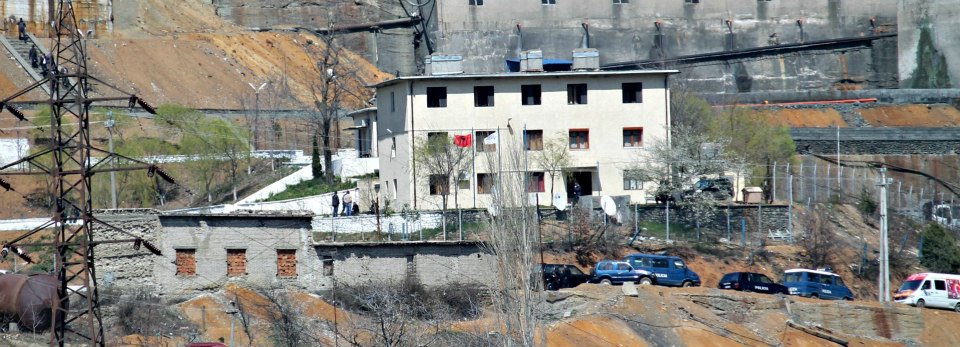
"In the conditions when this area has turned into a hot zone of environmental pollution, as the heavy smell of hydrocarbons prevails, the Gjanica river is polluted and reflects a dark color (following from the bridge over the plant in Ballsh and reaching the peak of pollution in the village of Ofičinë), the State Inspectorate of Environment, Forests, Waters and Tourism should undertake continuous inspections, not being content only with the imposition of administrative measures against polluting subjects, but forcing the taking of measures for the rehabilitation of the area in compliance with the principle "The polluter pays" and proposing to the KTA the suspension or revocation of the relevant environmental permit for the entire activity or part of it", - says the report of the KSh.

In January 2019, KSH appealed to the Administrative Court in Tirana to represent the interests of 3 citizens, residents of the village of Patos in Fier, as well as the public interest in the face of evidenced environmental pollution.
Faktoje contacted Ms. Ardita Kolmarku, a lawyer at the Albanian Helsinki Committee, to ask her what happened with the lawsuit filed at the Administrative Court by the interested parties.
"The court decided to partially accept the request-lawsuit, rejecting 3 claims of KSH, respectively the obligation of KTA to propose to the responsible minister the suspension or revocation of the relevant environmental permit of the operators operating in the areas near the Gjanicë river and that violate the conditions of this permit for all or part of the activity.
According to the Court's argument, through which it has stimulated the KTA to exercise the duty and the possibility that the law recognizes to propose to the responsible minister the suspension or revocation of the environmental permit of polluting operators, this is a legal possibility and not an obligation in the sense of the law, which for the Court means that the KTA cannot be forced to exercise this function as an obligation, as long as the law has not provided for it as such.
In its decision, the Court accepted the request for the identification of all operators that present a direct or potential threat to environmental damage in the Gjanicë River, as well as the determination of rehabilitation measures to return it to its previous state or minimize the polluting effects of this river as much as possible. .
But, despite the fact that the State Enforcement Service initiated the procedure for the execution of the decision, which took final form, KShH informs that so far nothing has been done in relation to the obligations set for the defendant parties to issue the necessary acts administrative, which would provide an appropriate solution and in accordance with the law to the situation created in the river Gjanica. Even for environmental experts, the condition of the Gjanica river today is alarming.
"Gjanica is one of the rivers, we can even call it one of the deadliest channels that can exist in Albania, and this can be noticed by any visitor who can pass by the sides of this river. We have often seen during the time we have made several films, documentaries in this area, that there are dead animals," said environmental expert Xhemal Mato, also executive director of Ekolëvizja.
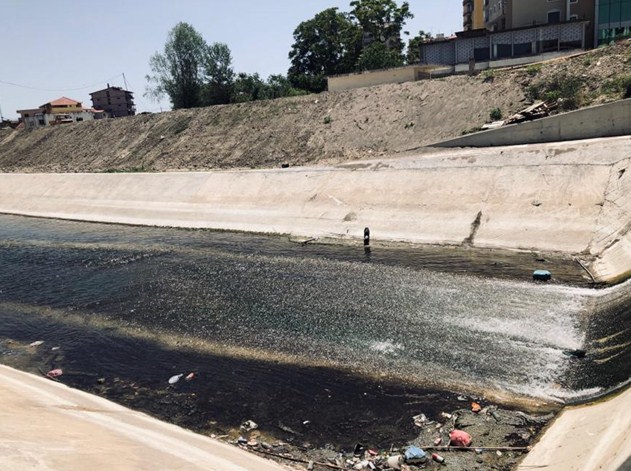
Faktoje went to Fier to see up close the condition of the Gjanica River, in May 2020, where he noted not only pollution accompanied by the heavy smell of oil along it, but also the lack of filters.

Before addressing the municipality, we sought the opinion of the expert on environmental issues, Mr. Xhemal Mato, on what the installation of filters could solve.
"There is a whole army working to pollute the river and with a filter there at the exit of Fier or at the entrance of Fier, they try to beautify a bit of water there. It is a solution purely for appearance, but not to really save the life of this ecosystem, which coexists with the inhabitants themselves, the people on both sides of them. These ecosystems, if we destroy them from beginning to end and put a filter somewhere, this is a very small solution that is not even a solution, but that is, it is a show just to make a bit of the river there a little cleaner," he said.
Faktoje addressed the Municipality of Fier with a request for information on June 1 to ask what happened to the project promoted by the mayor in 2018 for the installation of filters to clean the Gjanica River, when its full rehabilitation and cleaning will be completed, and how much the project cost. On June 23, the Municipality of Fier announced that the water filters were installed only for demonstration purposes and that there was no joint project with the implementing company.

"In 2018, the Recovered Earth Albania company presented itself to the Municipality of Fier with the claim that it had the necessary technology to clean the waters of the Gjanica River. The company, with its initiative and contribution, identified the most polluted points along the Gjanica River and installed, with the consensus of the Municipality of Fier, the filtration devices in the area near the former Azotik, where the demonstration was also held. This demonstration was viewed with great interest by the municipality and its mayor, as it is an obvious concern. Everything that was done was a request from the Recovered Earth Albania company to present the devices and their results in cleaning the river water and there was no investment or joint project in relation to it. After the end of this demonstration, the company withdrew the devices again. After this moment, the Municipality of Fier has no information about them," the official response of this institution states.
On May 26, Faktoje was also interested in hearing the opinion of the head of the Fier Environmental Inspectorate, Hadër Cako, to learn details about what has been done to discourage river polluters and what results it has had.

Until the publication of this article, we did not receive an answer from Mr. Hadëri, so we decided to refer to his two statements regarding the pollution of the Gjanica river.
In November 2018, in an interview with Report TV , the head of the Fier Environmental Inspectorate spoke about the identification of at least two entities suspected of polluting Gjanica's hydrocarbons and guaranteed that the matter was being pursued through legal channels with the cooperation of the police.
But, in April 2020, in an interview with ABC News, Chief Inspector Hadëri guaranteed that the river's pollution no longer came from hydrocarbon pollution, as the activity of operators of this profile had stopped.
"Of all the companies working in the hydrocarbon field, almost all of them are closed. There is no activity that could create this pollution. It could also be some chemical processing that could happen in a tailoring or a dyeing plant, because when there are hydrocarbons, all of them leave marks or have the characteristic smell of hydrocarbons. It was odorless, so it means that we are not dealing with pollution from the hydrocarbon field. It could be something else.. We are monitoring it even today as we speak," he told ABC News on April 23.
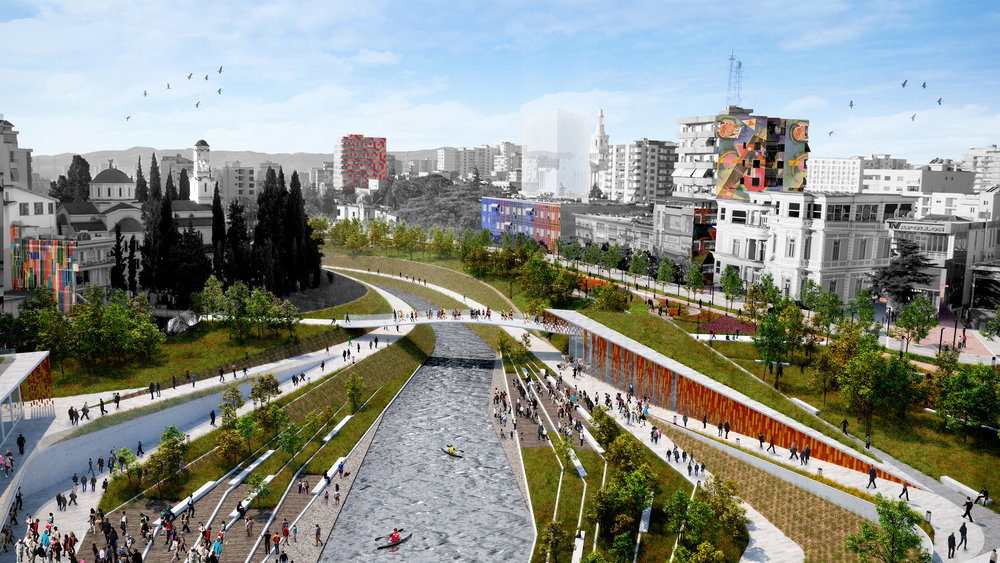
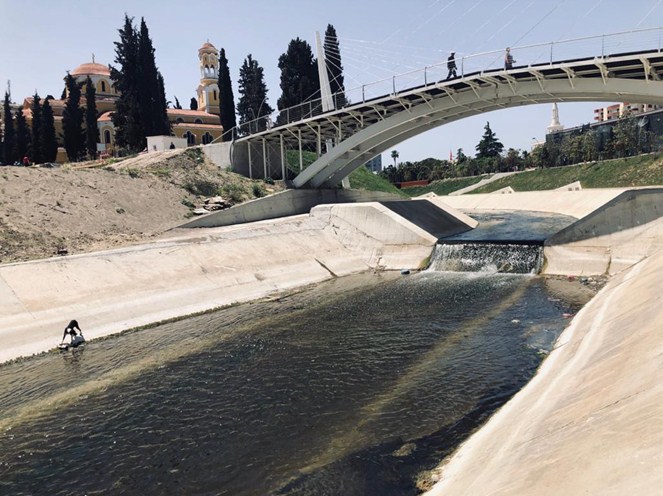
The view of a river with a fixed bed, but not in its entire length (less than 1 kilometer of the 42 kilometers that is the length of Gjanica), does not hide the pollution that can be seen with the naked eye and felt in the air. Meanwhile, the heavy smell of oil is unmistakable, even in the center of the city, an area planned to be a recreational space dedicated to citizens.
Today, the Gjanica River continues to pose a growing threat to the health of residents and irreparable damage to the environment.
* Photo at the top of the article taken by MAU Architecture, the designer of the urban redevelopment of Fier City

This article is published within the project "Facts and Environment" implemented by the Albanian Center for Quality Journalism and the Organization "Faktoje", within the project "Toward the Improvement of Labor Relations and Professionalism in the Albanian Media" supported by the European Union, implemented by the Institute Albanian Media and the International Federation of Journalists (IFJ). The sole responsibility for the content of this article is the author's and under no circumstances can it be considered to reflect the position of the European Union.