


Author: Ina Allkanjari
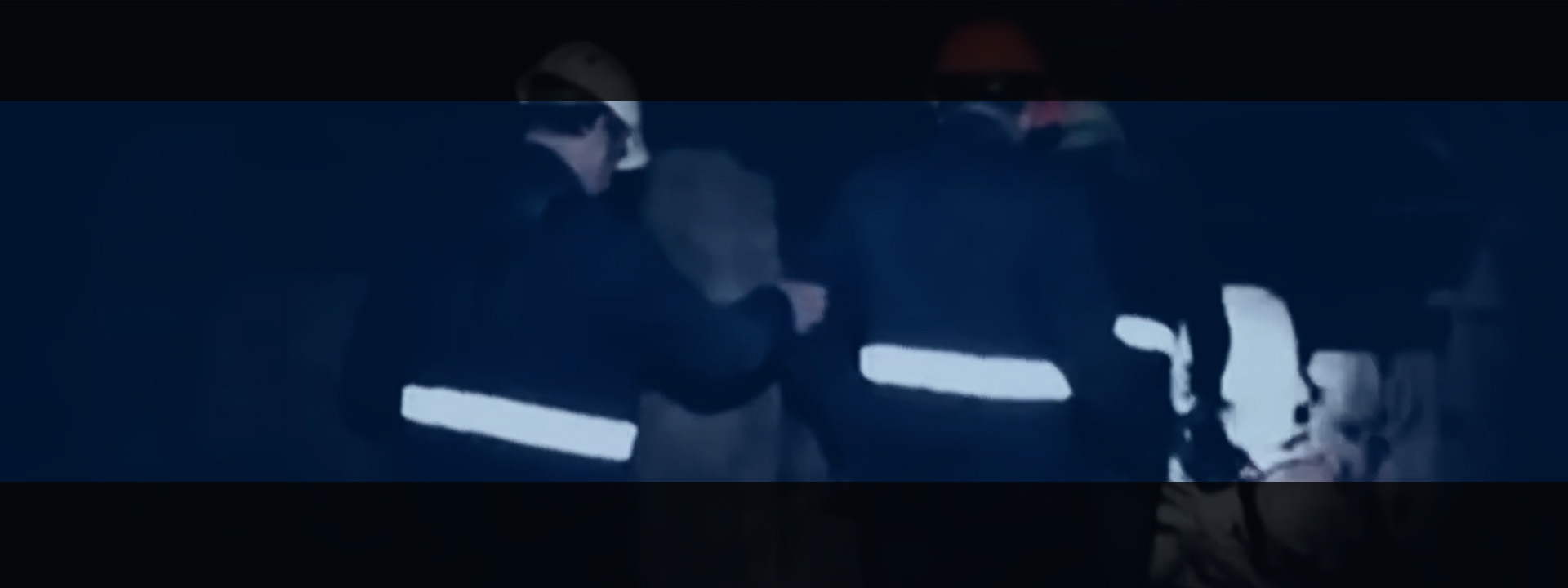
In the depths of Albania's soil there is an untapped wealth that has helped the country's economy for decades: mining. The discovery, exploitation and processing of mineral materials is accompanied by endless challenges and suffering for the employees in these mines who face extreme working conditions every day, which have often caused loss of life.
This ordeal of suffering for the miners has no end, although many of them have left this profession for years and are now retired.
"We have been trampled on, the state has never appreciated us".
This is what Mark Gjergji, a former miner who has worked underground for almost 17 years, says for ACQJ. Today, while he is retired, he is not reaping the fruits of his labor, but continues to experience the consequences of that work.
"I have had breathing problems for years, but not as severe as many other friends who also worked in the mines. "Many of them have difficulty breathing and use oxygen pumps."
The former miner says that although working in the mines is considered a high risk for health, after many decades they still ask the state for basic Services and coverage of health expenses.
Mark Gjergji dwells on the miner's status, a legal approval which would translate into benefits for all miners in Albania. He calls for a higher minimum pension for those who have contributed to the mining industry for years.
"We want the minimum pension for miners not to be below ALL 540 per month," says Mark Gjergji.
Today Gjergj receives a pension of 220 thousand lek per month. The former miner says that together with other employees, they have faced many challenges throughout the years of work.
"The indexing was done for MPs and ministers, but not for us former miners. For a former miner to receive a pension of 200 Lek today, after all those years of suffering, is a shame".
Mentioning the working conditions, Mark Gjergji says that the salary for them is very low.
"A miner should not be paid less than 700 thousand lek per month. It's a shame, there are miners today who are paid 500 thousand lek. Also, the first thing I have to change for the miners who work today in very difficult conditions in the mines is that they are insured from the health side with full packages as they are at risk all the time", says the former miner.
Working conditions and risk to life
Experts in the field of safety at work emphasize the need for changes in the treatment and protection of miners.
"All sectors of work have elements of risk in the workplace, preventive measures and training of each employee is important. Of course, the degree of risk is differentiated in some sectors such as Mining, Construction, etc., says security expert Fatjon Softa.
Softa indicates that risk assessment is a legal obligation, according to the Law on Safety and Health at Work and the Decisions of the Council of Ministers which must be implemented in practice.
"In Mines, the rules of safety at work are not strictly applied, the working conditions, the lack of a technical manager who is also the person responsible for safety at work, has exposed more danger to life", says Sota.
Another aspect that expert Softa puts in focus is the status of the miner, which continues to remain unresolved and continues to affect hundreds of miners in the country.
Frosina Gjino, director of the Albanian Occupational Safety and Health Center (AOSHC), underlines the need for special attention to this sector to address the challenges of safety and health in the workplace. Gjino emphasizes that working in mines is associated with a high risk of accidents at work and occupational diseases.
"The sectors with the highest risk to work in Albania are mining, the construction sector, cement factories. They are sectors with a high risk for accidents at work and for occupational diseases", says the director of AOSHC.
At the same time, Gjino emphasizes the need to create better conditions for employees in mines. It focuses on occupational medicine and the need to create a cabinet for occupational diseases.
"Accidents may have been minimized in some way, but mining workers suffer from lung diseases and it is unfortunate that the pavilion of occupational diseases has been closed in Albania. The cabinet of occupational diseases should be set up urgently, especially for mining workers who have very big problems with lung diseases, with lung cancer", says Frosina Gjino for ACQJ.
The president of the Miners' Union, Gëzim Kalaja, also dwells on the lack of a pavilion for occupational diseases, as he says that it was functional before the 90s.
"Due to the difficult profession, in the central hospital of Tirana there used to be a ward of occupational diseases. Today it no longer exists. Medical checks were carried out in every mine of the republic to determine the physical condition of the miners who worked underground", says the president of the Miners' Union for ACQJ.
No work contracts and low wages
In the last annual analysis published by the State Labor Inspectorate in the context of accidents at work in 2023, 168 cases of accidents at work were recorded, of which 30 resulted in loss of life. 27 of them are reported to be mining accidents, one of them with fatal consequences.

In these inspections, the causes of accidents at work are mainly related to non-implementation of safety and health rules at work.
The President of the Miners' Union indicates that accidents often occur with injuries and deaths of miners as the rules of technical insurance and miners' working conditions are ignored.
"In the history of the Albanian mining industry, according to the statistics we have in the Union of Miners of Albania, there have been 548 fatal accidents. Some of them have not managed to get out of the mine. This shows that it is one of the professions that has more fatal accidents than all other professions", says Gëzim Kalaja.
One of the forms of informality in employment is working without a written employment agreement. During this period, in the inspections carried out by the Ministry of Internal Affairs and Communications, it has identified a total of 2,446 employees without individual employment contracts. Of which 39 turn out to be employees in mines.
The low payment is another problem raised by the miners who demand that the minimum wage for this sector be 700 thousand ALL. According to the 2023 PHISPSH, there are 7,458 employees in mines where 8% of them, or in other words 561 employees, received a minimum salary of 400 thousand ALL.

Employees in mines face difficult working conditions every day, which have often caused loss of life. The demands of the miners are focused on determining the minimum wage of 700 lek per month for this sector, pension benefits for miners and their families in case of accidents at work, increasing the pension, lowering the retirement age, etc.
Privatization of mines
Mining in Albania was privatized during the transition years after the fall of the communist regime. Concretely, the development of the mining industry went through several stages. Mining activity since the establishment of the totalitarian system in 1945 until 1994 was controlled by the state and the organization was in the form of state enterprises. After 1994 until today, the mines were totally privatized and currently there is no mine in operation, where the state is the owner. Privatization brought changes to the mining sector, affecting their ownership structure, management and operations.
Gëzim Kalaja shows that before the 90s, the mining industry was working at full capacity for its needs despite the financial costs they had. According to him, the priority for that time was technical insurance, working conditions and the realization of the plan.
"Today the mines have been privatized. This has brought as a problem that the attention is all focused on production due to the market economy and the administrator who took over the mine is focused on how many minerals he will extract to sell, in order to ensure the income for payments, for electricity, for taxes, for taxes, but at the same time also for his profit", says Kalaja.
He also points to some conditions that have improved at present due to the implementation of modern equipment in mines.
"But some current conditions have changed, this is due to the introduction of modern machines that work underground and the situation has improved. Today, technology is present in the mines, excluding some galleries which have not had the opportunity to bring machinery to use the galleries they have".
Former miner Mark Gjergji also says that the privatization of mines was accompanied by some changes for employees. According to him, the impact these changes had on working conditions and safety were minimal.
"After the privatization of the mines, some changes took place that affected the miners for the better, but they were very small. At the time when I was a miner and the mines were state-owned, we paid for our own food, while today's miners have it for free during working hours. Another difference today is that miners are provided with free transportation. The situation of labor contracts has also improved, today most of the employees are declared", says the former miner.
Frosina Gjino, director of AOSHC, dwells on the lack of sufficient care and responsibility of the concessionaires towards the working conditions of the miners and the impact on the local communities.
"Employees in mines should also be given the best possible conditions, because when a mine is given a concession, the state should not only ask for the amount of the concession, but what percentage the owner gets. But conditions must be set in the concession, how to improve working conditions, what modern machinery will be introduced. And to carry out checks whether the concessionaire carries out these or not. Because this thing is very weak in Albania, the concessionaires are not held accountable as a percentage of the profit goes to the working conditions", says Gjino.
She emphasizes that it is necessary that a part of the profit in the mines should go to support the communities since according to her the mines are a source of pollution for the community.