


Denada Jushi
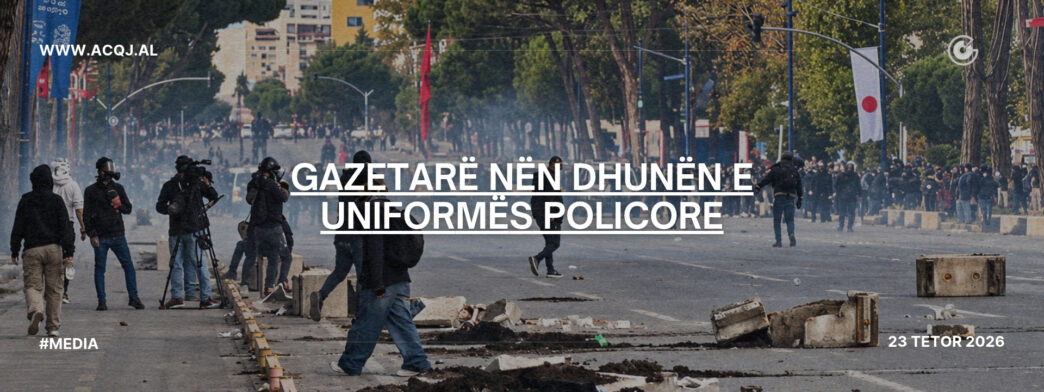
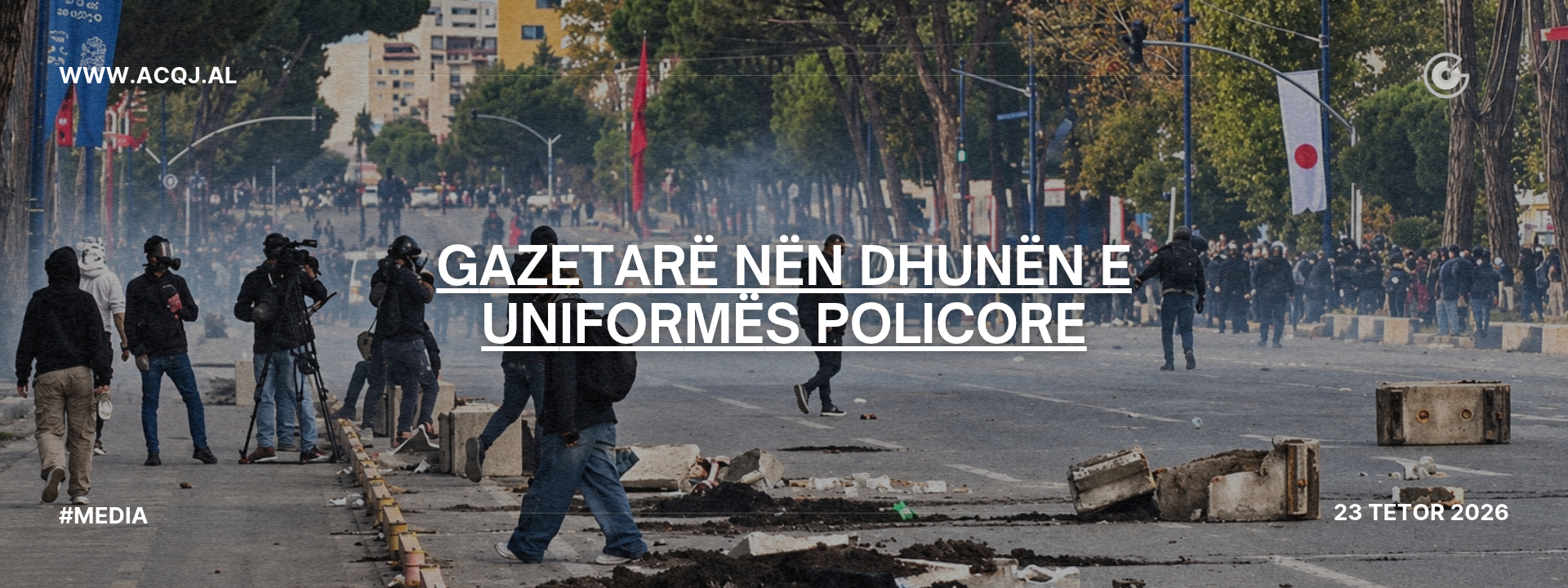
Since October 13, when protests that began in late May in Albania escalated into a revolt, dozens of incidents against media workers have been recorded in the capital. What was supposed to be an impartial coverage of events from the ground, for many journalists turned into a direct confrontation with violence, arbitrary arrests and the seizure of work equipment by the State Police.
Evidence from the field: Escorts, violence and phone confiscation
Paradoxically, while she was supposed to be broadcasting and documenting the events on the ground, Citizens.al journalist Vjolanda Peca herself became the subject of police action. Asked about the reason for the escort, she confirms that she was simply carrying out her professional duty.
"The first time I was escorted, I didn't have a badge, because it was broken, but I had all the tools for work. Since the prime minister was arriving and the area had to be 'cleaned', they asked me to leave. I told them I was a journalist and I was doing my job, but they said 'we don't care' and escorted me away ," Peca recounts.
At the police station, she was held for about two hours and was only released after the officers apologized. However, the second incident was even more serious:
"They grabbed me by the arms with force, even tried to break my camera, and put me in the car. They kept me in the police station for about four hours and confiscated my phone, which they only returned to me after three weeks."
The journalist adds that she was never informed whether her phone was opened or searched while she was at the police station: "In both cases, I was exercising my duty as a journalist and documenting developments on the ground."
The Peca case is not isolated. The balance of incidents against media workers includes a series of events repeated day after day:
October 13: Journalist Anesti Bajramemaj and cameraman Heri Simota (A2 CNN) reported violence by police officers. Journalist Fatime Halmusaj was injured in the leg by a smoke grenade. Dosja.al editor-in-chief Izmir Akulli was raped near the Bank of Albania while filming a police intervention against a student and ended up in the QSUT for medical assistance. Meanwhile, Top News journalist Xhoi Malësia reported that a police officer pointed a tear gas grenade launcher at him.
October 14: Journalist Alice Taylor ( Euronews Albania ) had her phone taken by an officer while photographing the protest. Journalist Enkelejda Mema and journalist Bekim Bici reported being obstructed from filming, while cameraman Elvin Kamberi ( News24 ) was injured by a stun grenade exploding near the media crews.
October 15: Journalist Jonida Mukja ( Piranjat ) was obstructed while reporting. Cameraman Albi Muçollari was forcibly taken away by police while documenting the interventions against the protesters, among whom there were reportedly minors. Photojournalist Felix Bilani denounced the obstruction of his work by people in civilian clothes.
October 16–17: The obstruction of journalist Elkier Bushkolaj near the Pyramid was reported, as well as the blocking of several journalists by masked and unidentified persons, as they sought a statement from the Director General of the State Police, Skënder Hitaj.
Meanwhile, the incidents have not only come from the police. The Association of Journalists of Albania (AGSH) also documented attacks by protesters against journalist Doriana Bezat and the Report TV team.
AGSH: "Over 42 documented incidents"
The President of the Journalists' Association of Albania, Isa Myzyraj, presents an assessment of the situation:
“Since the protests began on October 13, AGSH has documented over 42 incidents against journalists and media workers, 34 of which are related to the actions of the State Police and 3 to protesters. These figures reflect verified cases up to October 21, while the documentation process continues.”
According to Myzyraj, the main concern remains the aggressiveness of the forms used:
"We have documented journalists being hit with rubber batons, injured by rubber bullets or other means, as well as direct threats. We mention the case of a Top Channel journalist, to whom an officer threatened to 'blind her' if she continued filming."
Asked how many of these cases have ended up in investigative institutions, Myzyraj explains that formal verification of referrals is still in process.
Violation of rights and suppression of accountability
Blerjana Bino, from the Center for Science and Innovation for Development ( SciDev ), highlights that obstructing journalists from documenting police interventions directly violates the public's right to be informed:
“The journalist at the protest is not a participant or a party to the conflict. He is there to inform the public and the law protects him precisely for this function. This protection stems from the Constitution, the ECHR and international standards. There is no need for a press card or accreditation for the journalist to enjoy protection; the status is determined by the function he performs.”
Regarding the seizure of phones and the blocking of cameras, Bino underlines that filming police officers in public spaces is completely legal:
“The first consequence of this approach is the loss of accountability. The journalist’s camera is often the only independent mechanism that documents how the state uses force. When it is turned off or obstructed, the public is left with only the official version. The other direct consequence is the encouragement of self-censorship and the reluctance of editorial offices to send teams into the field.”
Individual responsibility and that of the chain of command
Security expert Fatjon Softa shifts the focus to operational management and leadership responsibility:
“The police have an obligation to maintain public order, but this obligation does not place them above the law. In any suspected case of unlawful use of force, the individual action, the orders given, the chain of command, operational planning and the response of leaders after being made aware of the incidents must be examined.”
Softa proposes that in the future, joint police-media training be conducted, direct communication channels be created in the field, and transparent investigations be conducted for every complaint. However, the escalation of events raises doubts that the behavior of the blue uniforms does not stem from a lack of training, but from the institutional approach to the media itself.
On October 16, the Police Supervision Agency (AMP) announced that it had administered video footage to verify the actions of the officers. On October 21, the Tirana Prosecutor's Office launched verifications at the Trauma Hospital. On the other hand, the State Police announced the suspension of five employees (four officers and the Chief of Order at Police Station No. 1) after the publication of footage of the escort of a 19-year-old injured man.
However, none of these measures or proceedings have been publicly identified as actions taken specifically to target and obstruct journalists.
Lack of parliamentary accountability
For Democratic Party MP Jorida Tabaku, this situation shows a marked lack of professionalism:
"This is sad evidence that the State Police is completely unprepared and unprofessional to deal with these situations. However, a distinction must be made because there are plenty of honest officers who do not break the law."
Tabaku reports that members of the Parliamentary Committee on Human Rights and the Media have signed a request for a hearing with the responsible minister:
"On the first day that the Assembly reopens, the request will be on the table and no one can avoid this accountability."
While normal life in the capital and the work of key institutions appear to have come to a halt, the State Police remains the main actor on the ground, but its actions are shadowed by serious doubts about their legality.
When journalists are targeted, violated, and obstructed while performing their duties in the public eye, the question that still remains unanswered is: Why is the State Police acting outside the legal framework?/ acqj.al