


Author: Merxhan Daci
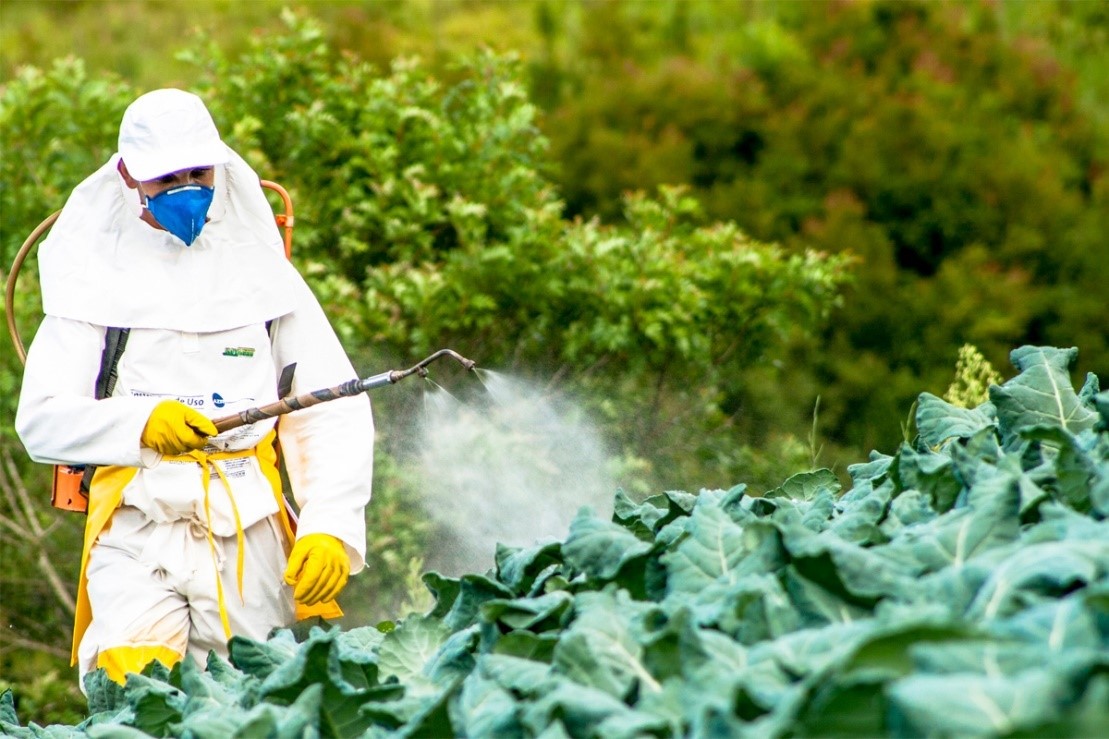
As soon as you pass Ndroqin, in the small greenhouses and courtyards of the houses you can easily see the seasonal vegetables planted at the gate of everyone, these products are sold on the spot. Meremja started very simply, she planted for family expenses, but then she gradually continued to sell tomatoes and spinach from hand to hand. When the family was convinced that it was profitable, they turned those few meters into a work front where all four members focused. The yard is always planted and at the gate there is a stand full of produce. The woman repeats that the products are organic and that's why the citizens who stop either returning to Tirana or traveling to Durrës buy them. But on the spinach leaves that have just been sprinkled with water "so they don't wither" - she says, the signs of spraying are visible. Probably from last night. "They are so that the worm doesn't eat you," says the 52-year-old for "Sinjalizo" and then adds without gloves that "I sprinkle them with my eyes, I throw the mass like salt on a dish with my eyes."
But for the question of whether farmers are informed about the use of pesticides, expert Alban Lila has the explanation as the lack of the "abc" of agricultural culture, since according to him, Albanian farmers do not respect the withdrawal periods, which in other words is called the time that prohibits the use of plants that have been treated with pesticides. According to Lila, this means not releasing the product to the market within a certain period. "You have to learn to use or respect the withdrawal periods, for example, if you spray with a product where the withdrawal period is three days, you should not harvest those three days. If it has a 7-day withdrawal period, you should not harvest for 7 days. Many years ago in Albania it was not enforced because they did not know. Today they enforce it because the production that is harvested is subjected to analysis. Even those who do not respect it are subjected to analysis and the goods are returned. Personally, I think the biggest problem for the domestic market is with imported products because an imported tomato can arrive and remain for a month after being harvested, its quality deteriorates ," says Lila.
Fadil Mara, importer of agricultural inputs, shares the same opinion. He points out that all pesticides have instructions for use written on the label, but adds that more education for farmers should be added.
" The withdrawal period is very important, even for us who operate in this field, the first thing we need to signal, even though they are all written on the labels, is to inform that this product has a 2, 3, 7 or even 20 day withdrawal period. Most farmers are aware and know it. But for farmers who are not informed, we are obliged to inform them, and it is absolutely important to respect it for a consumer ," says Mara.
The fear that in Albania plants are not treated according to EU standards
Albania has received a lot of expertise from the European Union on the use of pesticides in recent years. As cited in the European Commission's 2020 progress report on Albania (which is the most recently published), our country has relied heavily on expertise in agriculture, but has still not sufficiently aligned with European Union legislation. " Albania adopted a new law on quality policy, which is partially aligned with EU legislation. The level of alignment with EU legislation on organic agriculture remains low ," the progress report states.
Also in this report, the authorities are criticized for not having implemented all the recommendations made a year ago and that agriculture has many problems that need to be fixed in a short period of time. Despite these criticisms coming from the European Commission, expert Alban Lila says that Albania is trying to adapt to EU standards. " Our country follows EU legislation, every rule that is put there is also applied to us. Two years ago, the EU removed from circulation many active substances for plant protection that were old, or with residues, and they are not allowed. They have also been removed from the market in Albania. When the EU decides that it will not allow a product, it is sold for the time it is on the market, but its production is no longer allowed. When it runs out, it is removed from the market. As long as the products come from serious companies, they are all within the standards ", argues Lila.
Pesticides on the table
Spring and summer are the most productive seasons, as this is when most fruits and vegetables come to market. But many of the fruits and vegetables that are of these seasons circulate in the market and at other times of the year, raising suspicions that they have been grown with chemicals and are not organic. Farmers and authorities admit that pesticides are used in the country, but add that their use is used to protect plants from insects and various diseases and not to prematurely release various products to the market.
The term "pesticide" is commonly used as a synonym for plant protection products. Pesticides are intended for non-plant uses to control pests and disease vectors such as insects etc. Experts suggest the use of these chemical products to prevent various diseases that can affect plants. Pesticides play an important role in maintaining the yield of agricultural crops. However, pesticide residues can potentially be harmful to humans if they get into the food we eat.
But according to reports, it is known that the use of plant protection products, including pesticides, has not been properly monitored by public institutions. For this reason, room has been left for abuses and food safety has been compromised.
HSC alert on the use of pesticides
The High State Control in an audit conducted in recent months reveals that the institutions have left the monitoring of the use of pesticides in the country to the mercy of fate, since the necessary numbers of control and monitoring bodies have not been met. According to the audit carried out by the SSC, it is estimated that the Ministry of Agriculture and Rural Development has carried out structural reforms which have not fully served to increase the effectiveness of the management of PMBs and food security.
" To be more effective and efficient, restructuring should be accompanied by an increase in the number of professional staff, respecting the criteria according to education, professions in the field of agriculture, their training and testing, especially in plant protection structures throughout the PPP management chain, but also in administrative capacities. Changes in the administrative structures of the MADRD institutions have not been carried out based on needs, complexity, clear evaluation criteria, policies for better PPP management, as well as best practices. So this shows an ineffectiveness of frequent structural changes in achieving the goal of PPP management ," the SAI document states.
Also, this institution assesses that the government has not supported the Ministry of Agriculture and Rural Development enough with funds and number of employees, and in this way the control and monitoring bodies have not been adequately filled.

As explained in the table, in the last three years the Ministry of MARD has had from 21 to 36 monitors less than the planning made at the beginning of each year. According to the Supreme State Audit Office, “ this indicates incompetence in managing human resources and a lack of planning not based on objective needs in fulfilling legal obligations .”
On the other hand, the report also expresses reservations about food safety, since controls on the use of plant protection products are not treated with importance by the authorities.
" The lack of importance given to food safety and control of the chain of trade and use of plant protection products has resulted in this process being left to the secondary and tertiary aspects of the policy-making of the Ministry of Agriculture and Rural Development and the lack of funding for short-term and long-term investment programs ," is the finding of the Albanian Supreme Audit Institution.
Experts: Agricultural products in Albania are safe
Experts always suggest the use of pesticides to protect plants from various diseases. According to them, in the times we live, plants are endangered by the various viruses that circulate and it is a necessity to use chemical elements to spray the leaves and flowers during the process of growing fruits or vegetables.
Alban Lila, distributor of chemical fertilizers in Albania, in an interview for "Sinjalizo" is of the opinion that farmers in the country do not abuse the use of pesticides and adds that local products are of a very high quality. Lila also adds that when Albanian products are exported to the EU, they have passed several filters that make them safe for consumption.
" In Albania, there has always been the idea that farmers abuse, but our farmers actually produce a super product because almost 90% of the production that is made in Albania is for export. It is subjected to all the analyses in the countries where it goes and there is no problem whatsoever. The moment the EU allows you to export a product, you consume it yourself, it means that you have a super quality product ," he says.
On the other hand, Fadil Mara, an importer of agricultural inputs, says that competition has led to a significant increase in the quality of pesticides and their use being very controlled. " Competition has led to most people bringing products from abroad to market trying to be as high-quality as possible, from this point of view there is also some quality in what is imported into Albania. This does not exclude the possibility that low-quality goods are also imported into this market, but in general, traders try to bring the highest quality products, because they cannot sell them ," says Mara.
Agronomist Gazmir Cufo explains to "Sinjalizo" that farmers should take care to choose quality products and not fall prey to fraud, being lied to by the price, because in addition to killing the plants, they also kill themselves. He admits that there are also abusers, but adds that farmers have received information about the safety of pesticides and should be aware of the products they use.
" We hear that there are abuses, but we are committed to our products. There are abusers, but we provide consultancy to farmers ," he explains.
Pesticides threaten, but where is AKU?
According to the law "On food", a food is inedible when it contains "residues of pesticides, veterinary drugs, metals and other substances, harmful to human health, in quantities greater than those allowed". But even though the law is very clear about food safety, there have still been complaints from private institutions and citizens that the products being sold have been contaminated.
The National Food Authority, which is one of the authorities responsible for food safety, reports that it has carried out periodic checks to detect the marketing of products with pesticides. In various daily reports, the AKU clarifies that it has carried out checks at the end points of trade and has occasionally seized samples for further examinations and after analysis they turned out to be high in pesticides. But even though the AKU announces that it carries out checks throughout the country, the KLSH in a recently published report cites that no analyzes have been carried out either by the AKU or by the ISUV.
Meanwhile, the National Food Agency said in a response to "Signal" that in total for the period June 2021 - April 2022, from the updated information it appears that out of 875 samples taken in total, the results obtained from the analyzes carried out in the ISUV laboratory they talk about 206 compliant samples, 37 non-compliant and 632 samples still awaiting the response of the analysis result.
" The non-conforming samples are: peaches (15), carrots (1), green salad (2), melon (1), tomatoes (2), apples (2), potatoes (2), peppers (2), table olives (5), spinach (2), cucumber (1) and table grapes (2)," said the AKU in its response to "Sinjalizo".
Referring to the announcements from ISUV about non-conforming results of analyzes for the level of pesticide residues in the above-mentioned fruit and vegetable products, from the DRAKUs of the counties where these samples were taken, in the relevant subjects, AKU announces that measures have been taken based on the legislation in force .
"According to the subjects' addresses, the samples taken belonged to the counties: Tirana 10 samples, Lezhë 6 samples, Shkodër 5 samples, Fier 1 sample, Gjirokastër 3 samples, Korçë 1 sample, Elbasan 3 samples, Vlorë 1 sample, Berat 3 samples and Durrës 3 samples.”
Due to the lack of a traceability system as a legal requirement for 9 subjects, administrative fines (in the amount of ALL 100000 each) have been imposed for violation of Article 25 "Requirements for food traceability".
For imported products, referring to the traceability system, in 5 cases the problem was forwarded to the Directorate of Risk Assessment for the notification of the RASFF (Rapid Alert for Safe Food and Feed) system for taking measures to notify the authorities of the countries where the imported products came from. The imported products sampled belonged to the matrices: peach (3), carrot (1), tomato (1) and apple (1).
KLSH: No controls were carried out for pesticides
The High State Control in a recent report states that pesticides in Albania are used in an uncontrolled manner and are endangering the lives of Albanian citizens. According to the report, the Ministry of Agriculture and the Institute of Food Safety have not taken any measures. Even the vegetables and fruits that we consume go to the market without first being checked for the level of pesticides, since no analysis is done by ISUV. KLSH in the report cites that for the period 2018-2020 ISUV, as the responsible institution, did not perform the necessary analyzes initially for the type of pesticides used, leaving room for the use of highly toxic types.
" The malfunctioning of the laboratories for qualitative analysis of PPPs, as well as that of their residues in plants and products of plant origin of ISUV and AKU, we clarify that: ISUV has full technical capacity in the function of analyzing PPPs and their residues in plants and plant products. During the years 2018-2020, qualitative analyses of PPPs were not carried out because we were not able to foresee the reagent kits, the necessary laboratory material base for this analytical process. These analyses are included in the AKU's annual Risk-Based Plan which is not foreseen in the budget approved by the Competent Authority for ISUV as a subordinate institution. Also, the plan related to PPP samples has arrived late at ISUV ", the report states.
Further, KLSH clarifies that according to ISUV, the lack of analyzes came about because they did not have enough funds available. This shows once again that the state's attention to food safety is minimal. Based on this situation, KLSH asks ISUV and AKU to take measures to increase capacity, to increase investments in infrastructure, to increase work efficiency and citizens to be more secure about the food they consume.