


Denada Jushi
In the center of the capital, on the main boulevard, stands one of the most debated objects in Albanian urban history, the Pyramid.
In its history you find narratives filled with ideology, transformations, and public controversy, but also a testament to how urban objects can preserve the memory of a society that changes over time.
Xhemali, now in his 60s, remembers the time when he was a high school student and the opening of the Pyramid was a moment when everyone had to get acquainted with the building that was being erected in honor of Enver Hoxha.
"They took us all on expeditions, from first grade to high school, we went inside, for us back then it was such a big deal, and now that I live in a different time, it was completely out of the reality where we lived, we were very poor."
As we climb the reconstructed steps of the Pyramid to write this article, we encounter a crowd of Spanish tourists, young people in their 30s, who see it as a beautiful and colorful object.
"We like it, we picked up some things down at the cafes and we're going to sit and watch the sunset."
But none of them had any knowledge of the past, of what the Pyramid represented as an object and history.
Construction and urban context of the 80s
The pyramid was built between 1986–1988 by a group of architects led by Pirro Vaso and his wife, Enver Hoxha's daughter. The aim was clear, to serve as a museum dedicated to the communist leader after his death, glorifying his figure and legacy. The pyramidal shape was not accidental. As urban planner Gentian Kaprata explains, it embodied "the symbolism of eternity and the cult of the leader, being read as a personalized 'temple' of power."
Even in other cases in history, Pyramids were built as tombs for pharaohs, the larger the object, the more magnificent the cult of the individual. But also evidence of the power it represented.
The placement of the Pyramid on the Boulevard “Dëshmorët e Kombit” was a symbolic act. Kaprata emphasizes that it was not an urbanistic choice in the sense of integration with the city, but a political decision, which gave the figure of the dictator the weight inseparable from the state and power. Its architecture, unlike the buildings of the time, offered a visual break, creating the illusion of modernity in an isolated society.
However, compared to similar buildings in Eastern Europe, the Pyramid remained isolated. In Prague or Bucharest, socialist architecture was part of currents known as brutalism or socialist realism, while in Albania, as Kaprata calls it, the Pyramid “remained an object unrelated to either Albanian tradition or an international style.”
Public debates, should we destroy them or preserve them?
With the fall of the dictatorship in 1991, the Pyramid lost its monumental function. Starting a long transitional ordeal similar to Albanian society. First it became a conference center, then a shelter for private television, and during the Kosovo war it was used by NATO as an operational base office.
In the late 2000s, the Pyramid became the center of heated political and public debate. Part of the public opinion demanded its demolition, at that time known as the International Cultural Center “Pjeter Arbnori”, as a remaining symbol of communism, while others defended its preservation as historical evidence. Political scientist Ermal Hasimja recalls that “the debate was also driven by political positions”, while social divisions also reflected different approaches to the past.
In the years that followed, the building was transformed into an exhibition space and youth center, but always in temporary use and without a clear identity.
Another attempt of the time was to return this building to the Theater. On November 1, 2006, the then government came up with a new decision to carry out an open international tender for the study-project and its return to the Theater and National Gallery. The project was never realized, several million euros were spent and during the first stages of reconstruction, the vast majority of the marble slabs of the building's facade "were stolen"by the implementing firm.
At that time, for the citizens, the Pyramid was perceived as a neglected object. Children used it to slide on its facades, while young people considered it a meeting point. While for some, it still carried the scars of a painful history.
According to Hasime, the solutions taken have not always been right, not even in the last reconstruction carried out a year ago.
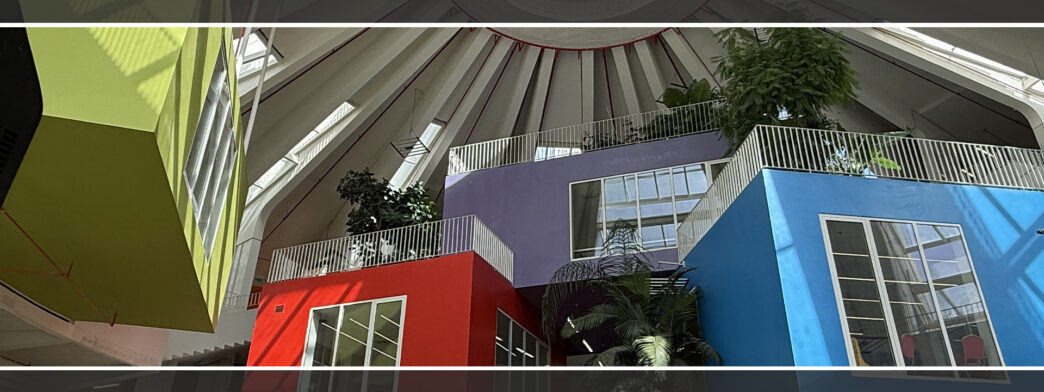
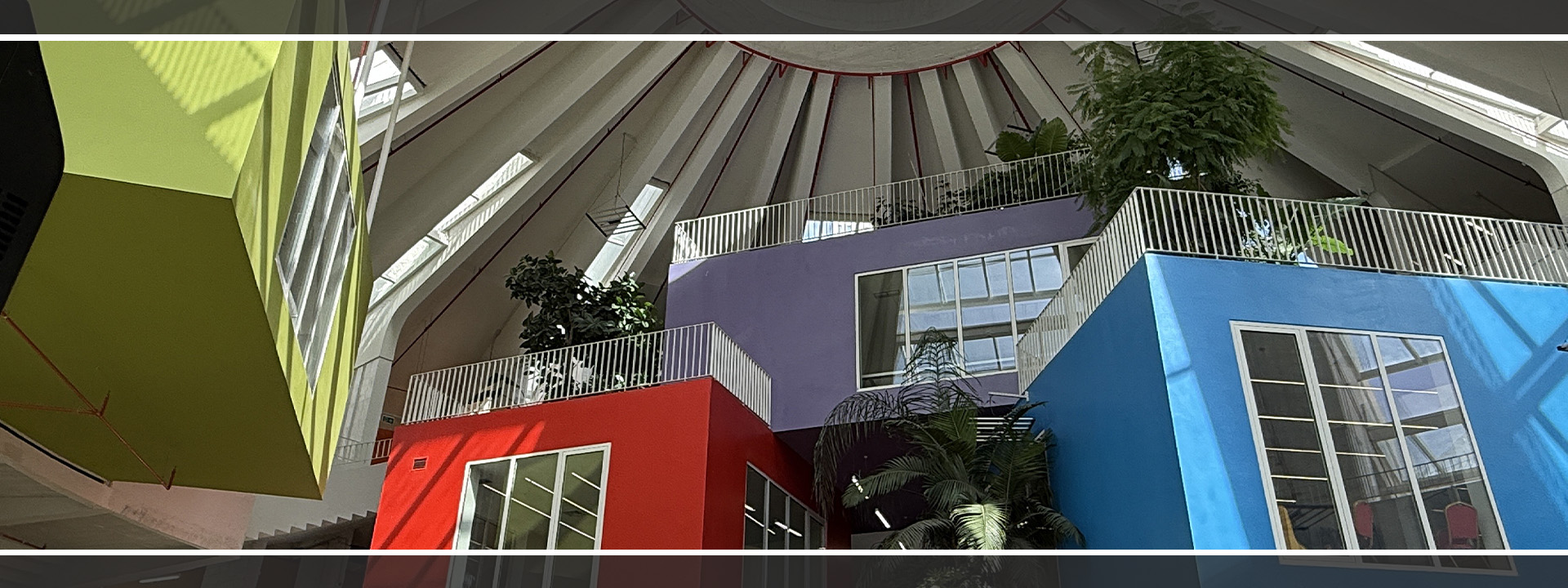
"The stairs that go up to the top are a good solution, but drowning it with cuboid objects seems inappropriate to me," says Hasimja.
He emphasizes that the Pyramid should have a deeper social function, as a museum of the crimes of the dictatorship: "Unlike the bunkers that present the dictatorship almost as an entertaining movie, this museum should present the essence of communism with its theoretical and practical principles."
While urban planner Kaprata emphasizes that the paradox remains present: "A part of society still sees it as a symbol of the collective memory of the totalitarian past, while others consider it simply a building without architectural value."
The Pyramid today from an ideological monument to a consumer environment
In recent years, the Municipality of Tirana, the European Union and the Albanian-American Development Foundation (AADF) launched a project to reconstruct the Pyramid, transforming it into a cultural and educational center for young people. The transformation of the Pyramid cost 22 million dollars, interventions that were carried out on the interior and exterior structure without touching the original exterior architecture. At the heart of this transformation stands TUMO Tirana, an innovation center that offers free programs for children and adolescents in the fields of technology and art.
Sinjalizo reached out to AADF for comment on how they have seen the development of the project they invested in over the past few months, and how they predict the impact TUMO Tirana will have in the years to come, but so far we have not received a response.
The center’s executive director emphasizes that TUMO has a capacity for 3,000 students each year, who pursue 10 disciplines, from programming and robotics, to graphic design and film. “The program is completely free, supported by full scholarships offered by the Municipality of Tirana.”
But in addition to the innovative center, today 11 premises have been put into operation by private entities, such as bars, restaurants or souvenir shops. The construction of these "cubic" buildings in the former green surroundings of the Pyramid came as a request from the Municipality of Tirana to have more spaces to rent to private businesses, this at the expense of green spaces and the initial plans of the design company. MVRDV and the initial promises of the former Mayor Veliaj, that the vast majority of "cubes" would be dedicated to spaces for start-ups where students, beyond the classroom, would have the opportunity to practice the skills they have learned, and another part would be dedicated to service businesses.
The pyramid is a trinomial between past history, technological TUMO, and the coffeehouse culture that dominates the capital. And in the midst of this, historical identity seems to have dissolved.
The Pyramid of Tirana is more than a building. It is a reflection of the journey of Albanian society from totalitarianism to democracy and modernity.
Starting with the glorification of a political figure, to its downfall as a monument of ideology, and to its return as a space for youth and "cafe culture", it represents the transitions and transformations of the city over these nearly 4 decades.
Kaprata and Hasimja unanimously emphasize that a more balanced approach would have been to preserve the historical authenticity, transforming it into a museum of the memory of the dictatorship, as other former communist countries have done. Ermal Hasimja underlines that the current reconstruction has brought positive elements, but the critical dimension of reflection on communism is still missing. Meanwhile, the leaders of TUMO see the Pyramid as a unique ecosystem, where Albanian youth have the opportunity to develop creative and digital skills.
The history of the Tirana Pyramid is a triple narrative: a testament to the monumental architecture of Albanian socialism, a space oscillating between different functions after the '90s, and today a center of innovation and consumerism.
For some, it remains a scar reminiscent of the dictatorship; for others, a public space where youth have fun.
But above all, today it is a building where, more than technology, the cafes, bars, and the occasional loss of the building's facade tiles stand out, once after they were stolen and once after poor workmanship of the implementing firm, stripping it of historical memory and turning it into a monument without identity