


Ida Ismail
Albania is facing a serious food safety crisis. Fruits, vegetables and products of animal origin sold every day in markets and supermarkets often reach the consumer's table without passing through basic control filters. The alarm does not come from local institutions, but from Brussels through the European Union's Rapid Alert System for Food (RASFF), which has repeatedly signaled the presence of banned pesticides, dangerous bacteria and parasites in Albanian products.
Alarming figures, over 163 tons of banned products
From January 2023 to September 2025, around 163.383 kg of unsafe products were placed on the Albanian market for consumption. These products, which contained prohibited substances and were dangerous to consumer health, were identified by RASFF and were returned or blocked by local authorities. For the pesticide Chlorpyrifos alone, banned in Albania since 2020, several problematic loads were detected:
- 8.216 kg of peppers contaminated with three banned insecticides: Flonicamid, Chlorfenapyr and Tebufenpyrad.
- 10.700 kg of strawberries with pesticides above the permitted rate, returned from Croatia.
- 5.562 kg of Albanian peaches with nickel content above the permitted norms.
- 8000 kg of pesticide tomatoes
- 26.325 kg of chicken and pork fillets, with the presence of Salmonella spp. bacteria.
- 985 kg of salted anchovy with the presence of the L3 Anisakis parasite, imported into our country.
While the responsible domestic control institutions, namely the National Food Authority (AKU) and the Veterinary and Plant Protection Authority (AKVMB), report measures following the alarm, experts warn that the domestic market is unprotected and that controls in the country are more formal than preventive.
Food safety expert Ervin Resuli warns of serious health consequences.
"Poisoning from pesticides, bacteria like Salmonella, or parasites like Anisakis can cause vomiting, diarrhea, fever, and even damage to vital organs like the liver, kidneys, etc."
Mandarins, investigations and scandals
In December 2024, a shipment of 21 tons of tangerines produced in Albania was rejected by Croatia due to prohibited pesticides. The products were supposed to be returned for destruction, but investigations revealed that they were redistributed to farmers in Berat and Konispol. The Berat Prosecutor's Office launched a criminal investigation against the subject of Arben Dyl, for the offense of "Production, importation and sale of food harmful to life and health". According to official documents, the quantity of 21.593 kg of tangerines lost traceability after being returned. Also under investigation are farmer Elton Tafa and AKVMB employee Elson Tahiraj for the criminal offenses of "Fraud with food products" and "Abuse of office".
The second case is that of Divjaka peppers, where a shipment of 8.216 kg was returned from Croatia.
According to Granit Sokolaj, director of the Alert Center, three insecticides were found in the peppers, one of which is completely banned. Sokolaj explains: "There is a lack of control in the entire chain from farm to market. Control should start in the greenhouses, where the AKVMB has the legal authority to verify the use of pesticides. Unfortunately, controls are only carried out after export, when the damage has been done."
Another worrying case concerns a 52 kg shipment of strawberries imported from Greece, where laboratory analysis found banned pesticides. The AKU stated that the entire quantity had been sold before being sent for analysis. For peaches, analyses revealed high nickel residues. Sokolaj explains: “The peaches are a more specific case, not related to the farmer, but to water pollution. The nickel found in the peaches is thought to come from the Shkumbin River, which flows through Divjaka and Peqin.”
The next returned shipment was in August 2025, 8 tons of Albanian tomatoes were rejected by Croatia due to the pesticide Chlorfenapyr above the allowed rate. In this case, the exporter Mariglen Qorri was imprisoned, while two young inspectors of the AKU, Ronaldo Lika and Griselda Doksani, were under “house arrest”. Sokolaj emphasizes that the responsibility is falling on the junior employees: “Two young inspectors who had not even been on duty for a year were sent to prison and who should have been accompanied by a third with experience. Meanwhile, the director of the AKU Berat and the producer who are responsible have been left out of the investigation.”
Laboratories out of order! AKU in crisis
Food safety expert Granit Sokolaj raises the alarm about the lack of functional laboratories in the country: "The AKU has 7 regional laboratories that are almost out of function because they are not accredited and do not have the necessary equipment.
Official analyses can only be carried out by the Food Safety and Veterinary Institute (ISUV), but since the order of former Minister of Agriculture Bledar Çuçi in 2018, third parties such as exporters cannot send samples there, but only to private laboratories.
Given the cases of recent years, Prime Minister Edi Rama has declared that he will suspend the activities of the AKU due to the "abuses" found in inspections.
Sokolaj said: "The new reform foresees the merger of the AKU, AKVMB and the Fisheries Inspectorate, three important food safety inspectorates. It takes time, as there are still many VKMs and sub-legal acts that have not been approved."
Statistics of recent years, measures of institutions
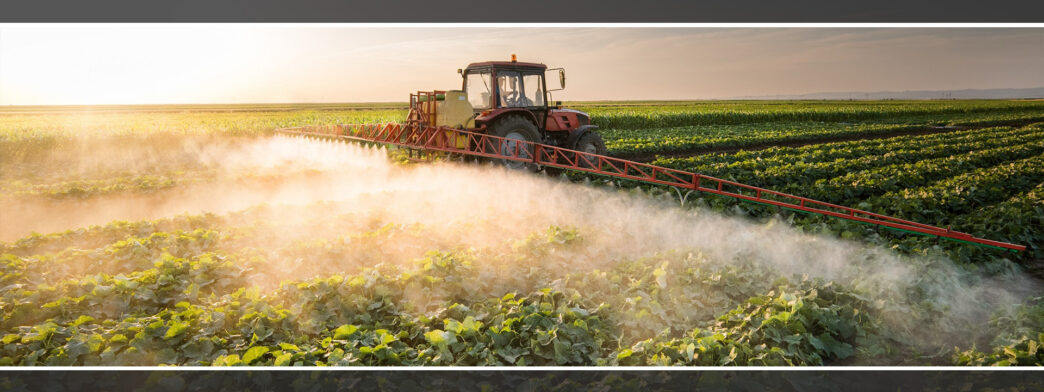
According to official data from the AKU, there are 116 cases of pesticides detected in 2023, 110 cases in 2024 and 54 non-conforming cases (with Chlorpyrifos) in the period January-September 2025. The Veterinary and Plant Protection Authority emphasizes that the substance Chlorpyrifos has been banned in Albania since February 16, 2020, but monitoring shows that it continues to be widely used in agriculture. Referring to the sampling plan, the AKVMB indicates that during 2024, 1014 samples were taken on the market, of which 54 resulted in the content of chlorpyrifos.
Following continuous alerts from RASFF, the AKU and AKVMB report that 6 farmers have been criminally charged for using prohibited pesticides, while 2 others are under investigation for lack of traceability. The AKU informs “Sinjalizo” that food operators who were found to have violated the rules have been fined 100.000 to 500.000 lek. AKVMB itself admits that it has serious difficulties: “During the process, a lack of interest on the part of farmers in correctly reporting the use of plant protection products and preserving documentation that proves the supplier was found.”
Experts warn that the problem is not only with farmers, but also with agricultural pharmacies that trade in banned pesticides, often smuggled from Kosovo under the labels of "biocides" or from Greece.
"The whole spirit needs to change," says Sokolaj. "We need an investigation into the imports of banned pesticides, the agricultural pharmacies that sell them, and the farmers who use them. We have good EU legislation, but we have problems with implementation. We need to increase capacity, as the AKU has only 290 inspectors in all of Albania, while in Tirana alone there are 25 food business operators."
The cases of tangerines, peppers, strawberries, tomatoes and other products show that Albania does not yet have a functional food protection system. Until the AKU, AKVMB and the Ministry of Agriculture build a monitoring and transparency system, Brussels alerts will remain the only way to find out what we consume every day.