


Denada Jushi
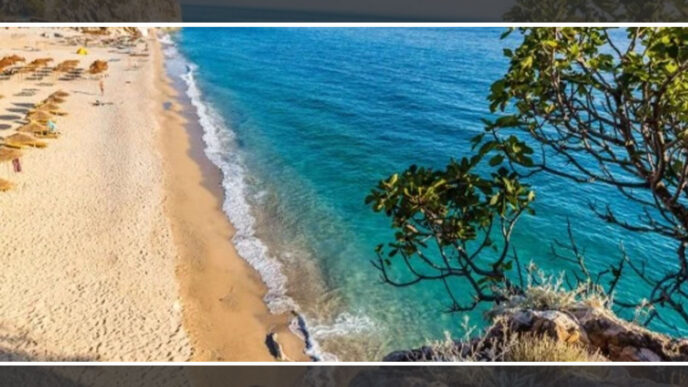
Northern Albania is a living postcard: mirror-deep lakes, cloud-touching mountains, and a coastline that rivals any Mediterranean country. But to reach this natural paradise, you must first pass through the hell of asphalt.
"It's 8:30. We leave Astir for Lake Koman. We wait 45 minutes to get out of Kashari, then stop again around Lezha. Two stops, two hours, and still without seeing a mountain or a lake," says Megi, who travels this route twice a week.
The Tirana-Durres axis, once a symbol of development, has been transformed into a knot of tense nerves. It has become the "first point of delivery", where the ordeal of tourists, vacationers and travelers begins.
Tourism on the rise, roads in crisis
Albania has made clear its ambition to become a European tourist destination. But with an infrastructure that collapses under the weight of the season, this ambition turns into a paradox: more tourists, fewer positive experiences.
From Shëngjin to Velipojë, from Theth to Valbona, from Koman to Shkodra, every northern destination is breathtakingly beautiful. But to see it, you first have to survive the traffic.
The Tirana-Lezha axis is 90 km. On paper, it takes an hour to cover. In the summer season? Three to four hours. Often, the road tires you out more than hiking to the peaks of the Alps.
Traffic that doesn't spare the weekend or weekdays
Every weekend, thousands of citizens climb into columns of cars that slow down in Thumanë, Milot, Lezha and further towards Shkodra and Hani i Hoti. Roads that should have been bridges of development have turned into barriers that slow down the economy, fray nerves and destroy peace.
The lack of a long-term plan and sustainable solutions has made institutions appear more like spectators than actors.
Experts speak: planning that corrects, not prevents
Dr. Doriana Musaj, an urban planner, explains it clearly: "These roads were designed for a different Albania. The road network designed for the 80s cannot handle the urban density of today's Tirana, Durrës, Lezha and Shkodra."
There are several factors: on the one hand, the increase in the flow of tourists (domestic and foreign), on the other hand, the lack of alternative routes, chaotic urban development, increased construction and industrial flow on the same axes.
For Gëzim Hoxha, a road safety expert, the problem is also exacerbated by the behavior of drivers: "Violation of the rules, dangerous maneuvers and accidents are daily, especially in the season. One accident stops hundreds of cars for hours."
One road… tourism, trade, ambulances and cement trucks
In Europe, the motorway is for fast cars. Secondary road for heavy vehicles. Emergency lane for emergencies. Here? One road for all.
On the Tirana-Lezha axis, everyone passes at the same time: citizens, tourists, trucks, buses, emergency vehicles, school buses and carts full of cucumbers. And the road, poor and narrow, cannot handle them all.
The ARRSH admits that the roads are congested and that the increase in the number of vehicles has exceeded the existing capacity. But the interventions; signage, some asphalting, some tree planting for "visual PR" - do not touch the essence.
Milot–Balldren: the 17-kilometer road that is not being built
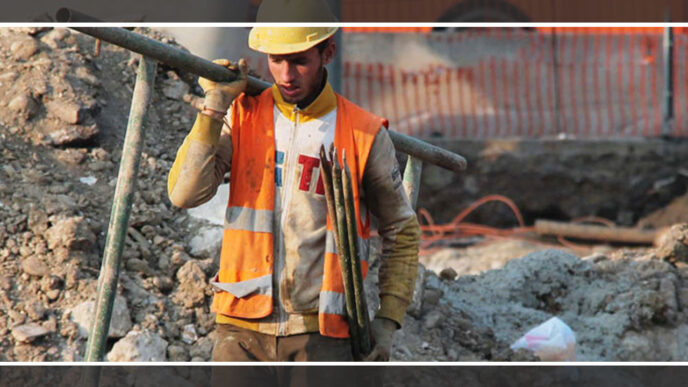
No debate on traffic can ignore the saga of the Milot-Balldren road. Only 17 kilometers, but carrying a history of repeated disappointment and failure.
The government touted it as the axis that would “liberate” the north. But the 213 million euro concession contract, awarded in 2019 to a company with no significant experience, was heavily criticized by experts and civil society. Today, the road remains a suspended project.
Instead of being a new artery of development, Milot-Balldren has become a symbol of unfulfilled promises. And the traffic continues as usual, or worse.
Solution? Yes, but late, slowly and with improvisation
Bypasses like those in Gjirokastra or Vlora were built to avoid urban traffic. But urban planners warn that building bypasses without an integrated strategy brings more problems than solutions.
A sustainable solution would include:
Functional public transport
Intercity terminals in major cities
Realistic train system for tourist trips
Bypasses for tourist cities and industrial areas
Expansion of axes and more intelligent traffic management
But these require planning, budget, time, and political will. Four words that don't always fit together in Albania.
Missing terminals and traffic that increases with each new building
In Lezha and Shëngjin, multi-story buildings have sprouted like mushrooms after the rain, but without sewers, without new roads, without parking lots. The result? Permanent chaos.
Urban planners warn that development without planning is like building a house on sand. Albania is building more traffic than prosperity.
Instead of the road network preceding urban development, it is always coming after it.
The statistics speak for themselves: 200 thousand vehicles in one month alone in Han i Hotit
According to official data, in a certain month of 2024 alone, the Hani i Hoti customs point recorded over 200 thousand vehicle crossings. An increase that indicates two things:
The growing flow of tourism and trade
The strategic importance of this axis for the economy and cross-border movement
And again, a road that was not designed for this kind of weight and flow.
The end of improvisation or endless improvisation?
The 2024 summer season comes with the usual promises: more police, a ban on heavy vehicles during rush hour, emergency expansions, smart cameras, etc. But all of these are aspirin for a body that needs surgery.
Meanwhile, citizens set off in the morning with coffee and tranquilizers to face the roads leading to their vacations.
The road is not a luxury, it is development.
In a country that aims to increase tourism, develop the economy, and better connect remote areas, the road is no longer a "wish." It is a necessity. And it can no longer remain a hostage to improvisations.
If Albania wants development, it must build roads. Real ones. Planned ones. And completed ones.
Because a country that develops tourism without roads, cities without terminals, and construction without infrastructure risks producing more traffic than well-being.