



Ida Ismail
UPDATE (December 19, 2024)
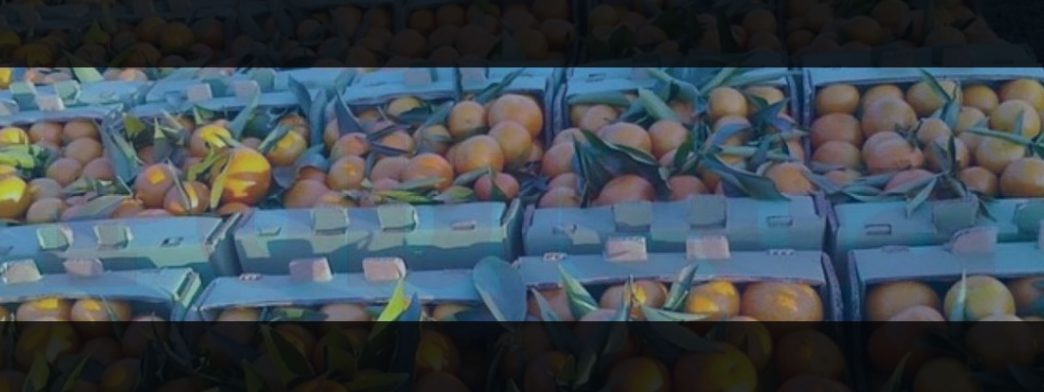
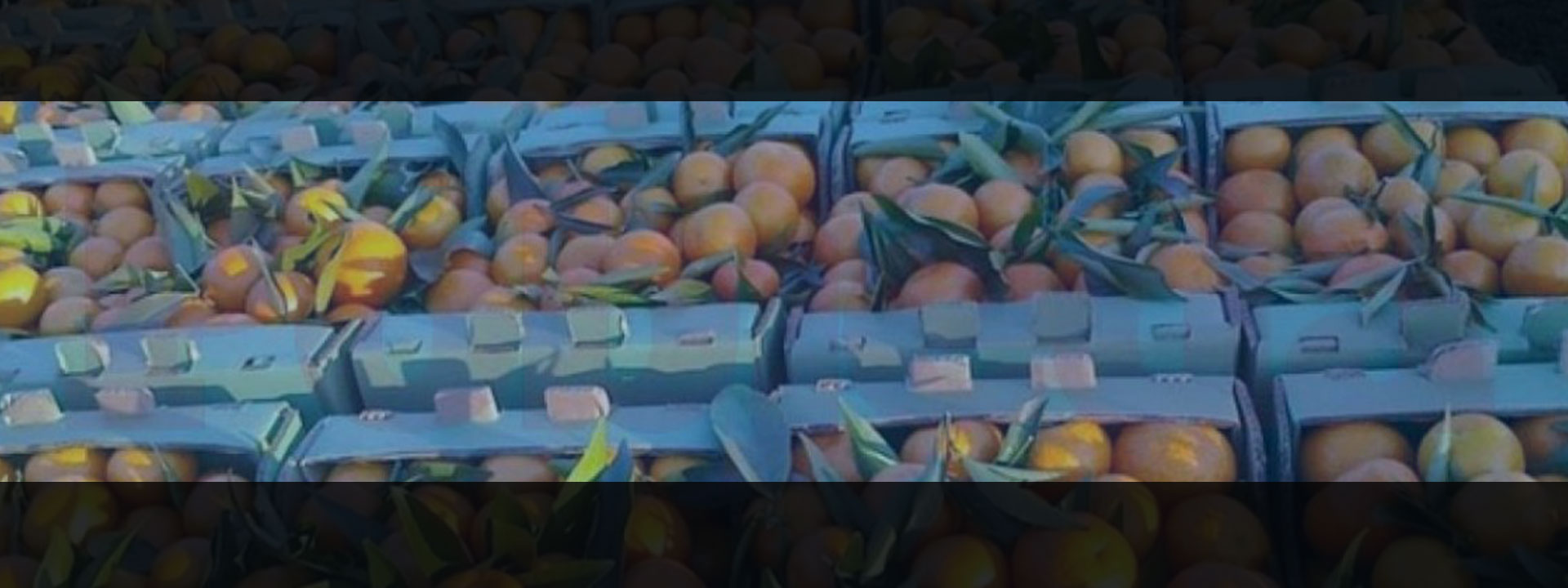
The Ministry of Agriculture and Rural Development has reacted to the RASFF report, about 3 loads of tangerines with pesticides, which came from Albania. The reaction of the Ministry of Agriculture comes only after the report was made public in the media. The Ministry announces that there are three shipments of clementine mandarins, exported by food collection entities located in Berat and Fier.
"Two of the cargoes have arrived at the country of origin. One of the cargoes was sent by AKU - Border Inspection Point, to the exporting subject and the cargo was disposed of by the farmers with the address Gorican Village, Dimal Municipality, Berat District and Mursi Village, Konispol Municipality, Vlorë District" - says the Ministry of Agriculture, but without making disposal images available.
Regarding the other load, the Ministry of Agriculture declares that it is blocked in the collecting entity located in the Fier District and the procedure of disposal of the products will be carried out by this Food Business Operator in cooperation with the Regional Directorates of Taxes, the National Food Authority and the National Environment Authority. This shipment was not accompanied by a laboratory report, as it is not a legal obligation for the exporting entities, which carry out this process within the control itself. While the third shipment announced with residues above the norm of Plant Protection Products, has not yet arrived in the Republic of Albania. Nor was this shipment accompanied by an analysis sheet.
Regarding the measures taken, the Ministry of Agriculture declares that the National Food Authority has fined and blocked the entity in Berat, for non-implementation of the legislation in force. Likewise, measures are being taken for farmers who have used plant protection products banned in the Republic of Albania.
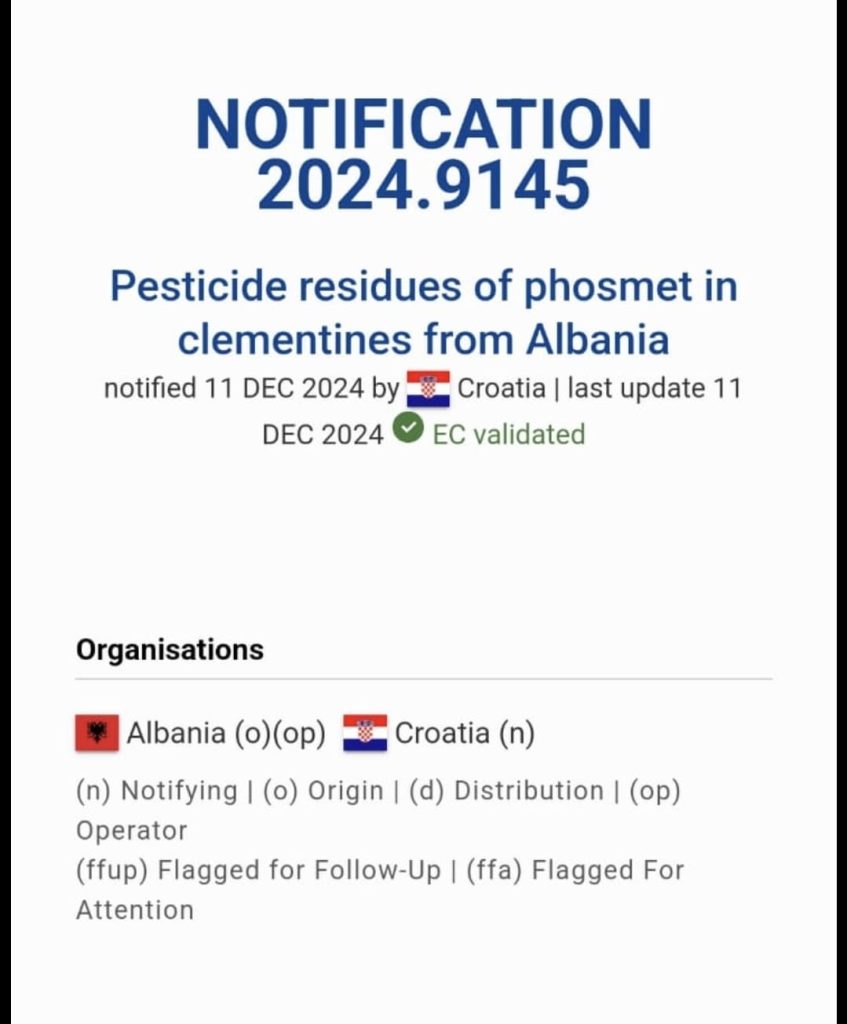
During the period November 29-December 11, 2024, the European Food Safety System RASFF has reported three cases of contamination with residues of Chlorpyrifos and Phosmet pesticides, in loads of mandarins originating from Albania. These substances are dangerous to human health and banned in the European Union due to their long-term damage. However, the Ministry of Agriculture is hiding the case, not making any announcement to the citizens, whether these products were consumed in the local market or disposed of according to the law.
Details from RASFF reports:
1. November 29, 2024 – Chlorpyrifos in tangerines. The shipment from Albania was discovered in Croatia.
2. December 11, 2024 – Phosmet in mandarins. The cargo was identified in Croatia.
All these cases are EC-validated, which means that they have been verified as correct and contain high residues of these pesticides.
WHAT IS CHLORPYRIPHOS?
Chlorpyrifos-ethyl is a pesticide that:
• It affects brain development in children, especially in the early stages of life.
• Causes damage to the nervous system and disorders of the endocrine system.
• Increases the risk of cardiovascular disease and cancer.
Chlorpyrifos has been completely banned in the EU for use and marketing by Commission Implementing Regulation 2020/18/EU, dated 10 January 2020, which entered into force on 16 February 2020.
In Albania, the prohibition of its use was made by the Order of the Minister No. 26, dated 22.1.2020, where it is determined that:
"To carry out the deregistration of plant protection products containing Chlorpyrifos by February 16, 2020".
What happens in Albania?
While Albanian legislation has been harmonized with that of the EU, the reality on the ground shows a total lack of supervision and transparency.
The shipments blocked by the EU show that these pesticides are still circulating and being used in our country.
Traders and farmers continue to use banned products, endangering public health and the reputation of Albanian exports.
Failure of authorities to control food products
These cases clearly show a failure of the food product control system by the Albanian authorities. In addition:
1. The Ministry has not informed the public about the risk of consuming these tangerines.
2. It is not known whether the products were blocked and buried, or ended up on the tables of Albanian citizens.
3. Exports of Albanian products are being damaged in the European markets, due to the residues of banned pesticides.
Lack of transparency and measures to be taken
Are these loads consumed in the domestic market?
What measures have been taken to ban the import and use of products containing Chlorpyrifos?
Why is there no transparency about their disposal according to the law?
This is a public health issue and cannot be ignored.