



Denada Jushi
If a file that is under investigation by the prosecution falls into the hands of a journalist, there is always a discussion about whether it should be published or not.
What should prevail? Public interest or the preservation of ethics? And above all, how should events related to justice be reported?
This is a dilemma that many journalists have encountered at least once in their careers.
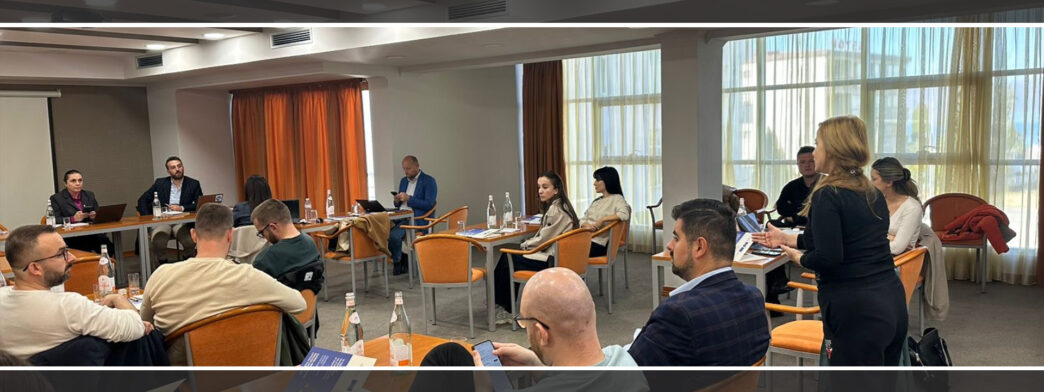
This was one of the strongest points of discussion at the 2-day training held in Tushemisht, Pogradec, by the Council of Europe this weekend.
"Reporting Justice with Accuracy, Professional Standards in Legal and Judicial Reporting" brought together in exchange of experiences, but also intensive training among lawyers, representatives of the judiciary, prosecutors and journalists.
In half a decade, justice topics have been the main focus of every news edition or programming, competing with the political background, which for many years in Albania has been unrivaled.
During the talks, the participants focused on the importance of judicial and legal reporting, the importance of journalistic accuracy in shaping public opinion, but also trust in the judiciary through fair reporting of cases.
At the same time, it was judged that legal terminology is extremely important for a journalist's reporting.
Through examples of articles, participants brought to attention the differences that a media article has when it provides transparency and when it reflects a judicial event.
The conversation then stopped at the points where the Albanian media often falters:
The privacy of minors, the protection of personal data, the presumption of innocence, which are often violated by journalists and editorial offices.
There are cases when photos of minors or individuals who may only be under investigation, or justice processes that acquit, appear, but the photos, generalities, or bombastic headlines remain forever in the print media.
Experiences from professionalism were also shared during the training by representatives of the judiciary, where participants focused on SLAPP lawsuits.
SLAPP lawsuits are lawsuits that are seen as not based on facts and that will be unsuccessful in court. Through them, the plaintiff does not aim to win the case, but rather aims to intimidate and discourage journalists or activists from further reporting on issues of public interest, forcing them to go through lengthy and costly legal processes.
Meanwhile, journalist Isa Myzyraj spoke about tactics and ways to avoid defamation, as well as elements such as accuracy, verification, sources and other elements to demonstrate ethical and professional reporting.
Anila Hoxha, a journalist with over 25 years of experience in reporting on justice issues and the fact that she studied at the Faculty of Law, brought through simulations the formats of interviews, the avoidance of mistakes that journalists make, but also the ways in which a breaking news story can be made without mistakes, even under time pressure.
Cooperation between journalists, lawyers and justice institutions remains essential for building a culture of fair, accurate and ethical reporting, where transparency is at the service of the public. / acqj.al