


Author: Denis Tahiri
"I bought medicines that the hospital should have provided for me. Some medicines were purchased at very high prices, such as RIBAVIRIN 200 mg, which I obtained for 160 euros at a pharmacy in Tirana. One box had 40 tablets . "

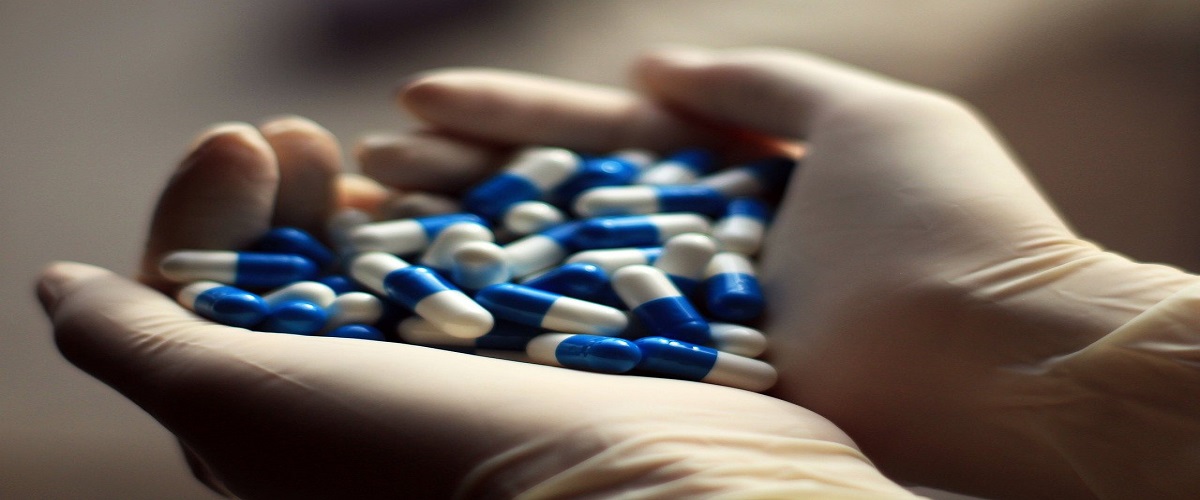
This is how a citizen begins his denunciation, who wrote to the Albanian Center for Quality Journalism. The denunciation was written on the WhatsApp number of SINJALIZO !, 0688563686 , which has been made available to citizens as one of the ways where they can anonymously report abuses and violations in various fields. But is this an isolated case? Or in the meantime, during the sars-cov-19 pandemic, dozens of citizens infected with the virus could not guarantee proper treatment with hospital medications and under the virtual "advice" of doctors they obtained medicines privately? Even though these medications, considered strong, should have been distributed only under the tutelage of doctors and only in hospitals.
Two bills against covid
An observation by the Albanian Center for Quality Journalism confirmed that many pharmacies in Tirana, under the instructions of doctors, offer such medicines that are only given for hospital use. The flourishing of such a market exploded especially during these months under the effects of the pandemic. “My family doctor suggested to me the names of the medicines via WhatsApp and even the number of them I should take per day. At the end, the name of the place and the address where I should buy them were written. After this treatment where the doctor took care that I only won the battle with Covid, due to the intensity of the strong medicines that I took as if they were herbal teas, I have other side effects that have seriously damaged my health,” writes another citizen on the SINJALIZO platform.
And these medications that must be used under hospital supervision, it is not difficult to find under the blessing of the doctor who also suggests the address where the purchase is made. Among the drugs that you can find in the pharmacy, although with some difficulty, are "Tocilizumab 400 mg/20 ml", "Propofol 10 mg/ml - 50 ml vial", as well as "Beclomethasore + Salbutamol 80 mcg + 1600 mcg, vial" ".
But what are the above medicines? The explanation is given by the pharmacist E. Z according to which the above-mentioned medications are for hospital use.
"Propofol 10 mg and 50 ml gram vial is anti-arrhythmic, it is used in anti-covid cures, it is a vial that is injected in the hospital. Undoubtedly, you find it secretly in some pharmacies. Even Beclomethasor + Salbutamol 80 mcg + 1600 mcg, it is a hospital vial, it is not legally sold in pharmacies. Rivibarin is not allowed to be sold in pharmacies, but in the open market now during covid you can find it at hand, it is antiviral and you can find it by hand. But it's not usually sold in pharmacies"
The Albanian Center for Quality Journalism asked the Ministry of Health for the list of medicines available to hospitals for COVID-19. The six medicines that are written in the line ministry's response are also found in pharmacies, in a market that is provided under the blessing of doctors who it is to some extent like the guarantee and condition that the patient must not betray. Their prices purchased on state roads vary from 107 ALL per unit to 545 ALL per unit. "On the black market" this price is offered much doubled. Specifically, the ministry lists ACQJ, medications and their value.
- 'Purchase antineoplastic immunomodulator drug. Tocilizuma 400 mg/ 20ml, 400 pieces, with a unit price of 62,641 ALL without VAT.
- "Ribavirin 200 mg tablet/capsule - 100 pieces; 10,700.00 ALL without VAT, with a unit price of 107 ALL without VAT
- "Oseltamivir (tamiflu) tablet" - 6000 pieces; ALL 885,000.00 without VAT, with a unit price of ALL 147.5 without VAT
- "Omperazol 40 mg/cial vial" - 20350 pieces; 9,666,250.00 ALL without VAT, with a unit price of 475 ALL without VAT
- "Propofol 10 mg/ml- 50 ml vial"- 660 pieces; ALL 359,766.00 without VAT, with the unit price of ALL 545.1 without VAT.
- Beclomethasor + Salbutamol 80 mcg + 1600 mcg, bottle- 10000 pieces, 513,000.00 ALL without VAT, with a unit price of 51.3 ALL without VAT.
Away from the walls of state hospital centers, another reality with high financial cost for citizens is advised by the doctor to the patient. Infected citizens, inclined to be cured and negativeized, rush to pharmacies in black, in the windows of which light drugs are offered and under the drawers, medication for "safe" patients.

' It's like a chain you can't escape. At the end of the day I don't care what is called black market and what is normal. As soon as the doctor instructed me about the medications, I didn't think twice. I bought them at any price"
But "Ribavirin 200 mg" purchased for hospital service with a total price of 107 ALL per grain, in the pharmacy is sold five times more and respectively 4 euros per grain or 160 euros per box, in which 40 grains are counted.
The other hospital medication "Omeprazole 40 mg/vial", bought by the Ministry of Health for 475 Lek excluding VAT per unit (per vial), on the black market, in some pharmacies in Tirana, you can find it for 620 Lek per vial.
Among the drugs that you can find in the pharmacy, although with some difficulty, are "Tocilizumab 400 mg/20 ml", "Propofol 10 mg/ml - 50 ml vial", as well as "Beclomethasore + Salbutamol 80 mcg + 1600 mcg". , flak".
Their monetary values differ significantly from the price in covid hospitals. But when the provision of hospital medicines is also provided on the black market and when the orientation of patients towards this solution affected the smuggling of medicines, at least unofficially, the prosecution still does not have a case that would convince them to start investigations.

The situation is aggravated not only by the fact that some of these medicines are expensive, but also by the fact that they are medicines that can only be offered in hospital centers. Such a condition is not ordered driven by price competition, but by the effects that their use brings to the health of citizens and that cannot be like any other outpatient medication. One of them is "Propofol 40mg/cial vial" as well as Beclomethasore + Salbutamol 80 mcg+ 1600 mcg vial".
After we showed the prescription to a pharmacist, which included the name of the above-mentioned medication, for the patient who is currently being treated at home, she asked:
"This is the flak that becomes venous? Is the person currently in the hospital? I currently do not have any of these that you have here, except for this Tamiflu, I do not have any of the others. I want you to give me some time to find you"
Other pharmacists are reserved. According to some, some of these drugs are very difficult to find as they are drugs intended for hospital use. "But it's not impossible," guarantees Elsa.
"These types of drugs are difficult to find, they are generally drugs that are taken out of hospitals, usually come from Greece, Italy and Turkey. Or they circulate by bringing them under hand from Turkey because it is difficult to get them from Greece and Italy. You can order if you have someone in Turkey, they are taken from the hospital, because you can't find them in pharmacies there either. I myself don't like to deal with these because they are not even allowed to be sold," says the employee of the next pharmacy who adds that if it is urgent she will help us find them. She also, as happens on the black market, based on trust, sends us to a pharmacy that offers these medications under hand.
The President of the Order of Pharmacists, Diana Toma mentions for ACQJ that these medications enter the pharmaceutical market through a supply that has not passed through legal channels at all. Despite the careful terms of the number one pharmacist, this mechanism is called more briefly, smuggling.
"In any kind of situation, there is the possibility that certain people bring to the market and make present not only drugs but various articles which are in short supply in the Albanian market, but are in increased demand. This phenomenon exists because a specific circuit, which is directly related to the supply of drugs in Albania, has not been closed. The state should find the forms and logics to fulfill everything that the Albanian citizen is looking for, and it should be more urgent when it comes to drugs" Mrs. Toma begins her explanation.
For the chief pharmacist, the state should have intervened to provide these drugs, as long as the demands are increasing.
" Referring to the values of these drugs and taking into account the way these types of drugs are administered, since the demand for these drugs has also spread outside the hospital, the availability of these preparations with state support should be urgently introduced. Since the pharmaceutical market is indeed with private suppliers, who may not have an interest in introducing these drugs, the state should intervene even if the state itself would encourage and provide various actors in the pharmaceutical system who import drugs in order to find opportunities to supply and make them present in the Albanian market."
Ms. Toma is straightforward in bringing examples that confirm the distribution of hospital drugs contrary to the strict conditions for their use.
"Some drugs that were used in hospital conditions were found in pharmacies and had a price tag. When you look at it from the outside, the logic leads that when there is a price stamp this bar is for the open market as those for hospital use have a special stamp. They brought me samples of drugs that did not have the stamp for hospital use, but simply had the price stamp indicating that the destination was for the open market. These drugs were also in short supply".
How much does the cure cost at home?
We are already used to the panorama of citizens waiting to bring in covid clothing and food to hospitals. Another reality is for those patients who fight the infection within the walls of their apartment. Their treatment at home is not so much, as each of them meticulously follows the prescription where the medicines to be bought and taken are written.

Tea, a 28-year-old from Tirana, is perhaps among the few Albanians who has taken the Covid-19 swab several times due to the infection of her relatives and herself later.
" The first to get sick was my brother, he had a fever for a day and on the second day we went to a private clinic and did a swab test and it came out positive. The swab test from the state was called in the second week, when my brother was on the way to recovery. Meanwhile, we didn't even do a swab test for my mother, we immediately took her for a scan and the treatment started on the first day with all the medications, antibiotics, dexamethasone and favira which is an antiviral and in addition to these another antiviral Codramol and stomach protection. Favira cost somewhere around 200 thousand lek and the treatment lasted about 20 days in total," she says, adding that she herself initially only took vitamins, but after a week she started treatment with needles.
"By the end of the first week I got worse. I went to the pneumonology of the neighborhood and he gave me needles with antibiotics and Dexamethasone that cost around 70 thousand old lek. After I came out negative, I got needles for blood thinning, which continued for another 7 days and cost me about 50 thousand old lek".
But how much did the cure cost Tea and her family?
"Medication for the entire family cost us 1 million 500 thousand old lek. For my mother's case, which was a little more complicated, the doctor gave us directions on where to find the medications," the young woman from Tirana tells ACQJ.
In the gift war
Aspirators, which were considered one of the main assets of hospitals in this "war" with COVID-19, were much talked about during the first months of the pandemic as a difficult equipment to secure due to the great demand in the global market.

On March 23, 2020, the Minister of Health, Ogerta Manastirliu, would state in a public appearance that the contracts for the purchase of 54 respirators had been concluded and the procedures for another 100, which would arrive according to a well-defined calendar, were being followed.
But on November 26, 2020, through an official response, the Ministry of Health announced that since the start of the COVID-19 pandemic in our country, " 50 medical devices of the dimodular, standard and advanced respiratory type for resuscitation, MRI magnetic resonance imaging have been purchased." But while the Albanian government opened its wallet with savings, various international partners generously extended their hand to us.
Officially, the Ministry of Health admits that various donations exceeded the respirators that the Albanian state could buy during the pandemic situation. In total, 211 respiratory devices were donated, in a list where the European Union leads with 80 donated devices, followed by NATO with 60 such devices, the UNDP brought 31 devices, the Danes also donated 30 respiratory devices and another 10 were forgiven by the Germans . Calculating the equipment donated, those purchased during these months and the small fund of respirators that were found in hospitals, the number of necessary breathing apparatus reaches 502, which are distributed in different hospitals.
Covid and corruption...
But did covid affect another type of corruption? That of providing help to patients in exchange for money. At the address of SINJALIZO, a citizen claims that every day that his relative was cured in the covid hospital, he willingly paid 500 new lek to the staff, not only to put the clothes in but also to calm him down with good news.

However, the arrest of Tire Alldervish, a sanitary worker at the "Shefqet Ndroqi" hospital, which was converted to Covid 2, exposed the corruption in Albanian hospitals. At least this is what the prosecutor declared during the security measure when he said that the medical records would be verified, but the authorship of the people who signed the medical prescriptions, which were then taken out of the hospital through the accused. For several weeks, the sanitary worker who appeared as a nurse extorted about 800 thousand Lek by guaranteeing dedicated service to the complainant's mother, who in the end did not win the battle with covid. The denunciation of the daughter of the deceased is not yet known if she discovered the tip of an iceberg, under which there are also doctors, or in fact the all-alone sanitarian managed to deceive everyone in order to take advantage of people who needed help.

The points on "i" are hoped to be decided by the expertise of the prosecution, which promised during the security measure that it will provide answers to evidence such as signed medical prescriptions, which were converted into medicines that were bought outside the hospital as soon as they were received from the woman's relatives. But despite the expected investigative result, the conversations between the family members of the patient and the nurse showed that beyond the slogan 'free medicine', other Services that the hospital should guarantee, such as food and medicine, are bought by the citizens themselves.