


Vivian Mancellari
Our country is facing an increase in the number of minors with mental and emotional disorders, their involvement in criminal activities and a lowering of the age of use of psychotropic substances that cause mental health problems. At a time when action is required to rehabilitate mental health problems, Albanian children and youth find themselves facing a lack of capacities and insufficient human resources, and their parents facing unaffordable costs and private Services that have turned into businesses.
The past year has been accompanied by continuous alarms regarding mental and emotional disorders, the increase in the number of people seeking psychiatric Services, and the decrease in the age of recipients of these Services. For children, adolescents, and young people who need these Services, the situation is significantly more difficult due to the specifics of Albania.
Official data in figures: Capacities and flow
The national capacity of specialized mental health Services with beds for children and adolescents is 8 beds at the Child and Adolescent Psychiatry Pavilion at the "Mother Teresa" University Hospital Center (QSUT).
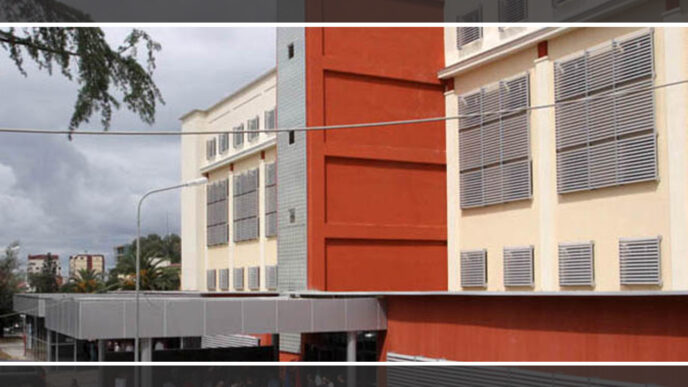
At the end of 2024, work began on the reconstruction of the psychiatric buildings and the transfer of patients from the Psychiatric Service to transitional facilities where operations are being carried out with reduced capacities, prioritizing cases. During this period, only outpatient Services and a day hospital for minors were provided. According to the latest data from the Psychiatric Service at the QSUT, only 1 patient under 18 years of age is hospitalized.
In the last 5 years, 501 children have been admitted to the Child and Adolescent Psychiatry Pavilion at the University Hospital, while according to data from the University Hospital service, readmissions account for about 40% of total admissions.
According to QSUT data, most of these are men and the most common diagnoses for which they are treated are paranoid schizophrenia, bipolar disorder, and unspecified or transient mood disorders.
In the last 5 years, 8099 minors have been treated for mental disorders at regional hospital centers and psychiatric hospitals.
In addition to the Child and Adolescent Psychiatry Pavilion at the University Hospital, the National Therapeutic and Rehabilitation Center for Children, Tirana (NTRC) offers inpatient Services, but not like psychiatric hospitals. The service provided to hospitalized children is of a rehabilitative nature and includes children aged 0-6 years, including neurodevelopmental diagnoses. The bed capacity is for 25 children. Hospitalized children stay at the center for 2 weeks and attend therapeutic sessions every day, returning for the next cycle of therapies after 6 weeks. In the last 5 years, 821 children have been hospitalized at NTRC.
In addition to inpatient Services, the QKTRF offers diagnosis, treatment and rehabilitation for every person aged 0-18 years suffering from mental health disorders, and plays a preventive role in disorders and at the same time promotes positive mental health. Children who receive outpatient therapy attend therapy with a frequency of 2 times a week. In the last 5 years, 5959 medical visits have been carried out.
According to the QKTRF, what is observed is an increase in the number of medical visits, which includes psychiatric consultations for various mental health issues in the 0-18 age group.
For several years, Albania has been working to de-hospitalize Services in the mental health sector, with the aim of treating these problems in the community. To this end, the number of beds in psychiatry has been reduced and Community Mental Health Centers (CMHCs) have been established. At the national level, a total of 10 such centers operate, distributed in 4 regions, Tirana, Elbasan, Shkodër and Vlorë, and offer Services to the community in the field of mental health.
All QKSHMs provide Services for minors and adolescents, except for QKSHM Berat, which only provides Services for persons over 18 years of age.
According to data from the Health Care Services Operator (OSKSH), in the last 5 years, 6200 minors have sought psychiatric treatment at the Korçë Mental Health Center, 3308 at the Elbasan Mental Health Center, and 12808 at the Tirana and Kavaja Mental Health Centers. During the years 2022-2023 alone, 17819 children and adolescents received psychosocial and psychiatric Services in all centers.
At a national level, there are 6 development centers in our country that provide Services for people with disabilities, located in Tirana, Durrës, Vlorë, Berat, Korçë and Shkodër.
In the last 5 years, there have been 47 beneficiaries under 18 years of age who have been treated with various mental health diagnoses assessed according to the KMCAP and the QKSHM.
Social care institutions for people with disabilities provide long-term Services for children without parental care up to the age of 21. Because some of the beneficiaries have been abandoned by their families, these centers also treat beneficiaries over the age of 21. These beneficiaries mainly receive Services at the Korça and Shkodra development centers.
These centers provide social-psychological Services, housing, developmental therapy, occupational therapy, and medical Services. Admissions are not based on medical protocols, as the centers are not health institutions, but provide Services for the training and reintegration of people with disabilities, for whom biological families or legal guardians cannot provide care for various social reasons.
Capacity and human resources versus needs
According to official data, for children and adolescents with mental health disorders, Albania not only lacks capacity, but also has a centralization of it, making access impossible for the entire population. The psychiatric inpatient service is only located in Tirana, but community Services are also located in 4 regions.
According to the latest report of the Supreme State Audit, it turns out that not all Community Mental Health Centers have been established in our country to properly manage psychiatric patients in the health service.
"Despite this commitment to establish and strengthen health Services at all levels, in practice it has resulted that, out of 25 Community Mental Health Centers that should have been established to follow up outpatient patients with mental health disorders, only 10 have been established, due to non-implementation of the Mental Health Action Plan 2013 - 2022," states the SAI audit report.
Child and adolescent mental health professionals express concern about the situation caused by limited capacities.
“Unfortunately, many children still do not have access to community mental health centers, which means that they do not receive the right help in time, are not diagnosed, are not treated, and this is later reflected in their clinical progress,” says Elona Dashi, a child and adolescent psychiatrist. “In other cases, it happens that despite being able to initially present themselves at community centers, they are unable to continue regular follow-up, whether due to distance or lack of awareness about the importance of mental health,” adds Dashi.
In the Basic Register of the Order of Physicians of Albania, there are 7 doctors registered who are licensed and specialized in child and adolescent psychiatry. Professionals say that this low official figure is outdated and does not reflect reality, although they agree that human resources are scarce.
"If we refer to countries in the region and beyond, it is true that we have lower human resources than the needs," says Elona Dashi, who adds that "in many cases, due to the lack of child psychiatrists, the need causes the service to be covered by other specialists, such as adult psychiatry, and this also affects the quality of the service."
Anisa Dizdari, a child development specialist and director of the non-public TISS center, testifies to the fact that public Services leave much to be desired. According to Dizdari, there have been cases when parents of children who have not been able to receive Services at public centers have gone to the center she runs, which provides Services for children with special needs.
"We are sorry to say this, but there have been parents who have had economic problems and the state has been the first door they knocked on. Service in the state is not denied to anyone, but the influx and perhaps the lack of staff in numbers, means that parents do not receive the service for their child on time," says Dizdari.
Affordable costs for families of children with special needs
There are not a few cases where minors with mental health disorders remain in the care of their families and do not receive any type of treatment or professional Services.
"At a minimum, the parent must be trained, receive information, and receive the appropriate recommendations to help the child in everyday life. Once this step has been taken, the parent can always, in collaboration with the mental health team, take care of the child," says Elona Dashi.
Dashi further states that in such cases, the cost is complex, social, emotional and, of course, economic in nature.
"If we refer to the average income in our country, the economic cost for these families is great, and if we talk about families with below-average income, this cost becomes even greater," says Dashi.
In the absence of human resources, capacities or economic opportunity to pay for Services, families of children with special needs are forced to seek help from the community or charitable organizations. The “Donate with Heart” Foundation is an initiative that helps Albanian citizens and the various needs that cases may have.
Gëzim Allushi, the founder of this foundation, recalls the case of a family with a child with special needs, whom he met during a food aid distribution campaign in the Devoll area last year.
According to Allushi, this is a child who was 6 years old at the time and needed speech therapy.
"The child had significant speech and pronunciation difficulties, which hindered his communication and language development. They did not have a precise medical diagnosis, but it was clear that he needed professional speech therapy."
With the help of local people, a center was found near the area and the "Donate with Heart" foundation came to the aid of the family by paying for speech therapy treatment for almost 6 months.
"They had requested social assistance, but had not received any response until then," says Allushi, who further adds: "To my knowledge, they did not receive any assistance or response from state institutions during the time we followed them."
High demand for private Services – Services that turn into business
Anisa Dizdari, director of the TISS center, says there are several reasons why parents of children with special needs turn to private Services. She mentions the provision of a faster and more effective service, convenience, quality of Services and the use of modern treatment methods, support for parents, etc.
"I can list several factors, but essentially, the choice of a private center comes from the parent's desire for a more specialized, effective, and personalized service for the child's development," says Dizdari.
According to her, one of the factors that draws parents to non-public centers is that doctors and specialists have more time to pay proper attention to the child and his or her problems, and the assessment and diagnosis can be more complete and accurate.
But while non-public centers are attractive for a number of reasons, they are neither always a safe choice nor do they necessarily guarantee the quality of Services provided.
"We have had cases that have been poorly evaluated or underestimated by other specialists. Cases where an incorrect diagnosis or no diagnosis at all has been made (at the moment when the child needed a diagnosis) ... children come who receive therapy in other centers for years and the parent does not know what to call the child's problem because the doctor does not give a diagnosis," says Dizdari.
According to her, in Albania there is a significant lack of well-structured state control and policies regarding the provision of Services for children with special needs, especially in the private sector.
“We are a group of centers that have been providing Services for years and every day we feel this problem more and more, raising the issue whenever we are given the opportunity, even in discussion tables at political levels.”, says Anisa Dizdari, who further adds: “In my opinion, the problems are: High informality – Many centers and individuals operate without a license, without clear professional standards and without proper supervision; Lack of staff accreditation – There are no detailed mechanisms to verify the training, certificates or professional preparation of therapists and educators who work with this category of children; Services that turn into business – The lack of public support pushes many parents towards private providers, creating a market where in some cases financial interest prevails over quality and professional ethics; Lack of inspections and unified standards – There is no state structure that regularly monitors centers for therapy standards, physical conditions, therapist-child relationships or intervention ethics; and parents without sufficient information – In "Lack of transparency, many parents fail to distinguish between a quality service and a harmful or ineffective service."
The community facing a social wound
Albania is facing a social problem with alarming features. Every year, more and more Albanian children and young people show signs of poor emotional and mental health, involvement in violent activities and sometimes as a cause, sometimes as a consequence, use of narcotics and a decrease in the age of users of psychotropic substances that cause mental health problems.
In Albania, a significant percentage of minors who present for treatment at the Clinical Toxicology Service suffer from the consequences of using psychoactive substances that began at a very young age.
According to the QSUT, as a result of the use of harmful substances, minors display these traits, "Male adolescents with criminal behavior share common tendencies regarding substance use: about 90% of them smoked cigarettes starting at a significantly low age (12.4 years), followed by alcohol (86%) and cannabis (79%), which began at the age of 13-14. Among the consequences of the consumption of these substances are: increased rates of school absence, violent behavior and mental health issues."
In the response from the QSUT, it is emphasized that early intervention is essential for minors who abuse substances, to interrupt the cycle of addiction and reduce the risk of long-term complications. Also, according to this statement, it is intended that for patients who need rehabilitation treatments and are currently followed in polyclinics, a long-term rehabilitation center be established, outside the hospital structure.
Sociologist Gëzim Tushi also highlights a worrying situation, but according to him, the social roots of the problem must be addressed.
"Unfortunately, a regressive process has begun to emerge in Albanian society, which has to do with the lowering of the age of people who exhibit mental deviations, who exhibit antisocial behavior, and even criminal behavior," says Tushi.
According to sociologist Tushi, Albanian society is facing a phenomenon that he calls "weakening of social shock absorbers."
"Before we hold psychiatric hospitals accountable, it is better to return to some primary institutions that are preventive; the first is the family. The school is without a doubt an important institution for moral security and strengthening the mental health of adolescents and young people," he underlines.
Following this line of logic, it must be understood that emotional disorders left unaddressed by these preventive institutions lead to mental disorders. Unfortunately, our country was shaken a few months ago by a tragic event, where a conflict between several minors just a few meters from the school resulted in the loss of life for one of them.
In 2020, the reorganization of the psychosocial service in pre-university education institutions was carried out, increasing the number of psychosocial service employees in educational institutions in the country.
According to this order, it is foreseen that the number of psychologists/social workers in the psychosocial service unit is determined as follows: “a) one psychologist/social worker for 300-499 students;
b) two psychologists/social workers for each school with 500 or more students; c) one psychologist/social worker for each school that has at least 8 students with disabilities determined by a report of the Forensic Medical Commission; ç) one psychologist for each special education school; […] e) in cases where schools have a small number of students, one psychologist/social worker will cover several schools and the number of students will be from 80-299.”
Without analyzing the effectiveness of this service, it is worth saying that this remains a high number of students to be followed by a social worker.