


Ida Ismail
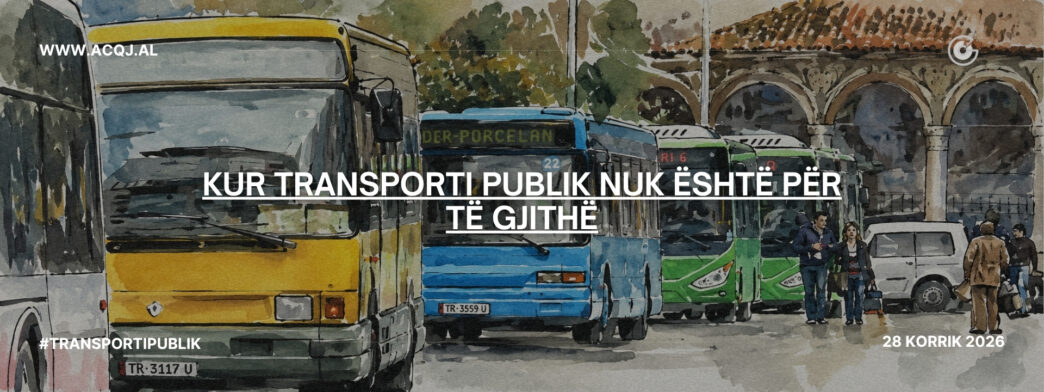
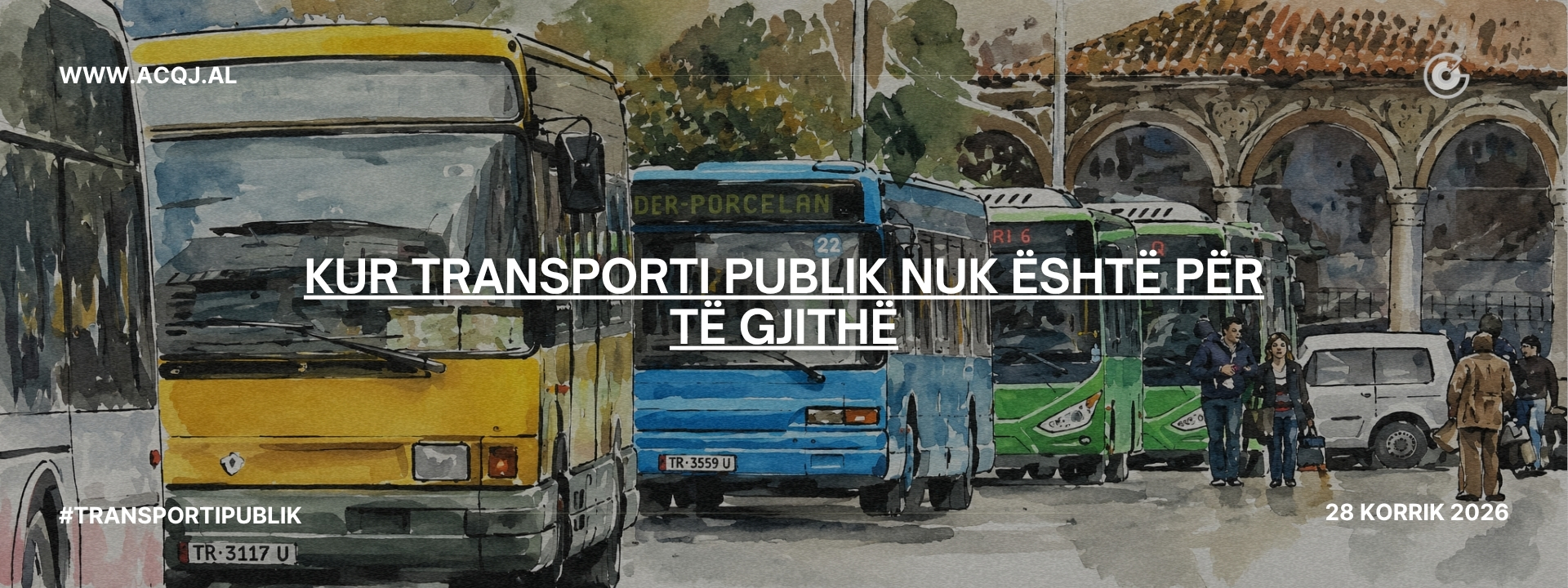
Free movement is a fundamental right, but for thousands of people with disabilities in Albania it still remains a daily challenge. From inadequate sidewalks and inaccessible stations to buses without functional ramps, barriers not only limit travel, but also access to education, employment, health Services and social life.
Although Albania has adopted the legal framework for the protection of the rights of persons with disabilities and ratified the UN Convention on the Rights of Persons with Disabilities, the reality on the ground shows that public transport still falls far short of accessibility standards.
Suela Lala, director of the "Së Bashku" foundation, lists the problems faced by people with disabilities.
"Currently, only the Municipality of Tirana has buses equipped with ramps, while in other municipalities transport remains almost completely inaccessible. Even in Tirana we encounter difficulties, as many stations are not adapted, drivers do not always open the ramps and overcrowding on buses makes it impossible for people with disabilities to stand. There are also lines that cover the peripheral areas of the city and are completely inaccessible," she says.
However, even where buses are equipped with accessibility features, they often remain unusable due to lack of maintenance or malfunctioning ramps. In practice, people with disabilities are forced to wait for the next bus, seek help from passers-by, or give up the trip.
"I have had to use the Vora line several times, where the buses did not have a ramp. There have even been cases where the driver did not stop at all, leaving me unable to travel," adds Lala.
The problems are not limited to means of transport. Many stations and terminals do not have functional elevators, adapted signage, orientation elements or voice announcements for people with visual impairments. Also, the lack of accessible information about timetables, line changes and delays creates other obstacles, not only in Tirana, but also in intercity transport.
Suela Lala states that "Intercity transport is completely inaccessible. One of the few positive cases is the Kamëz Municipality line, where an audio announcement system for the route and stations operates, helping to orient people with visual impairments."
Another problem is the lack of effective complaints mechanisms. People with disabilities often do not have clear procedures to report cases where they are denied transportation or when operators do not respect legal obligations.
Suela Lala says that transportation is essential for modern life, as without it you cannot receive Services, go to school, work, the hospital, other institutions or vacation in another place: "The lack of accessible transportation means that we are totally excluded and isolated from society."
The new Durrës-Tirana railway: Is it built for everyone?
The modernization of the railway line that will connect Tirana, Durrës and Rinas has been presented as one of the most important transport investments in the country. The project aims to restore passenger rail transport and bring it closer to European standards.
The project, launched with the goal of being completed in 2023, has already cost over 118 million euros and there is still no clear date for its full completion. As the cost increases and deadlines drag on, a question arises: Is this infrastructure also intended for people with disabilities?
We contacted the Ministry of Infrastructure and Energy regarding this issue, requesting information on whether the new stations and trains will have the necessary accessibility elements, such as barrier-free entrances, adapted platforms, signage for people with visual impairments, audio-visual announcements, and spaces dedicated to wheelchair users. As of the publication of this article, the Ministry has not responded.
The lack of information raises questions about how public investments are being planned. Modern transportation is not measured only by kilometers of railway or train speed. It is also measured by the ability of every citizen to access, travel and use the service independently.
In European Union countries, accessibility is a mandatory part of every new infrastructure project. A station, terminal or means of transport is designed from the outset to be usable by all citizens, regardless of their physical abilities.
In Albania, the main challenge remains implementation. Although laws recognize the right to equality and non-discrimination, a unified approach that treats accessibility as a mandatory criterion in any public investment is still lacking. Another problem is the lack of real control.
Projects are often evaluated only by technical documents, without being tested by the people who will use them. For this reason, organizations of people with disabilities require that every new investment go through a practical verification process before being put into operation.
Accessible transport is not a special request of a group of citizens. It is an indicator of respect for fundamental rights and of the way in which a society ensures that no one is left out. Because a bus, a terminal or a railway that cannot be used by everyone is not fully public. But, it is an investment that leaves a part of the citizens behind./ acqj.al