


Author: Dallandyshe Xhaferri
"I saw a group of young people standing to drink drugs," writes Sinjalizo, a citizen who not only identifies himself, but also introduces himself as a resident right next to the city's fortress. The resident of the "Kala" neighborhood details the behavior of young people who, according to him, mainly drink hashish and the smell of drugs is felt as soon as you get close.
But Elbasan's witness is not the only one nor the first to raise this concern for Sinjalizo. A few months ago, on February 3 of this year, the mayor of Elbasan, Gledjan Llatja, officially identified the abandoned apartments of the Elbasan castle as the area where drugs were consumed and sold. Sinjalizo's witness points out that the problems for citizens are related to each other.
"During the night when the lighting is not strong, when the alleys are narrow, we are afraid to walk there" describes the citizen under the condition of anonymity.
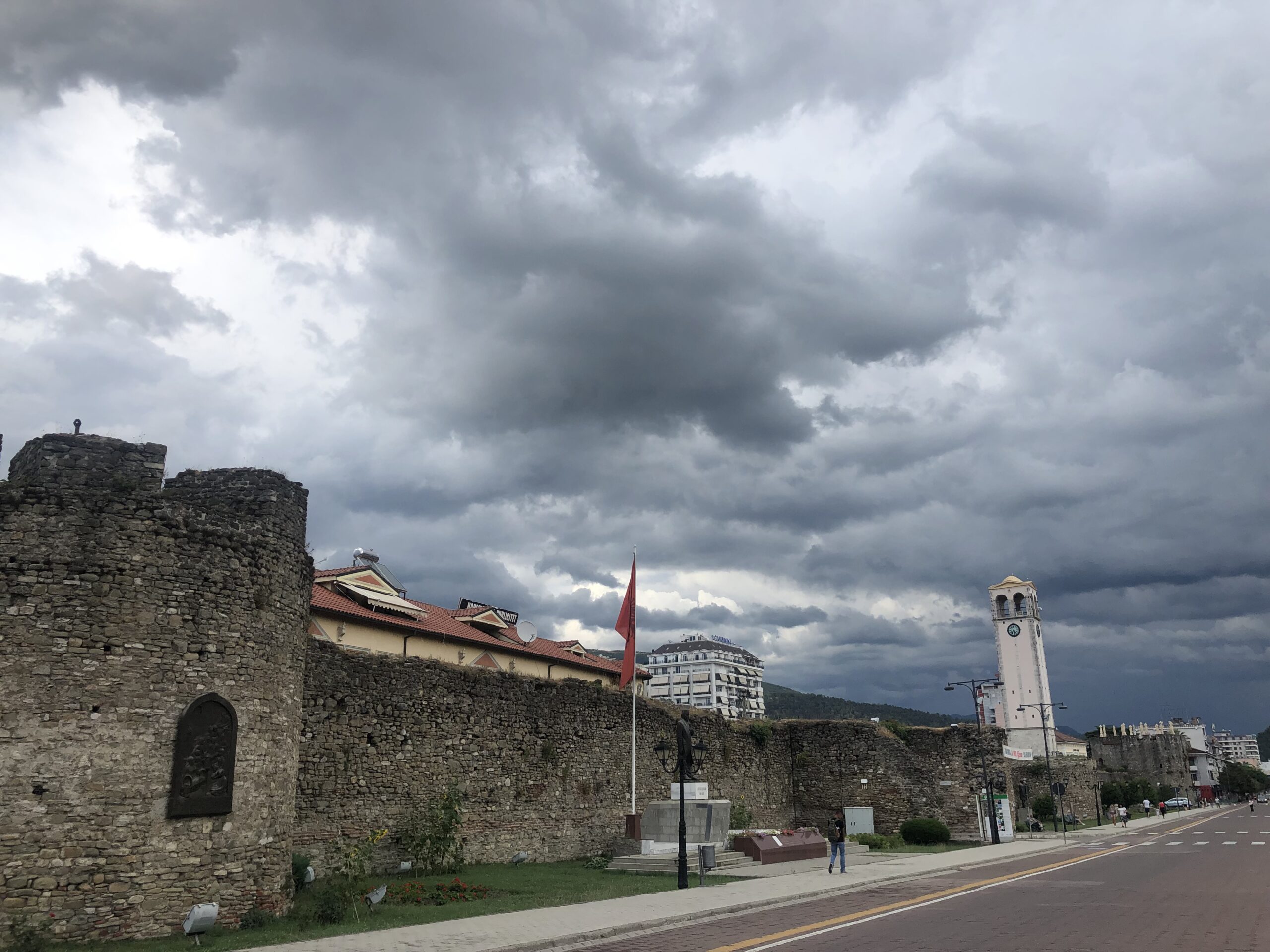
During his speech at the Local Council for Public Safety, Llatja indicated that the drug users had left the gate of the castle, the main destination for tourists, but were stationed at other points of the same facility.

In the official written response, Elbasan Municipality admits that it is cooperating with the Police and District Prosecutor's Office to address such cases.
"Accounting in the KVSP (Local Council for Public Safety) is good for us to help each other to focus on reality and solve the problems," says the official response to Sinjalizo. When asked by Sinjalizo, the police officials of this city do not deny that in the neighborhood inside the castle, continuous controls are carried out for consumers and distributors of narcotics.
Elbasan Police Director, Ardian Çipa, stated that several operations have been carried out.
"Two people were arrested who distributed the narcotic substance heroin and two others, distributors of cannabis sativa", says Çipa on this issue.
But from Sinjalizo's investigation, it became clear that the map of drug hotspots also includes the former private school "Ahmet Dakli" on "Egnatia" street, which has been closed for several years.
The castle of goldsmiths today has a "paralyzed economy"
"Hem Irfan hem Burhan/ You are the one who gathers all of us/ You only give us medicine/ We have news for you", sang Isuf Myzyri in the last century, the singer from Elbasan who sang the fortress of his city as a symbol of antiquity , hospitality and love.
Built in plain relief, Skampini castle (the old name of the city of Elbasan) is considered as the field castle with the largest area in the country, which continues to be populated by nearly 2077 inhabitants. Over the centuries, known as the "Castle of the Bride of Rumelia", dozens of goldsmiths, goldsmiths, cobblers, Kazakhs and trays were engaged in commercial activity within its walls.
"At the end of the century XIX and the beginning of the century. XX there were 9 guilds in Elbasan, 14 guilds of bakers (bakers), 12 guilds of blacksmiths (weapons manufacturers), 48 goldsmiths and a good part of them were also inside the castle", - says the researcher and history pedagogue in University of Elbasan, Zhuljeta Kadilli.
According to official data from the Elbasan Tax Administration, 64 businesses are registered inside the castle, but according to observations made on the ground by "Sinjalizo", it turns out that a large part of them are closed. Currently, 23 entities operate within the walls of the castle, 10 of which are cafes. The figures on the ground do not match the institution's statistics.
Mr. Monda, who works as a seamstress inside the Elbasan fortress, tells "Sinjalizo" that she does not feel at all safe that she is practicing her profession in the business inside the fortress.
"I don't feel privileged at all, because there are no demands. There is no work", says the woman, who adds that the visits of tourists do not bring an increase in income, as they are temporary.
"They sometimes come and see the street "Egnatia" and the buildings, but they don't buy", says Monda.
Another citizen, who preferred to remain anonymous, said that one of the difficulties of being a resident of the castle is the lack of grocery stores.
"There are no shops here. You have to go out on the main road, because you have nowhere else to spend your money", he says.
"Egnatia" street, the symbol of the fortress that did not return to identity
The historical and economic developments of the city's fortress are closely related to the construction of Via "Egnatia" in the second century BC. The historical and cultural importance of this road has made it involved in investment projects for years.
In 2014, the road was included in the investment of 500 million old ALL, financed by the European Commission. The aim of this investment was to rehabilitate the alley that connects the "Saint Mary" Church with the "Mbret" mosque, both buildings built in the 15th century that today are symbols of religious harmony and coexistence among the local population.
Although this project was to be followed after three years, i.e. in 2017, by another investment aimed at returning to the identity of the street, the works were not implemented. The project of 28 million old leks aimed to invest in the 5 main streets of the castle, among them the streets "Xhafer Kongoli", "Bardhyl Popa" and "Saveta Mishta", which connect the houses with the religious monuments and the "Zëra Jete" school.

"This road that was made now is to destroy it from the beginning, it is a very bad job", Gani Xhaferri, a resident of the Elbasan fortress, told "Sinjalizo".

"The alley where I have my house and that was not touched at all is better than "Bardhyl Popa". Here you fall from the stones" complains the resident.
Faith and history
Father Nikola is one of the descendants of the well-known Elbasan family, that Xhufka. He has decided to preserve the family tradition by serving as a priest in the "Kala" neighborhood, just like his grandfather once did. Born and raised in the traditional houses inside the castle, he has become a witness to the changes made in recent years.
He explains to "Sinjalizo" that the interventions made in 2017 were not the right ones for the residents because they already find it more difficult to move on the cobbled road.

"All the old stones were removed and these were placed. The problem is that the stones move and we, the residents, are forced to take mortar and glue them ourselves", he tells "Sinjalizo", adding that after 4 years of "returning to the identity" of the cobbled streets, they are already created some pits.
"The road has risen a lot, it has become steeper, but now there are also potholes. Here, like that one there", he points with his hand very close to the church where the Orthodox believers gather during mass inside the castle.

But the return to the identity of the castle is a promise repeated over the years, not only by the local government, but also by Prime Minister Edi Rama.
In 2017, during the presentation of SP candidates, Rama declared that the city's Castle would turn "into a new factory of economic development."
"There are many addresses and many destinations within the Castle, which may turn into a new factory of economic development that will directly affect the lives of its residents, homeowners, but also directly the economy here and the country, as a whole. I am convinced of this", said the prime minister in 2017, while today, 5 years later, the Elbasan castle has not yet turned into a stable destination for tourists, which are temporary, while the houses have not yet been restored. old Elbasan, such as that of Dhaskal Todri or Kostandin Kristoforidi.
In 2021, on the Summer Day holiday, the city's symbolic holiday, Prime Minister Rama reaffirmed that the Elbasan castle will have the same fate as the "New Market" in Korça, but a year later the revitalization of the castle has not yet begun and historical monuments within it.

In the written response, the Municipality of Elbasan announced that the Ministry of Culture opened two months ago the call for the "Revitalization Bonus", within which the owners and legal users of real estate that are an integral part of historical urban ensembles , historical centers, archaeological areas or have the status of cultural assets as special objects outside these areas, have the right to apply to receive funds up to 10 million for the restorations, interventions necessary to turn the castle into a tourist attraction.
According to the official response of the municipality, this institution is collaborating with the Elbasan Local Directorate of the State Cadastre Agency to provide the residents of the castle with property documents to be able to apply for this budget program, although according to the data the call was closed on June 6 of this the year.
But how much money is invested in the maintenance of the castle?
The Korçë Regional Directorate of Cultural Heritage informs Sinjalizo that 2021% of the total budget has been spent on the maintenance of the Elbasan fortress during the period 2022-30. Otherwise, 12 million old per year.
The maintenance service includes cleaning, for which this institution cooperates with the Elbasan Municipality for periodic cleaning during the year.
For the historian Rudina Mita, the revitalization of the castle is important as it shows the development, as well as it is an indicator of what the ancestors bequeathed to the people of Elbasan with fanaticism.
"Revival is part of the ethno-cultural, historical and spiritual continuity of the inhabitants of the city and the region of Elbasan", she concluded, emphasizing that the castle is part of the traditional values and identity of the inhabitants.