


Author: Inva Hasanaliaj
The river bed of Shushica – the second largest branch of Vjosa is being intensively used by the Austrian company Strabag AG for the construction of the Vlora River road, a practice criticized by experts for the high costs to the detriment of the environment.
Inva Hasanaliaj in Vlora and Tirana
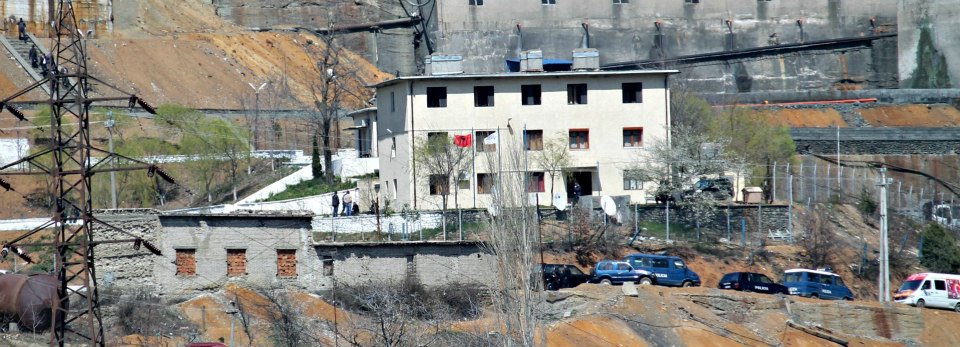
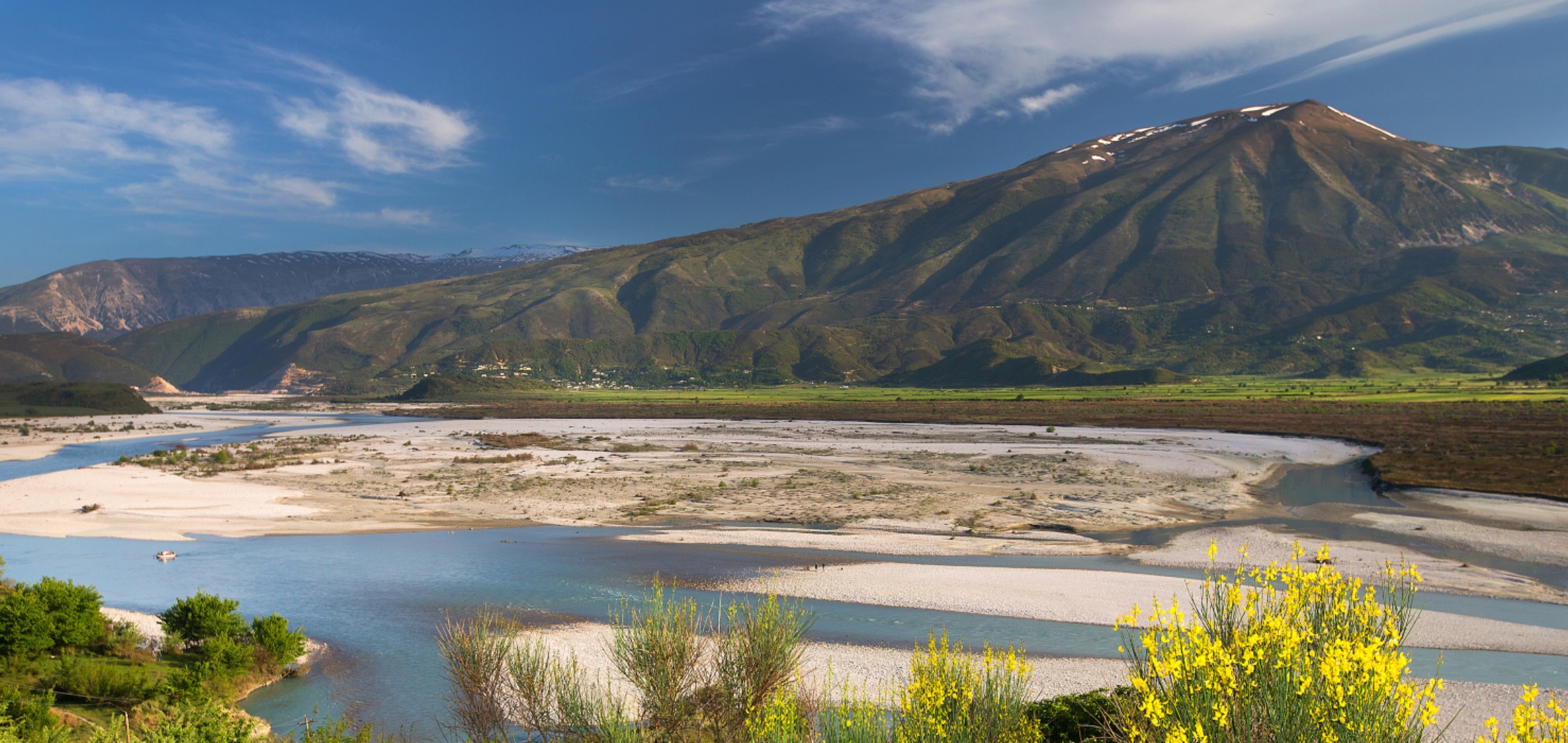
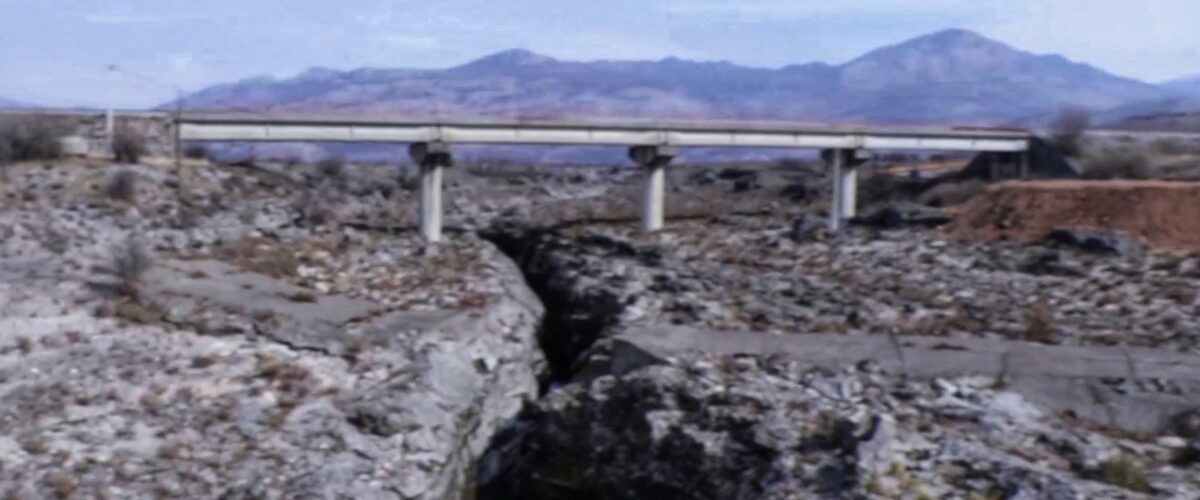
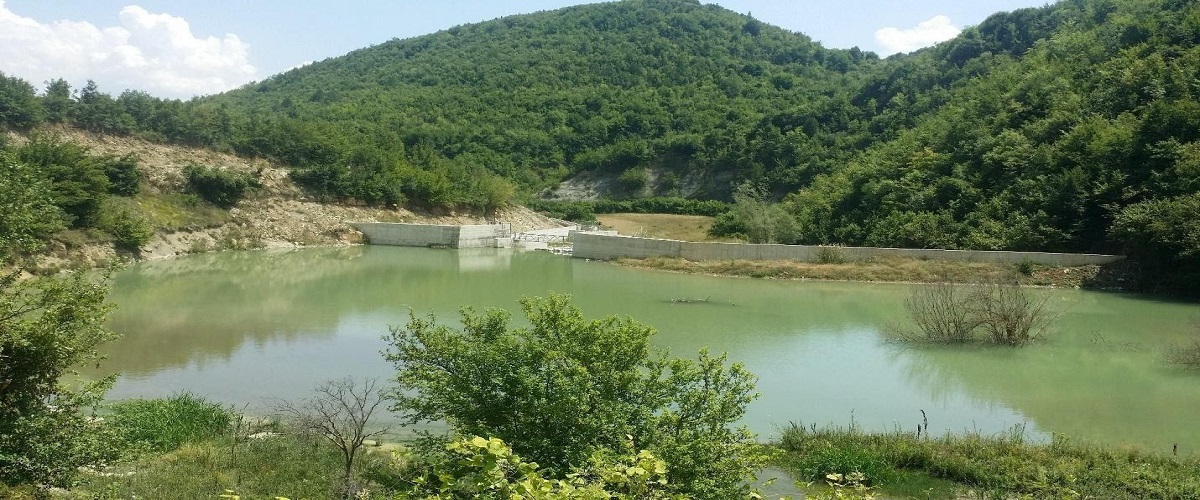
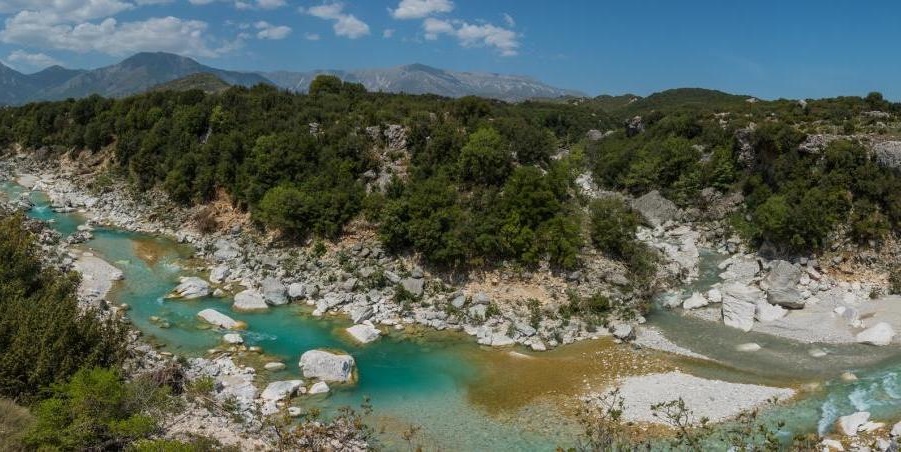
The bed of the Shushicë river resembles a large construction site on the bridge of Gjormi - part of the valley known as the Vlora River in the Selenica municipality in the south of Albania. Dredging and shifting of gravel have created deep pits along the stream, while the frequent circulation of fadromas has opened new ways over the water.
The Shushica is the second largest tributary of the Vjosa and flows parallel to the segment under construction of the Vlora River road – which aims to connect the tourist areas in the south of Albania.
But the government's infrastructural project is burdening the rich eco-system of the valley, while the Shushica river basin has turned into a "warehouse" of gravel and concrete for road construction.
Fultjan Mema, a resident of the area complains that the machines for extracting inerts from the river work seven days a week, at night or early in the morning. "All residents know this, but not all can speak as some of them are employed by the company," he said.
The construction of the road segment Ura e Gjormi - Brataj - Ura e Lasko has been financed with about 4.2 billion ALL by the Albanian government and the Kuwait Fund for Arab Economic Development, while the Austrian company Strabag AG was declared the winner.
Asked about the negative impact on the environment, Strabag AG said through a spokeswoman that the works were being carried out by the subsidiary company in Albania, Trema Engineering 2, in accordance with the permits issued by the Albanian institutions.
"We can assure you that all works are being carried out according to the permits issued by the Vlora Water Basin Council and in accordance with the approval received from the Ministry of Environmental Protection," said Strabag group spokesperson Marianne Jakl.
Shushica is not the only river that is being used intensively for road construction projects in Albania. On May 28, the residents of the village of Hambar in Fier also protested against the indiscriminate use of the Vjosa river by the companies that are building the Fier By Pass.
Damage to riverbeds is one of the most widespread environmental crimes in transition Albania, and according to environmental experts, it has led to a chain of problems in river habitats as well as erosion.
"If a riverbed is stripped of some inert matter...the banks change and all the habitats that are on the banks of the rivers are damaged and there are species that disappear. A part of these habitats are globally threatened," said Aleko Miho, professor at the Faculty of Natural Sciences in Tirana.
Road along the river
The Vlora River Road rehabilitation project was inaugurated on the eve of the 2017 election campaign and created immediate pressure on the Shushica basin.
A 2018 investigation by the Prosecutor's Office of Vlora brought charges against a group of subcontractor companies that were involved in the construction of Lot I of the road for falsifying documents and illegal exploitation of the Shušicë river along the Peshkepi-Gjorm axis.
Nine people, including local officials and company administrators, were taken as defendants, but the file went to the Court of Vlora divided into two.
In a communication with the Court of Vlora, we learned that on February 24, 2020, the trial for five defendants ended, but none of them received prison sentences.
Four of the defendants accused of illegal construction and falsification of documents were sentenced to 150-200 hours of community service, while one of them was acquitted.
The inerts of the Shushica river continued to be used for the construction of the second lot of the road that creates a short connection from Borshi to the city of Vlora.
After numerous Right to Information requests and conflicting responses received from the National Environment Agency, we managed to secure a decision on the Environmental Impact Assessment, EIA in favor of the Austrian company Strabag AG, only after the intervention of the Commissioner for the Right to Information.

The permit for the use of the inerts of the Shushicë River in the area "Ura e Gjormit - Kallarat" was signed by the Director General of the National Environment Agency, Edison Konomi.

The document shows that the use of river inerts for the construction of the second lot of the road was part of an agreement signed between the Albanian Development Fund and the company that won the tender, Strabag AG on April 17, 2019.

Then, the Albanian Development Fund asked the Ministry of Infrastructure to include the Gjorm Bridge - Brataj - Lasko Bridge axis in the list of public works that require the use of inerts - a request that was approved.
Strabag was then provided with a permit from the Vlora Basin Council and a preliminary EIA from the National Environment Agency to use inerts in 6 points of the river from Brataj to Kallarat.
The decision on the preliminary EIA also contains a long list of obligations for the construction company, including systemizing the bed of Shushica, strengthening the banks by planting new saplings, and avoiding work early in the morning or late in the evening - so as not to disturb the residents. of the area.
From our observation on the ground at the beginning of May, it did not result that any of the above obligations had been implemented yet. We also learned that state institutions have turned a blind eye to the implementation of the conditions of the EIA, while no inspection has been carried out throughout 2020.
In response to a request for the right to information, the State Environmental Inspectorate, ISHMPUT, said that it did not conduct any inspections during 2020 in Shušicë as the institution is in "complete restructuring".
"With the completion of the restructuring and implementation in the National Environment Agency, the water inspection directorate will draw up the work program for the identification and inspection of all entities that use inerts without permission in all river beds, and in particular in the Shushica river ," said the Inspectorate.
Environmental consequences
The massive use of riverbeds for the purpose of building roads is criticized by environmental experts in Albania as a harmful practice with long-term consequences for the environment. Experts also note a number of weaknesses of Albanian institutions in licensing entities and controlling them.
Olsi Nika, executive director of the organization Eco Albania, denounced the exploitation along the entire river of Shushica as a phenomenon that is done to reduce the costs of the road, without considering the environmental costs.
"The effect on flora and fauna is quite clear, since the taking of inert materials, especially in periods of minimal flow, creates what are called ponds or side pockets of the river. If this phenomenon is sufficiently manifested in the series, the loss of the longitudinal connection of the river is created, which means the obstruction of the migration path of aquatic species, which then cannot carry out the survival processes of their species," Nika said. .
Lecturer Aleko Miho also thinks that the use of rivers for inertness has been a constant concern of the transition - especially for the construction of roads and other types of construction.
"There is no reason to take aggregates from the river to build roads, it is high cost and a great harm done to the environment," said Miho.
"River flows are in balance with all the habitats that they have around, so interfering in this way, taking inerts from the rivers is a concern that brings damage of various kinds," he added.
Experts appeal for the implementation of environmental legislation and for the punishment of those who abuse the country's natural resources.
"Unfortunately, even 30 years later, we continue to have a misuse of the rivers, even though the institutions are there, the legislation is there, but it is an extraordinary flaw of the institutions to implement the laws," said Nika from Eco Albania.
"The solution is the will of law enforcement," he added.
Professor Aleko Miho also said that the time has come to stop the abuses and give the rivers time to renew themselves.
"This may not solve the damage caused in many years, but at a certain point we have to tell ourselves to stop... It is never too late to show care to nature," concluded Miho.

This article is published within the project "Facts and Environment" implemented by the Albanian Center for Quality Journalism and the Organization "Faktoje", within the project "Toward the Improvement of Labor Relations and Professionalism in the Albanian Media" supported by the European Union, implemented by the Institute Albanian Media and the International Federation of Journalists (IFJ). The sole responsibility for the content of this article is the author's and under no circumstances can it be considered to reflect the position of the European Union.