


Author: Aurora Shpataj
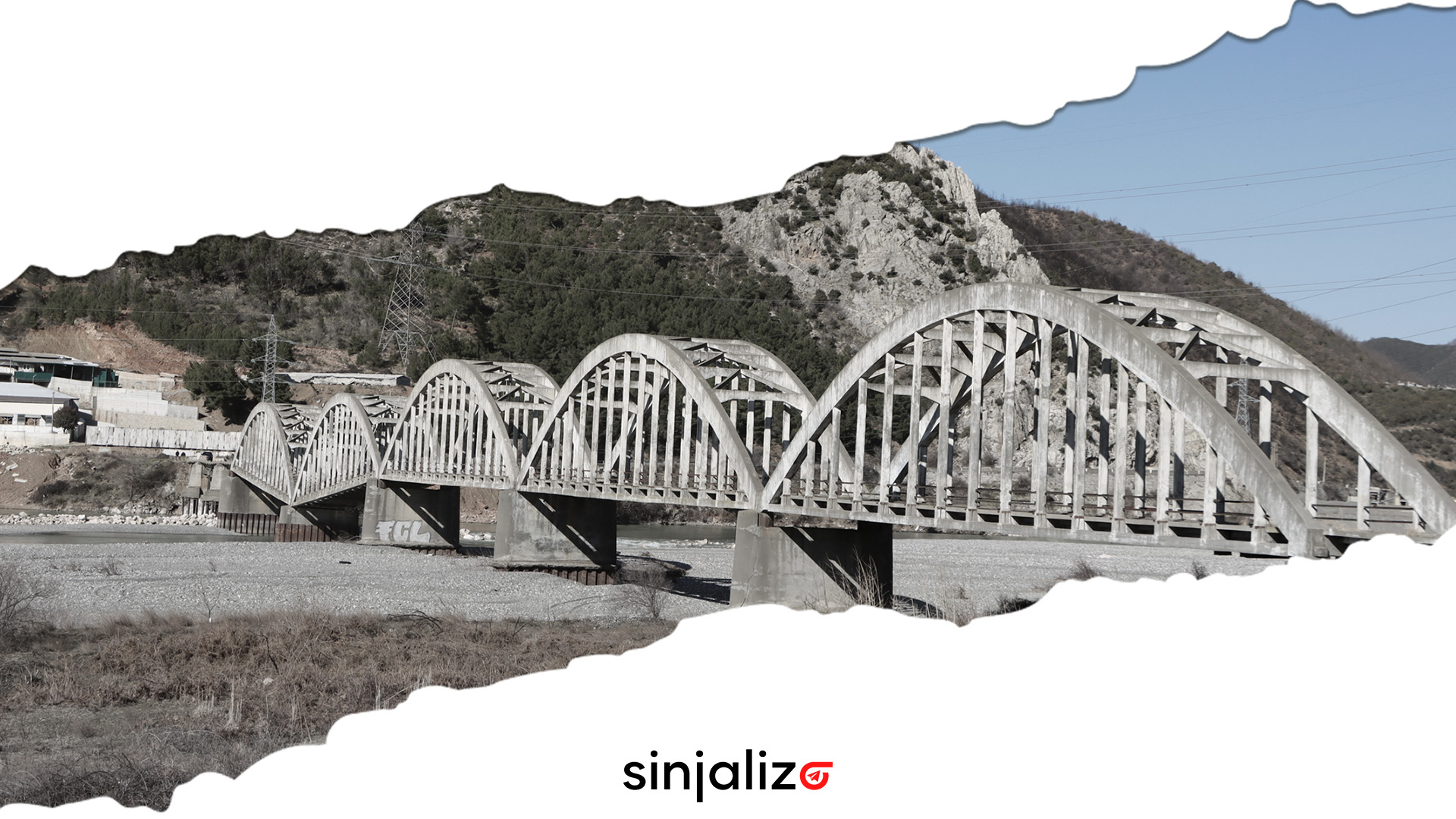
The “Arches of Milot” Bridge or otherwise known as the “Bird’s Bridge” is one of the oldest bridges in our country. Built in 1927 at the initiative of King Zog, the bridge is special because of the architectural style of 5 arches and has a length of 478 m. Its importance comes from the fact that this work has served as one of the main roads connecting Southern Albania with Northern Albania. Although the bridge has a special architectural, historical, national importance, because it has been declared a cultural monument of the first category in the Lezha region according to the decision of the Council of Ministers , this cultural work has not been maintained.
But what is currently happening with the bridge with the "Arches of Milot", otherwise known as the bridge of King Zog?
Despite the frequent appearances of heritage protection associations, denunciations in the media, protests by citizens or various activists for the destruction of King Zog's bridge, it seems that all these calls have fallen on deaf ears. The lack of accountability and failure to take timely measures by the relevant institutions have led to the damage of one leg of the bridge. The warning that King Zog's bridge is in danger also came from the international organization " Europa Nostra ", on December 14, 2021, where it declared this work as one of the 7 most endangered monuments in Europe for 2022.
What are the factors that led to the damage of a first category monument?
Pal Trashaj, historian and resident of the area, tells who is the key factor that led to the degradation of the bridge.
" This bridge has been damaged since the first day of democracy with a big storm, with greed the slopes of the Mat River were taken by various construction companies. Within 10 years, from `91 to 2001, the river level had a drop of up to 2 m. From 2001 they tried to stop it somehow, but then again after 2003-2005 and until today with a rare ferocity millions and millions of m3 of gravel are taken for construction inside and outside the country ."

Trashaj also blames the state for the destruction of the bridge. " State institutions are also here, because the companies that have taken over the "Milot-Kukës, Milot-Shkodër or Fushë-Krujë-Milot" highway collect inert materials here. All the companies licensed by the state have taken billions of m3 of gravel and placed them in machines that are absolutely not allowed because not only does the bed erode, but since the zagorishtet are round in shape, they have the possibility of being flattened on any highway. That is why the water level in the river bed has dropped ."
But he metaphorically compares the companies that erode in the Mat River with the label "vampira", where he does not forget to emphasize the lack of functioning of the state.
" The company is the state, the lack of functioning of the state is called any company name. For me, many measures should have been taken, they should have protected it. But not only have they not protected it, but the `vampires` that erode the bed of the Mat River are not stopped either, not a single nail has been driven in ."
The state's reaction to the destruction of King Zog's bridge!
Through several official requests for information that "Sinjalizo" addressed to the Ministry of Culture, the latter clarified to us that the erosion of inerts is outside the protected area.
" We clarify that the gravel and aggregate extraction node is 1 km from the cultural property, practically outside the "protected area" of the facility, but the extraction of these aggregates has caused the river flow to meander towards the weakest point of the bridge, where the legs are made of iron structures."
However, the ministry does not deny that there is a problem in the monument of the first category and that it has delegated this problematic situation to other competent institutions, but in its answer it does not emphasize who they are.
" Institutions subordinate to the Ministry of Culture do not have the authority to intervene in a territory outside the monument and its protected area, but have raised it as an issue in official communications with other competent institutions. Regarding the problems it presents and that have been identified in this structure by various institutions such as the Water Resources Management Agency, an initiative has been taken to establish an inter-institutional group with the aim of cooperating to determine the necessary interventions in this structure ."
"Sinjalizo" also sent a request to the National Environment Agency, regarding the measures it has taken for the companies that have used the inerts near the "Bird Bridge", which clarifies that:
" As a sector, we inspect the legality and entities that are equipped with permits for the use of river aggregates issued by the water resources management authorities. Referring to the decision No. 1, dated 21.06.2006 of the KKU on "Reduction of the use of gravel and sand in river beds", the use of river aggregates has been interrupted, prohibited at a distance of 500 m from the foot of the Zog bridge, no entity or company has had a permit for the use of river aggregate materials. Given the fact that we do not have entities equipped with a permit for exploitation, we have no information on which of the entities or companies may have caused damage at the foot of the Zog bridge, in the bed of the Mat River, as a result of the use of river aggregates."
But even though the National Environment Agency denies the fact that there are companies that have been provided with exploitation permits, the National Inspectorate of Territory Protection shows the names of the companies.
" From the information we have and from the verifications carried out on the ground since 2020, when the Lezha Regional Directorate of IKMT was established, the following entities have operated with permits for the use of inert materials in the Mat River:
1."ANK CONSTRUCTION COMPANY" shpk (Usage area was under the Lezhë-Milot highway bridge)
2. "BARDH KONSTRUKSION" shpk (Usage Area was between the Train Bridge and the Lezhë-Milot Superstrada Bridge)
3. "SALILLARI" shpk (The area of use is between the Old Rubik Bridge and 2 km above King Zog Bridge )
When asked what was the period of time that these companies were provided with operating permits, IKMT answers as follows:
" The period in which these entities operate is from March 2020 onwards, according to the Decisions of the KBU, Mat. According to these decisions, the contract terms are according to the terms that these entities have with the ARA for the construction or maintenance of roads of national importance ."
The National Environment Agency clarifies that some companies have eroded the bed of the Mat river, without a usage permit, receiving a fine as a legal measure.
" The Environmental Inspection Sector, for the year 2022, has imposed 3 fines on 3 entities that were caught red-handed taking river inerts in the Fan and Mat rivers, without having the relevant permit for the use of river inerts. Specifically for the entities "Brajden 31"shpk, "Kompleksi Klodi"shpk and "Ardi&Orgito"shpk for the period September-December 2022. "
Regarding the number of fines imposed by state institutions, historian Trashaj states: " So few fines have been imposed that if you compare them to profit, they are not called fines ."
"Sinjalizo" addressed an official request to the Water Resources Management Agency, regarding the causes that have influenced the demolition of the Bird Bridge.
" We do not have, at least to date, an in-depth study of the specific causes of the situation created on one of the legs of the Zogu bridge, on the Mat River, and the "specific weight" of each factor in this situation, moreover spread over time, " explains AMBU.
However, this institution, as a participant in the working group for the damage to the Zog bridge, through the answer given, gives the reasons why the King Zog bridge was damaged.
" From the activities carried out, in which AMBU also participated, which are related to the damage to the bridge foot (processes started since 2021), it has generally been concluded that the main factors identified but not officially assessed have been and are:
- The bridge has a lifespan of 95 years and in many aspects this is also the cause of its degradation;
-Lack of measures to curb the erosion problem;
-The construction of several hydropower plants that have disrupted the river's regime, as well as the non-arrival of material to replace what is removed from the river's flow (hydropower plants built before and after the 90s);
"Perhaps indiscriminate use of the river by the companies that take inerts, which has led to the phenomenon of bed erosion also appearing on the new bridges of Ruga e Kombit."
"Sinjalizo" also requested a response from the companies that have access to use the river Mat, but they have refused to respond.
Just a few days ago, through a post on the social network Facebook, Minister of Culture Elva Margariti indicated that the technical implementation project for the emergency intervention at the Mati Bridge has been approved, where the experts who were involved in drafting this project are from the Faculty of Civil Engineering and the National Institute of Cultural Heritage.
Asked by "Sinjalizo" about any reaction to Minister Margariti's post, Mr. Thickaj says:
" For me, this bridge was once ours, because we are talking about a bridge worth hundreds of years, we are not talking about a new bridge. If they want to build a new one, they can do it, but it is of no value at all. We are talking about protecting a first-class cultural monument ."