


Author: Ina Allkanjari
Luljeta Kamberaj is from the city of Vlora and has been trying to get justice from the court for 6 years. Her problems became critical the day she was fired from her job near the regional hospital of this city. Left without a job, she looked at the judiciary in the hope that the law in the hands of the judges would speak in time. Kamberaj passed the first level of the court and the file ended up in the Appeal of Vlora, a court that according to the Supreme Judicial Council will be merged. Pessimistically, she writes in Sinjalizo about the odyssey she has gone through and about the challenges that await her because her file will be transferred together with the court in the capital.
" All these years and I still haven't found a solution because I haven't been given a trial date. When I found out that the Court of Appeal in Vlora will be closed, I was shocked, how can I pursue the case in Tirana, when I have a sick person at home and I myself am sick. Where can I go, where can I seek help to cover the expenses of going to Tirana, when I am unemployed and I can't even due to health reasons. We can't afford to pursue the trials in Tirana, it's impossible," the plaintiff further states.
Like Kamberaj, the same fate is expected for dozens of citizens who are waiting for hearings in the appeals of Korca, Vlora and Shkodra and Durrës, which according to the new map will be gathered in a single national court, the Albanian Court of Appeal. This project has been strongly opposed by the community of lawyers, 2 thousand of whom with an active license, entered the second threatened boycott. At first, by decision of the National Chamber of Advocacy, they abandoned the hearings of the foundation, while in the second strike, the board of this chamber ordered the abandonment of the personal security measures, which according to the defense's predictions, had to block the courts. But the chancellor of the largest court in the country, Donald Xhelili, admitted that in the conditions when the arrested have only 48 hours to appear before the court and when the elected lawyers are not appearing, the court has ensured the representation of the suspects with free lawyers from the state.
The consequences of the new judicial map
Durim Bajramaj, the head of the Vlora Bar, tells "Sinjalizo" that the changes brought by the new judicial map deny citizens access to justice.
" Article 6 of the Constitution states that every citizen must be heard by a judge and a decision must be made within a reasonable time for any problem they may have, which is being denied to them. Another consequence that comes directly from the change in the judicial map is the cost to the citizen, who if the appeal goes to Tirana, will pay me for legal Services, but also the cost because I will leave the cases in the first instance court in Vlora and will represent them in the Tirana Appeal, where I will waste the whole day with the case, plus the citizen will also pay the cost of transportation," explains lawyer Bajramaj, explaining the expenses.
But when, in one of his public appearances, the head of the KLJJ defended the new map using, among many arguments, the emptying of the vetting, the representative of the lawyers of Vlora, which is the city where two courts were closed, added:
"Now they are saying that only one Court of Appeal should function, while we have given them the solution of 6 courts of appeal, that at least 3 courts should remain, one in Vlora, one in Tirana and one in Shkodra," Bajramaj replies.
As a voice that has opposed the boycott ordered by the Chamber of Advocacy is Saimir Vishaj, another lawyer in Tirana who leads the Chamber of Criminal Lawyers. At the beginning of the session, Vishaj emphasizes for Sinjalizo that lawyers cannot abandon their clients by not representing them in court.
"The map was not born in 2022, but it has been discussed with interest groups since 2017, agreeing in principle about this type of organization. There are problems, because there are some cities that escape the basic courts, but I believe that until the approval by the Council of Ministers, the parties must agree. The law says that in order to transfer a judge from Vlora to Tirana, he must give his consent. In the specific case when the map decides to merge the 4 appeals of the districts, it means that all the appeal judges who are in the districts will come with family residence in Tirana. This is a problem."
Further, Vishaj has a proposal for urgent files that must be reviewed in the courts that will be closed, as otherwise it will be difficult to provide Services to the citizen.
"In relation to some criminal offenses, contact has been severed, the provision of court Services to citizens, especially in domestic violence where a woman who has been raped from Tropoja will have to travel with her aggressor to Kukës where the basic court will be. These are problems that I think should have been seen better, especially in a category of offenses where the courts should function as they currently do," Vishaj said for Sinjalizo , singling out minors as a category where care should be taken. Minors require special courts - the lawyer mentions - with specialized lawyers, because the rights of minors prevail.
Put at the head of the movement of lawyers who are warning of escalation, Maksim Haxhia, Chairman of the Chamber of Advocates of Albania opposes the new judicial map, arguing that this change will increase the financial cost that will weigh directly on citizens' pockets and according to him increasing costs will limit citizens' access to the judiciary.
"Since the new judicial map will prevent many citizens from going to court for the reasons I mentioned, it will lead to an increase in self-justice for the resolution of many conflicts in the administrative and criminal cycle, " Haxhia declares.
Judges in front of the new judicial map
Fuat Vjerdha, the President of the Shkodër Court of Appeal, asked by "Sinjalizo" whether he agrees with the new judicial map and the merger of the Courts of Appeal in the districts into a single one, declares against it. The point of view of the well-known judge is quite different from what the General Prosecutor's Office and the High Council of Prosecutors declared earlier, which raised the green card on the proposal of the Supreme Court of Justice. Even Prime Minister Edi Rama, who heads the Council of Ministers, the latter the final institution that expresses the judicial map, declared in favor of merging the courts.
"Considering the code of ethics, I cannot speak to the media about these claims. With the institutions, when meetings are held, I have expressed my position, but due to the ethical code, I cannot in the media. My position is known as I have made it public that the Court of Appeal in Shkodra should not be merged", declared the president of the Court of Shkodra.
Earlier in January of this year, the President of the Shkodër Court of Appeal, Fuat Vjerdha, stated that such a system with a single Court of Appeal in Tirana was in force until 1998 when it was switched to a system with 6 Courts of Appeal .
“The argument then was that a single court would lead to corruption ,” said Vjerdha, who proposed a system with three courts of appeal. “ I propose that the judicial map be with three courts, Shkodër, Tirana and Vlora, and that civil cases be tried only in Tirana, and that judges for these cases be delegated to Tirana ,” said the judge.
Vjerdha said that it was necessary to think about a justice as close as possible to the citizens.
" It is a national concern that a citizen today cannot be tried in his own country ," he said.
Capacities of the Tirana Court of Appeal
The evaluation report of the High Judicial Council shows the advantages and disadvantages of the Tirana Court of Appeal in terms of infrastructure.
“ The Tirana Court of Appeal building has 28 judges’ offices and 19 administration offices; as well as 7 courtrooms (2 criminal and 5 civil). Advantages: The Tirana Court of Appeal is located in the city center. The court meets design standards regarding security and/or avoidance of ex-parte communication (i.e., there are dedicated entrances and exits for court personnel, parties and/or detainees), and the service area for the public is realized according to standards. Disadvantages: The number of courtrooms is not sufficient ,” states the KLGJ evaluation report.
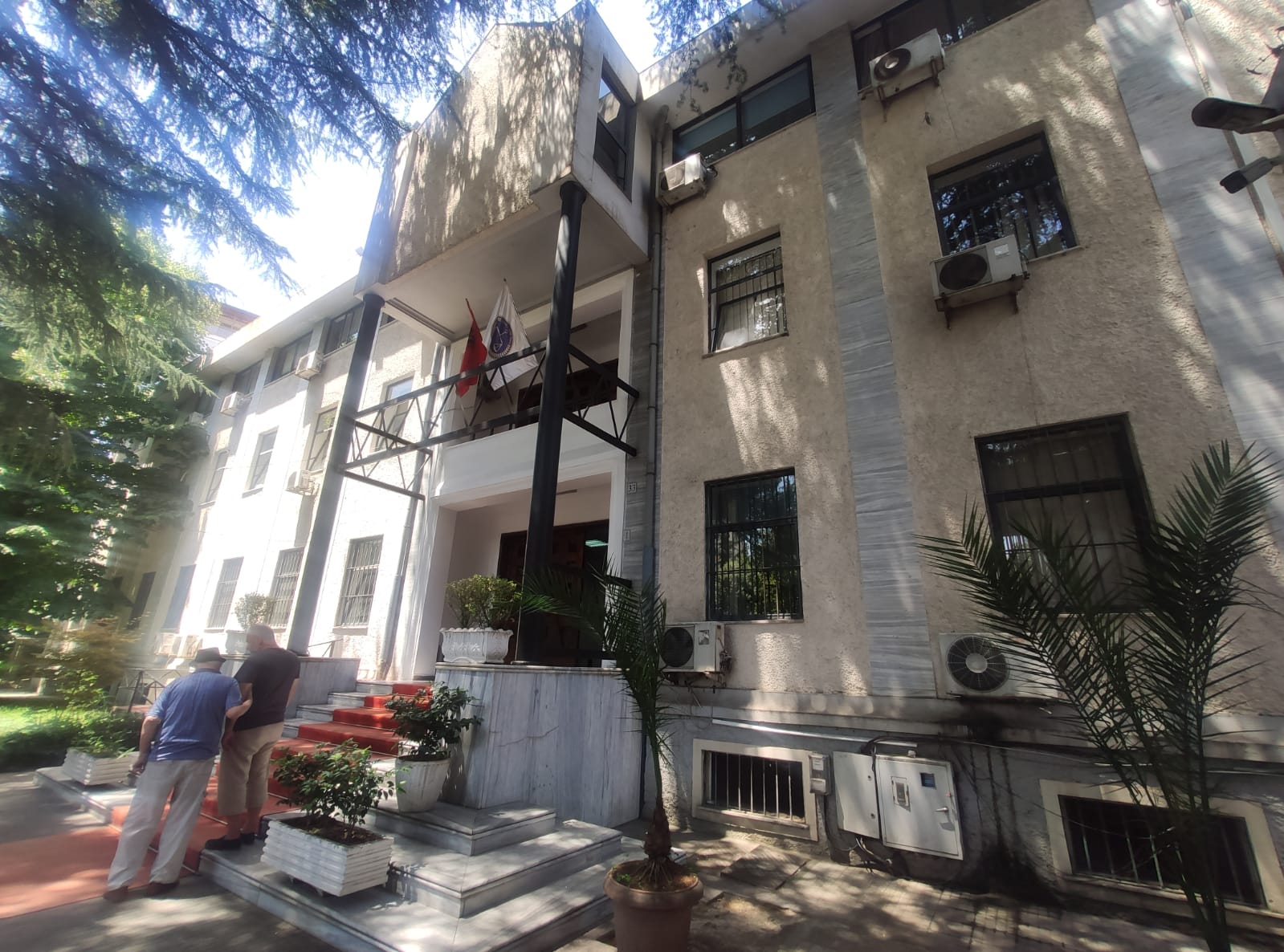
Sources at the Court of Appeal told "Sinjalizo" that the capacities in this court are not a concern, since there are not many judges at the moment, while in the future it is thought to invest in a new court. Meanwhile, it is predicted that from the moment of approval of the new judicial map by the Council of Ministries, it will take at least 6 months to determine the rules for the transit of files.
Durim Bajramaj, the head of the Vlora bar, says that the Court of Appeal in Tirana does not have the capacity to be the only one in Albania.
" That court cannot cope with the Tirana judicial body, let alone five district appeals judicial bodies. Even if they build a building, for me this new judicial map is still a failure. There is also the time effect. By law, the Administrative Appeals Court must issue a decision within 3 months from the date the file goes to court, while it is judging cases from 2016, we are 6 years behind ," said Bajramaj.
According to Bajramaj, there may be 100 security measures per day in all of Albania, and these will be done in Tirana with the new map.
" Police vehicles will be dispatched from all districts to go to the Court of Appeal in Tirana. First, we need a whole fleet of police cars, we also need a military unit with police officers, it is a staggering cost for the state, it is the taxes of Albanians ," Bajramaj concluded.
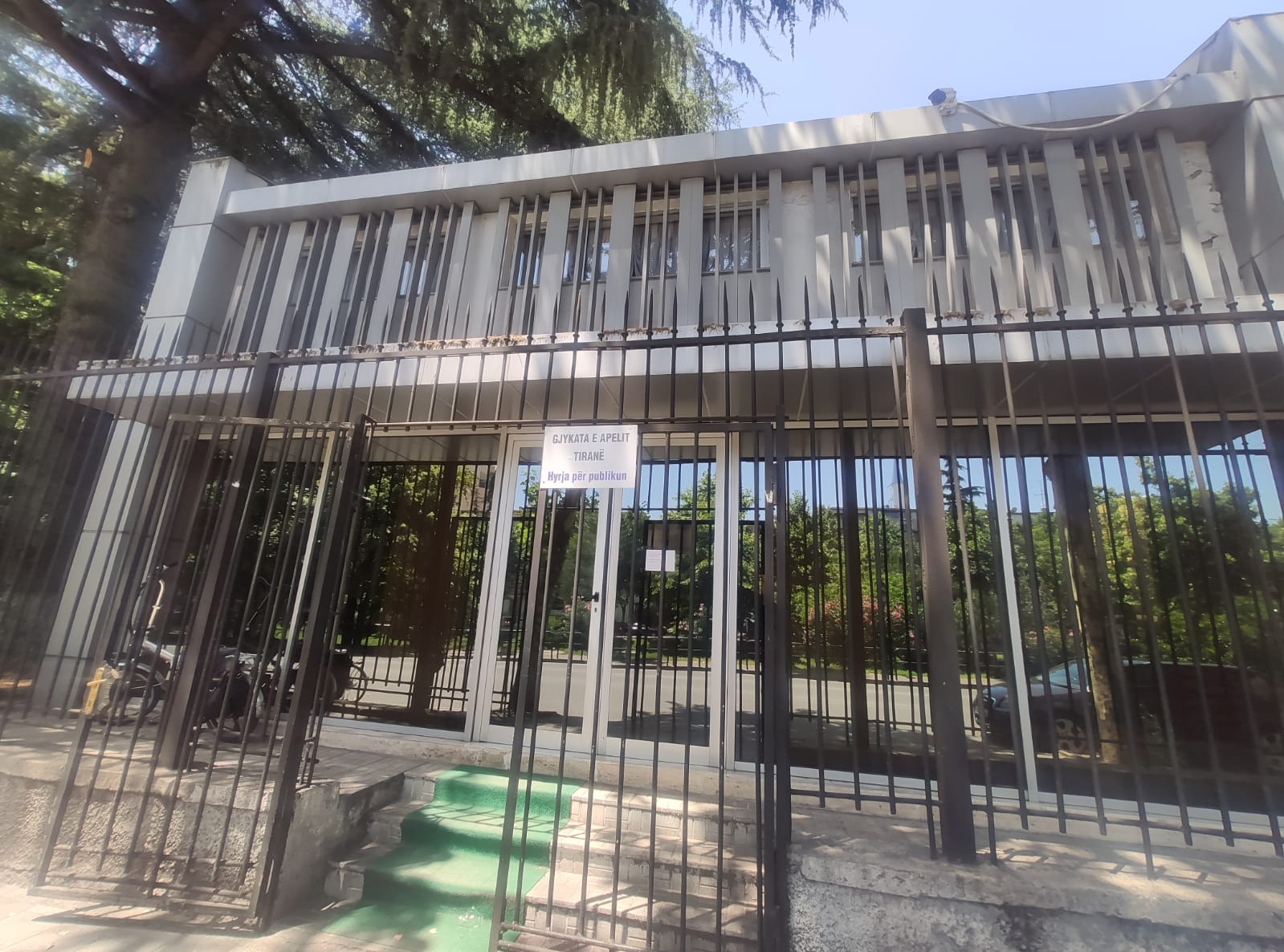
One point where Vishaj agrees with his colleagues is related to the lack of facilities at the Tirana Court of Appeal, where hundreds of files will be collected. " The Court of Appeal in Tirana has neither the building nor other capacities. From the issuance of the VKM, that is, from the approval of the Council of Ministers to the start of work, a period of about 6 months or a year will pass to stabilize the personnel, secretaries, chancelleries, etc. ," said Vishaj.
The same thing is confirmed by lawyer Maks Haxhia, who emphasizes that if there is only one Court of Appeal, more problems will be created than there are today.
" The Court of Appeal in Tirana does not have the necessary capacities. Only one Court of Appeal will bring organizational problems, problems for the halls, for the offices, for the place where the detainees will stay, the infrastructure of the chancery Services, the secretaries, the protocols, all these are problems, they have not been solved in advance. If they had been solved, it could be discussed to make a new judicial map as it has been designed ," concludes Haxhia.
The changes brought by the new judicial map
The Supreme Judicial Council approved the new judicial map in the country, which means the presence of only 13 courts of first instance, 2 administrative courts and 1 appeal court for the entire country.
The Supreme Court of Justice has approved the changes that envisage the merger of the courts in Tropoja, Krujë, Lushnje, Pogradec, Krujë, Mat, Përmet, Kurbin, Kavajë, Pukë.
The HCJ estimated that the courts should be reorganized and out of 22 courts of judicial districts, only 13 courts of general jurisdiction remain in: Berat; Diber; Durrës; Elbasan; Fern; Gjirokastra; Lezhe; Korça; Kukes; Saranda; Shkodër; Tirana and Vlora.
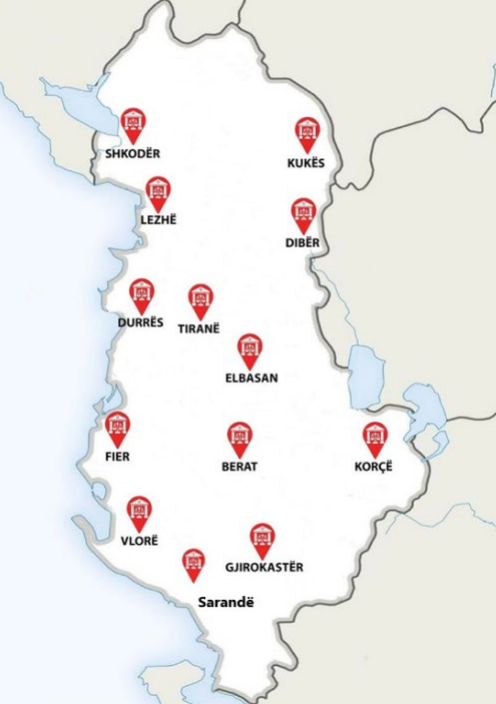
In this map, the administrative courts are merged, of which only two remain, one located in the city of Lushnja for the south of the country and another in Tirana for the center and the north.
Relation of the Supreme Judicial Council
The KLGJ report emphasizes that access to court does not only mean receiving service near or as close to one's place of residence, but also receiving it as quickly and effectively as possible. According to the KLGJ, a national appeals court with general jurisdiction will enable the reduction of the time frame necessary for the completion of trials, especially for those judicial cases that are already "dormant" in second-instance courts.
" The trial in a national appeal court would enable the average time for the completion of the trial in the review jurisdiction to be standardized, as the way of planning the workload of appeal judges would be based on the same standards, thus achieving equality in the workload of judges. To date, in small appeal courts, the workload has been significantly lower than in other courts, and the time for adjudicating cases has been significantly shorter than in other courts, resulting in a violation of the principle of providing justice to the citizens of the Republic of Albania, " the report states, while emphasizing that the creation of a single appeal court would bring a gradual reduction in the number of backlogged cases, because the creation of many sections and with specialized judges would bring an increase in their efficiency in exercising judicial activity.
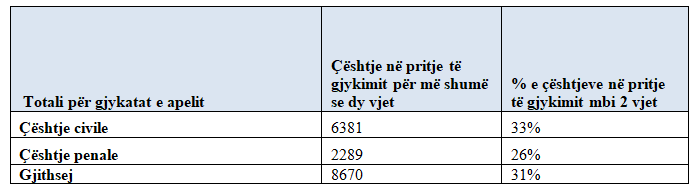
In total, for all appellate courts of ordinary jurisdiction, it is observed that 31% of the stock are cases older than 2 years.
From the statistical data reported by the courts, it appears that the amount of backlog cases (stock) varies significantly between courts of the same level. The Court of Appeal of Tirana records the largest number of stocks. The second place is held by the Court of Appeal of Vlorë, while the Court with the lowest stock is the Court of Appeal of Gjirokastër.
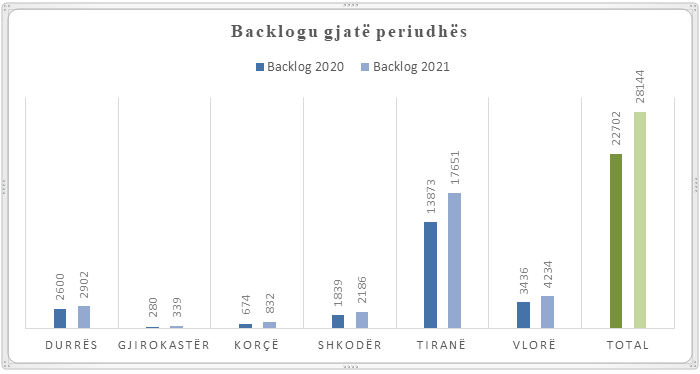
In the KLJ report, it is said that at the end of 2021, 28 cases are waiting to be examined by the appeal courts. They are mostly civil cases and only 144% of the stock are criminal cases. Distributed according to the courts, it is observed that we have an increase in the stock in all the appeals courts, but the most significant increase is reflected in Tirana with 31%.
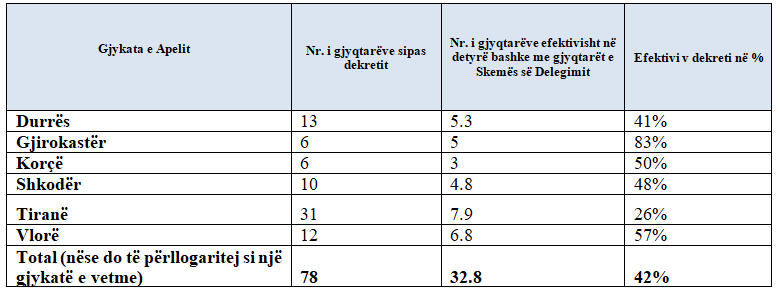
"Comparison of the workload between the courts shows that there is a significant difference in workload, with a total workload of 20,350 cases in the Tirana Court of Appeal, followed by the Vlora Court of Appeal with 7,105 cases and then the Durrës Court of Appeal with 5,328 ."